Showing posts with label Humor. Show all posts

02 May 2020

A Life of Co-incidences

Indiscretions Of Archie
P.G. Wodehouse
Andrews UK, 2004
Originally published 1920
189 pages


Archie is my first Wodehouse character who is not Jeeves or Bertie Wooster or one of their pals. And poor Archie really, really needs a calm mess-fixer-upper like Jeeves. To be formal, the titular character is Archibald Moffam (pronounced "Moom"), another inimitable Wodehousian name.

Unlike Bertie Wooster, Archie is not wealthy, and after many business failures in England has gone to America to seek a new start. He falls in love and quickly marries a sweet girl, whose father turns out to be one of the richest men in New York. But his new father-in-law despises Archie.

 All of which sets the scene for the stories in this book, which is sometimes described as a book of short stories rather than a novel. The stories are in sequential order and all involve the same characters, so I think it can be considered either one.

The subtitle really ought to be: A Life of Co-incidences, for Archie ricochets from one crazy co-incidence to another like a ball in a Pachinko machine. In the early chapters, everything seems stacked against Archie, but as I read on things began to break his way -- still in extremely co-incidental ways. It was a diverting and fun read for the #1920Club over at Stuck in a Book.

P. G. (Pelham Grenville) Wodehouse published at least 71 novels and 24 story collections, as well as plays, a poem, some non-fiction, and other miscellaneous books. So if you decide you like his style, you have plenty of good reading ahead of you!


23 April 2020

Book Beginning: Indiscretions Of Archie by P.G. Wodehouse

Book Beginnings is a weekly meme hosted by Rose City Reader. We share the first sentence (or so) of the book we are reading, along with our initial thoughts about the sentence, impressions of the book, or anything else the opener inspires.

Sir? replied the desk-clerk alertly. All the employees of the Hotel Cosmopolis were alert. It was one of the things on which Mr. Daniel Brewster, the proprietor, insisted. And as he was always wandering about the lobby of the hotel keeping a personal eye on affairs, it was never safe to relax.


Since I love Wodehouse's Jeeves and Wooster series, - in print, on film, on audiobook - I'm taking a plunge into a different Wodehouse world. Should be many crazy antics ahead!


11 March 2020

A Miniature Victorian Novel

The Young Visiters or, Mr. Salteena's Plan
Daisy Ashford
Academy Chicago Publishers, 1991
First published 1919
102 pages


Nine-year-old Daisy Ashford's novella is a lot of fun to read, childish errors of spelling and punctuation and all. It's both short and entertaining enough to be read in a single pass. And if you are at all attuned to novels or TV dramas about the English aristocracy of 100 years ago, it is also quite funny, akin to P. G. Wodehouse's Jeeves and Wooster stories.


Walter Kendrick. a professor of English at Fordham University who was an authority on Victorian literature, assures us in his introduction that this is not just a children's story, but "also a Victorian novel in miniature, a tidy précis of English fiction circa 1890". It even has a double plot, one about love, the other adventure.

As for Ashford's spelling and punctuation, he calls them "hilariously idiosyncratic". She may talk about the "sumpshous" bathroom, items wrapped in "tishu paper", and a room full of "searious people", but she knows what those words mean and tries her best to spell them phonetically. Hey, she's nine!


According to Wikipedia, "The Young Visiters" has been adapted as a musical, a play, a feature-length movie, and a BBC television production. Not bad for a first-time author!

The is my entry in the 20th Century Classic category for the 2020 Back to the Classics challenge.


21 February 2020

Book Beginning: Stuff Brits Like by Fraser McAlpine

http://www.rosecityreader.com/

Book Beginnings is a weekly meme hosted by Rose City Reader. We share the first sentence (or so) of the book we are reading, along with our initial thoughts about the sentence, impressions of the book, or anything else the opener inspires.

Let us start this preposterous journey in the most British way imaginable: with a series of meandering apologies and caveats. I don't know what it is about a book like this, but it seems you can't make huge, sweeping, lawn-mower generalizations about the likes and loves of an entire nation without slicing up the odd precious and unique orchid here and there, and for that, I am truly sorry.


Subtitled "A Guide to What's Great About Great Britain", this book consists of many very short chapters, each a humorous essay on some topic near and dear to British hearts. As an avowed Anglophile but recently returned from a vacation to England, I know I'll enjoy this book. And it could be useful before I visit that sceptered isle again.


16 December 2019

Mrs. 'Arris Tackles America

Mrs. 'Arris Goes to New York
Paul Gallico
Drawings by Mircea Vasiliu
Doubleday, 1960
192 pages


In this second book of the series. our adventurous Mrs. 'Arris, a London char, sets out to right another wrong. Her neighbors are mistreating a little boy who was left in their care by his mom when she remarried and the new husband didn't want the child. In her innocent view of the world in the 1950s it must be a simple task to find little Henry's father, George Brown, in America. You just needed to take a ship over there and look him up.


As is usual with Mrs. 'Arris's plans, things do not go quite that smoothly. And as is also usual with Mrs. 'Arris, her friends, employers, and even new acquaintances are always eager to help her out of a jam. Thus she and her friend and fellow char, Mrs. Butterfield, find themselves on an ocean liner to New York courtesy of a client who desperately needs their help settling in to a large New York apartment. And her old friend from Paris, the Marquis Hypolite de Chassagne, the new French Ambassador to the US, happens to be on board, as well.

Mrs. 'Arris does indeed find a new forever family for little Henry in America, after an arduous search. With a little help from her friends. She is one of the most endearing characters ever to grace the pages of a book. Her stories are more like modern, feel-good fairy tales than novels. All of her exploits are worth reading. Alas, I have now read all four of the Mrs. 'Arris books and so cannot look forward to more. Rereads are in my future!


MY OTHER REVIEWS

"Mrs. 'Arris Goes to Paris"
https://booktapestry.blogspot.com/2018/12/mrs-arris-paris.html

"Mrs. 'Arris Goes to Moscow"
https://booktapestry.blogspot.com/2018/12/mrs-arris-paris.html

"Mrs. 'Arris Goes to Parliament"
https://booktapestry.blogspot.com/2019/08/mrs-arris-parliament.html


NOTES

The versions published in the UK have slightly different titles and don't use the abbreviated version of her last name. Actually in the books she is always called Mrs. Harris, but the US publishers saw fit to drop her Hs, as does Mrs. 'Arris herself in her cockney accent. She will forever be Mrs. 'Arris to me, too. Also note that British English does not use a period/full stop after "Mrs" or "Mr".

Mrs. 'Arris Goes to Paris - Flowers for Mrs Harris
Mrs. 'Arris Goes to New York - Mrs Harris Goes to New York
Mrs. 'Arris Goes to Parliament - Mrs Harris MP
Mrs. 'Arris Goes to Moscow -  Mrs Harris Goes to Moscow


07 December 2019

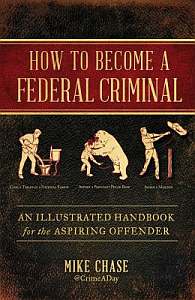
Book Beginning: How to Become a Federal Criminal by Mike Chase

http://www.rosecityreader.com/

Book Beginnings is a weekly meme hosted by Rose City Reader. Share the first sentence (or so) of the book you are reading, along with your initial thoughts about the sentence, impressions of the book, or anything else the opener inspires.

If you're like most Americans, your first experience with the heart-pounding thrill of committing a federal crime came from a little white tag on the end of your mattress.
"Cut me," it dared you. "Tear me off."


I am greatly looking forward to reading this provocatively-titled book. Full title: "How to Become a Federal Criminal: An Illustrated Handbook for the Aspiring Offender". I've been following the author on Twitter - @CrimeADay - and the daily crime tweets have been very entertaining!

01 August 2019

Mrs. 'Arris: Live and Let Live!

Mrs. 'Arris Goes to Parliament
Drawings by Gioia Fiammenghi
Paul Gallico
Garden City, 1965
152 pages


I am continuing my reading of the Mrs. 'Arris series with this, the third of the four books. This time the story is a bit different as our intrepid London char does not visit a foreign country. Her other exploits were in Paris, New York, and Moscow. Instead she gets elected as a Member of Parliament with the help of a coterie of London chauffeurs, some influential friends from the first two books, and a lot of backroom politicking that misfires.


Parliament is a tougher nut to crack than her former adversaries, however.

Flypaper, that's what politics was, Mrs. Harris thought. You'd hardly got one foot clear when the other one was stuck.

Most of the story concerns the politics of a 1950s British parliamentary election. Parts of it were a bit confusing to this American; the titles and committee names and procedures were very different from what we're used to here. But I got the gist of the political machinations. I don't think it's giving away any surprises to say that she does not manage to right the world of 1950s London. But there is a very nice ending as her friends rally to her support.

Once again this is a charming and sweet book where the plot is not particularly realistic, but the characters are wonderful. I love Mrs. 'Arris for her principles, her devotion to her friends, and her belief that she can make things better in the world. A good read for when the world is too much with us.


NOTES

The versions published in the UK have slightly different titles and don't use the abbreviated version of her last name. Actually in the books she is always called Mrs. Harris, but the US publishers saw fit to drop her Hs, as does Mrs. 'Arris herself in her cockney accent. She will forever be Mrs. 'Arris to me, too. Also note that British English does not use a period/full stop after "Mrs" or "Mr".

Mrs. 'Arris Goes to Paris - Flowers for Mrs Harris
Mrs. 'Arris Goes to New York - Mrs Harris Goes to New York
Mrs. 'Arris Goes to Parliament - Mrs Harris MP
Mrs. 'Arris Goes to Moscow -  Mrs Harris Goes to Moscow


My OTHER REVIEWS

"Mrs. 'Arris Goes to Paris"
 https://booktapestry.blogspot.com/2018/12/mrs-arris-paris.html

"Mrs. 'Arris Goes to Moscow"
 https://booktapestry.blogspot.com/2019/01/mrs-arris-moscow.html


13 May 2019

How to Introvert

Introvert Doodles: An Illustrated Look at Introvert Life in an Extrovert World
Maureen "Marzi" Wilson
Adams Media, 2016
unpaged


This is a quirky little cartoon book that is a lot of fun and I even learned something from Marzi. In between introverts and extroverts there are ambiverts, who have attributes of both other types. Cool, 'cause that's me! I enjoy people in limited amounts.


Meet Marzi. She's an introvert who often finds herself in awkward situations. Marzi used to feel strange about her introverted tendencies. Not anymore! Now she knows that there are tons of introverts out there just like her--introverts who enjoy peace and quiet, need time alone to recharge their battery, and who prefer staying in with their pet and a good book to awkward social interactions. -Back Cover

http://IntrovertDoodles.com 

The drawing style is simple. Some cartoons have lots of text; some only a little bit. Some are very funny; some quite sad. And scattered within the frames is plenty of social wisdom.


Marzi has a website IntrovertDoodles, a popular Instagram site @IntrovertDoodles and a Twitter account @IntrovertDoodle. She has also written three other books:
  • "Kind of Coping: An Illustrated Look at Life with Anxiety"
  • "The Introvert Activity Book: Draw It, Make It, Write It (Because You'd Never Say It Out Loud)"
  • "The Little Book of Big Feelings: An Illustrated Exploration of Life's Many Emotions" (Nov. 2019)


28 April 2019

Vonnegut on Wealth Inequality


God Bless You, Mr. Rosewater
Kurt Vonnegut
Dial Press, 1965
275 pages

Another book read for #1965Club. Thanks to Kaggsy and Simon for hosting! I read some Vonnegut back in the 60s and 70s, during and after college, and I remember liking his offbeat vision of the world, especially in light of the large anti-war protests going on then at the University of Wisconsin in Madison. Recently I started thinking about reading more of his novels and was pleased to find one from 1965 for the club reading week.

https://amzn.to/2GK6peb

The story centers around Eliot Rosewater, a very wealthy man, and how he handles the funds of his family's tax-sheltering foundation. There's not much to the plot. The book is more about the various characters in the Rosewater family, past and present, plus the impoverished citizens of Rosewater County, Indiana, which is pretty much owned by the family, lock, stock, and barrel.

Eliot, who may or may not be insane for most of the book, gives a lot of philosophical musings/speeches about wealth in America and the plight of the poor. The whole story is farcical, satiric, a bit slapstick, take your pick of adjectives. I found it overblown and too snarky for my taste, and therefore more tedious than funny. It's not that I don't agree with Eliot, I just don't like the tone.

I think it's terrible the way people don't share things in this country. I think it's a heartless government that will let one baby be born owning a big piece of the country, the way I was born, and let another baby be born without owning anything. The least a government could do, it seems to me, is to divide things up fairly among the babies - Eliot Rosewater, page 121

Fifty-four years after Vonnegut wrote it, the book seems extremely relevant to today's world, where wealth inequality is a hot topic for the country. A publisher should re-issue it with a foreword by some current politician, scholar, or activist.

This is my entry for the Back to the Classics 2019 Challenge, in the Twentieth Century Classic category.

18 February 2019

Village Culture Wars

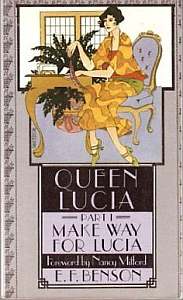
Queen Lucia
E. F. Benson
Harper & Row, 1977
originally published in 1920
318 pages


"Queen Lucia" is the first of six comic novels that E. F. Benson set in village England between the two World Wars. Kirkus Reviews called them "delicious satires of the pretensions and foibles of provincial middle-class life in Britain". The series is sometimes referred to as Mapp and Lucia, after the two main female characters, although Mapp is not in this book and Lucia is not in the third book, "Miss Mapp".

http://www.amazon.com/exec/obidos/ASIN/9781603863629/ref=nosim/webxina/

Lucia's real name is Mrs. Emmeline Lucas. However one of her pretensions is that she can speak Italian, so her friends call her "Lucia, pronounced, of course, in the Italian mode--La Lucia, the wife of Lucas." Conversations with Lucia are always peppered with Italian words and phrases.

Lucia is the cultural queen of her village, Riseholme, and she always takes it upon herself to promote literature, music, and art among her subjects, holding frequent garden parties and musical salons. Tact is not her long suit and she constantly badgers and bullies everyone into doing what she wants.

In this book Olga, a famous singer, buys a home in Riseholme to escape the pressures of London life. She is very sweet and genuinely cultured, quite in contrast to Lucia. Thus a rivalry builds up, in Lucia's mind at least, and farcical cultural wars break out.

Although Benson was a serious English novelist, biographer, memoirist, archaeologist, and short story writer, he is now probably best remembered for the Mapp and Lucia comedies. The writing style befits the story he is telling: bombast, exaggeration, mock horror. One of my favorite lines in it is:
The thought even of good food always calmed Robert's savage breast; it blew upon him as the wind on an Aeolian harp hung in the trees, evoking faint sweet sounds.
At least two "Mapp and Lucia" TV series have been created in the UK, and are sometimes shown on our PBS stations. I saw both Geraldine McEwan and Anna Chancellor as Lucia and enjoyed both series, which is why I bought this book. To be honest, I am not sure I'd like it as much without that background. Yes, Lucia was pushy in the TV version, but the actresses somehow smoothed out her rough spots a bit. Maybe the nasty side of her didn't overwhelm the nicer side in a live performance. She's just not very nice at all in the book, so I am a bit disappointed in it. But the goings on in Riseholme are High Farce and quite funny. I do plan on reading the other five eventually.

This is my entry for the Back to the Classics 2019 Challenge, in the Classic Comedy Book category.


22 January 2019

Mrs. 'Arris Fights the Cold War

Mrs. 'Arris Goes to Moscow
Paul Gallico
Delacorte Press, 1974
214 pages


I re-read the first of the Mrs. 'Arris quartet, "Mrs. 'Arris Goes to Paris" last September, and enjoyed it every bit as much as I had forty-odd years ago. For some reason the book title, author, and plotline had stuck with me all those years. It was probably one of the first books I read that wasn't assigned for school or a classic novel I'd heard about at school. A real grownup's book!

Then last fall I learned via book people online that there were more Mrs. 'Arris books to be had! I do seem to have read them out of order, as this one is the fourth and final one. But you needn't have read any of the others to enjoy this one. Interestingly, there are a couple places where Mrs. 'Arris's previous exploits are briefly mentioned and they have footnotes to the other titles in the series.

http://www.amazon.com/exec/obidos/ASIN/0440059054/ref=nosim/webxina/

Once again the intrepid Mrs. 'Arris, a London char, ventures out into the wider world, dreaming this time of helping a pair of young lovers who have been separated. She wins a vacation trip to Moscow during the height of the Cold War, and the author, Paul Gallico, has a great time with all the prevalent Russian stereotypes of the inept bureaucracy, KGB brutality and ineptness, terrible food, dowdy fashions, etc.

She and her best friend, Mrs. Butterfield, are marched around Moscow by their Intourist guide, visiting all the obligatory sights. And they make rather pointed remarks about the country, the people they meet, and the general feel of the place. Their candid remarks inside Lenin's tomb are down-to-earth, practical, no nonsense cockney, and very funny. Mrs. 'Arris charms everyone she meets, well, except for those relentless KGB guys whom she outwits instead.

This is another light, breezy read that is quite entertaining, just like the story of her trip to Paris. It made for good cozy reading during a long, cold winter weekend. Of course, it is not particularly realistic. But it was fun, especially coming after my slog through 800 pages of Trollope! In the coming months I will seek out her other books when I'm in a funk.

Mrs. 'Arris reminds me of Mrs. Emily Pollifax, protagonist of a series of 14 spy-mystery books by Dorothy Gilman. Mrs. Pollifax, a sixty-ish New Jersey widow, works for the CIA on far flung (and far fetched) missions. She is just as charming and disarming as Mrs. 'Arris, and just as fun to read. I listened to the Pollifax audiobooks, which are very well done.


NOTES

The versions published in the UK have slightly different titles and don't use the abbreviated version of her last name. Actually in the books she is always called Mrs. Harris, but the US publishers saw fit to drop her Hs, as does Mrs. 'Arris herself in her cockney accent. She will forever be Mrs. 'Arris to me, too. Also note that British English does not use a period/full stop after "Mrs" or "Mr".

Mrs. 'Arris Goes to Paris - Flowers for Mrs Harris
Mrs. 'Arris Goes to New York - Mrs Harris Goes to New York
Mrs. 'Arris Goes to Parliament - Mrs Harris MP
Mrs. 'Arris Goes to Moscow -  Mrs Harris Goes to Moscow

01 January 2019

Short Reads Short Reviews #4: Becoming French

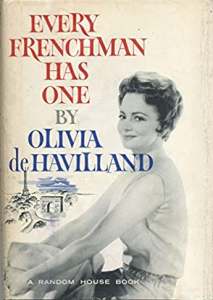
Every Frenchman Has One
Olivia de Havilland
Penguin Random House, 2016
143 pages


This is an amusing little book of short pieces by Olivia de Havilland, the retired actress who won 2 Oscars and many other awards in her long career. On the eve of her 100th birthday, the 1961 book was reissued with a short interview with Miss de Havilland as she turned 100.


She fell in love with a Frenchman and moved to Paris in 1953, where she has remained up to this day. In this book she humorously recounts many incidents that happened to her as she learned to be French. As the publisher's blurb puts it, "her skirmishes with French customs, French maids, French salesladies, French holidays, French law, French doctors, and above all, the French language are here set forth in a delightful and amusing memoir of her early years in the City of Light."

Her style is light and funny, as though she were an old friend telling you of her adventures with as much wit and exaggeration as she could get away with.
Of course the thing that staggers you when you first come to France is the fact that all the French speak French—even the children. Many Americans and Britishers who visit the country never quite adjust to this, and the idea persists that the natives speak the language just to show off or be difficult.
On a long, cold, grey winter day, this would be a perfect pick-me-up accompanied by a cup of something hot, especially if you, like me, have a soft spot in your heart for Paris.

P. S. The secret word is "liver".


22 December 2018

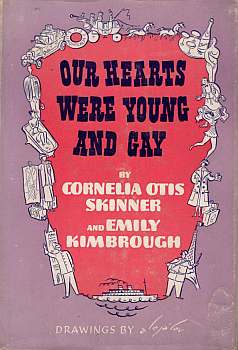
Young and Lighthearted

Our Hearts Were Young and Gay
Cornelia Otis Skinner and Emily Kimbrough
Drawings by AlajĂ¡lov
Dodd, Mead & Co., 1942
247 pages


It's the 1920s, the Roaring Twenties, and in the air is a feeling of novelty and newness, of getting away from the traditions of the past, of relief that World War I is over. Think of jazz, flappers, the Art Deco movement, and expat writers in Paris. With this spirit of modernity, in the early Twenties two women in their early twenties embarked on a summer in England and France, mostly unchaperoned. In this memoir, written nearly 20 years later, Cornelia Skinner and Emily Kimbrough recount their adventures and misadventures during that summer of freedom.


Every thing is new and exciting to them, not just the attentions of the young doctors they meet on the ocean liner but all the sights, sounds, and people in Europe. Written in the first person by Cornelia, this is a light and airy but very entertaining romp through the quaint Old World. I thoroughly enjoyed their little vignettes about France and England a century ago. And the stories about their clothes were quite funny - they never had the right outfits, although they tried hard to look sophisticated and glamorous.

Lots of unnerving things happen to them, some not of their own doing, such as when the ocean liner runs aground before they even leave the St. Lawrence River and they're stuck in Quebec for a week. Cornelia does get seriously ill en route to England, but she pulls through and makes a lively story out of it. Mostly they just get into scrapes because they are so unworldly, but they aren't in real danger except for their dignity.

https://amzn.to/2Lx1zTt

I felt almost as though I had been on a whirlwind mini-vacation with two charming but very young girls, for from the vantage point of nearly a century, they seem amazingly innocent for well-bred college girls. They claim to have first learned about the birds and the bees from exhibits at the Cluny Museum of the Middle Ages in Paris. Times have definitely changed!

The book was made into a motion picture in 1944, and was dramatized by Jean Kerr in 1946, but I haven't seen either of them. The movie publicity pictures I saw online just don't jibe with my mental pictures of Cornelia and Emily and their adventures. And I rather like my own images, so I'll stick to the book. Long ago there was a radio ad for NPR (National Public Radio) where a little boy said he liked radio better than TV because "the pictures are better." I agree!

This is my selection for Travel in the 2018 Back to the Classics Challenge.


25 November 2018

The Unthinkable Mind

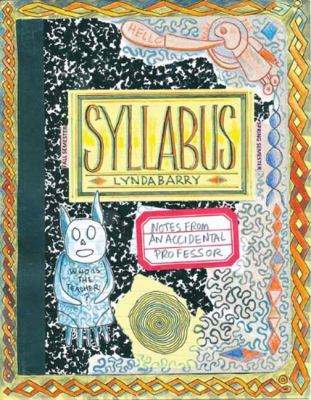
Syllabus: Notes from an Accidental Professor
Lynda Barry
Drawn & Quarterly, 2014
200 pages


It's going to take me a while to digest this book. On my first try, it stymied me. What WAS it? A comic book? A graphic novel? It had colorful but messy, seemingly unrelated pages and sentences, some handwritten, some typed, in many different colors and styles. Confusing sensory overload. I returned it to the library.


http://www.amazon.com/exec/obidos/ASIN/1770461612/ref=nosim/webxina/

Second try. Well, this is about or from a course Lynda Barry taught at the University of Wisconsin at Madison (my alma mater), so it must make some kind of sense. I'll just try reading it page-by-page, word-by-word, image-by-image and see how it goes.

Got it! I think. Maybe thinking too much was the problem. Apparently this is the syllabus from the interdisciplinary course, The Unthinkable Mind, that Barry taught at Madison in spring 2012, when she was named an Interdisciplinary Artist in Residence. She soon became a fellow at the Wisconsin Institute for Discovery, and then an associate professor of interdisciplinary creativity -- thought to be the only joint faculty position in interdisciplinary creativity in the country. Her courses are cross-listed in the departments of Art, Science, and English!

From the Syllabus alone, I can't quite envision this course, but I have found the original description published by UW Madison when it was offered in Spring 2012.

Course Description

Open to both graduate and undergraduate students from all academic disciplines, the focus of this class will be the relationship between the hand, the brain, and spontaneous images, both written and visual. No artistic talent is required to be part of this class, but students should have an active interest in spontaneous memory and ideas, how pictures and stories work, how the brain works, and what the biological function of the thing we call ‘the arts’ may be.

Class time will be used for active studio work, creating projects entirely by hand, evenly divided between writing stories and making pictures. Students will be required to complete a handmade book by the end of the semester and to teach at least one off-campus writing or picture making workshop using the techniques developed in this class.

The book's review in the London (Canada) Free Press by Dan Brown says:
It is not a graphic novel per se, but the cartoon equivalent of free-form jazz; there is a structure, but that structure is just something on which to hang big philosophical questions, such as "If the thing we call 'the arts' has a biological function, what is it?"

Lynda Barry - Self Portrait

Plain words cannot convey the reality of this book or the course. Once I spent time decoding it, absorbing it, immersing myself in it, I was hooked. It's an intense experience, this blending of writing, drawing, and listening, one I want to repeat. My copy of "Syllabus" should arrive soon! This time through I plan on taking the course, or duplicating what I can on my own. I want to do a lot of writing and crafting in the coming months, now that I have closed my online shop. Barry's way of experiencing the world and interacting with colors, pencils, images, and sounds might just help me become more creative and productive. It will certainly be a lot of fun.

Below I am listing quite a few resources that relate to Barry and her books - she has published a lot of them. Do check out the sample "Syllabus" pages posted online by the publisher to get a better idea of what is contained within this amazing book! I highly recommend jumping into Barry's wild and colorful world!


Further Reading


A 9-page PDF excerpt from "Syllabus" provided by the publisher:
https://www.drawnandquarterly.com/sites/default/files/docs/samples/SYLLABUSwebcerpt.pdf

The Tumbler account for her classes:
http://thenearsightedmonkey.tumblr.com/

Her author page at her publisher, with links to many podcasts and videos with Lynda
https://www.drawnandquarterly.com/author/lynda-barry

Brain Pickings article with lots of page images and good analysis:
"Lynda Barry’s Illustrated Field Guide to Keeping a Visual Diary and Cultivating a Capacity for Creative Observation"
https://www.brainpickings.org/2014/12/02/lynda-barry-syllabus-book/

05 June 2018

Immersed in 1930s England

Diary of a Provincial Lady
E. M. Delafield
Harper & Brothers, 1931
388 pages


I have taken 70 years to discover the delights of the Provincial Lady; pray do not make the same mistake! First and foremost, this is a funny book - not uproarious, belly-shaking-laughter kind of funny, but more a gentle-chuckle and wry-smile kind of funny. While looking for a quote to tweet out during the recent mini Persephone Readathon, I had trouble because the Provincial Lady doesn't use one-liners. Her humor is prefaced with paragraphs of setup, most well beyond Twitter's character limits. Funny stories, funny vignettes.

http://www.amazon.com/exec/obidos/ASIN/1521292183/ref=nosim/webxina/

The book purports to be the diary of a country gentlewoman living an upper-middle-class life in 1930s England. This is not beautiful, lilting prose, but short, witty, descriptive phrases and sentences, often reminder notes to herself or philosophical questions to ponder later. Most of these asides are satirical in nature, even quite caustic at times, as she keenly and mercilessly observes her fellow man and herself.

I love that it portrays daily life in a foreign country, even if we Americans don't think of England as being particularly foreign. And I was amazed at how many words, phrases, book titles, and names of people I had to look up to find out what she was talking about! When an older book mentions domestic things like food, famous people, popular songs, and fashions, it can be difficult to follow. Many times a standard college dictionary didn't help, and I spent a lot of time Googling and searching Wikipedia for information. Ever since I was a kid, I've always had to know what every word means in a book. I'm going to create another post with my annotations to this book, so future readers can benefit from my inquisitiveness and research. I have over 70 entries in my notes!

This book proved to be very popular and she wrote 3 more diaries in the Provincial Lady series:

1. "Diary of a Provincial Lady" (1930)
2a. "The Provincial Lady Goes Further" (1932 - second book title in England)
2b. "The Provincial Lady in London" (1933 - second book title in America)
3. "The Provincial Lady in America" (1934)
4. "The Provincial Lady in Wartime" (1940)

There are books with various titles about the Provincial Lady in Russia, but according to a blog review by I Prefer Reading, Delafield wrote that book as herself, not as a diary of the Provincial Lady.

This book was very fun to read. I felt I had spent the weekend in 1930 in England with some close friends.


Further Reading:

Persephone Prize essay contest at Persephone Books
Shortlisted: Charlotte Ford, 'The Provincial Lady's Husband'

... this essay will seek to argue that a) the Provincial Lady’s husband is actually rather lovable; b) his character supports and complements the Provincial Lady’s to their mutual benefit;  and c) the Provincial Lady fully appreciates both a) and b).  It will then Go Further, and argue that Robert is in fact The Perfect Husband.


03 June 2018

Mini Persephone Readathon Wrap Up

https://dwellinpossibilityblog.wordpress.com/

I spent a beautiful Summer weekend reading "Diary of a Provincial Lady" by E. M. Delafield. Happy weather, happy book! Delafield wrote thinly veiled stories of her real life in the British countryside, with a very dry wit and many trenchant observations of British society.

I completed 4 of the Mini Persephone Challenges:

* Photogenic Persephones: Share a photo of your Persephone collection and/or your readathon book

http://www.amazon.com/exec/obidos/ASIN/1521292183/ref=nosim/webxina/

Not the Persephone edition, but the best cover I found for "Diary of a Provincial Lady". It combines several Arthur Watts' illustrations from the 1st edition and colors them in.

* In Six Words: Describe your current Persephone read in 6 words

witty family life 1930s British village

* Quote This: Share a quote from your current read

(Query here becomes unavoidable: Does not a misplaced optimism exist, common to all mankind, leading on to false conviction that social engagements, if dated sufficiently far ahead, will never really materialise?)

The Provincial Lady is SO quotable, I'm giving you another:
(Query: Does motherhood lead to cynicism? This contrary to every convention of art, literature, or morality, but cannot altogether escape conviction that answer may be in the affirmative.)

* Persephone Pairings: Share a recipe/drink/snack that you think would pair well with a specific Persephone title
    tea and gingernuts (gingersnaps in the US)

This mini readathon was fun! I enjoyed my concentrated reading time spent in 1930s England and the interesting Tweets about everyone else's Persephone books. Thanks Jessie for setting it up. I'll review the book officially soon.


23 January 2018

Back to the Classics 2018: A children's classic

The Brownies: Their Book
Palmer Cox
Dover, 1964 reprint of the 1887 original

Brownies? Who doesn't love brownies? I was a Brownie, then a Girl Scout. I've made brownies for dessert. I used to take pictures with a Brownie camera. And I remember seeing drawings of little fairy-type creatures called Brownies many decades ago, but never a book about them. So it seemed like a great idea to read "The Brownies: Their Book" for the Back to the Classics Challenge.

http://www.amazon.com/exec/obidos/ASIN/0486212653/ref=nosim/webxina/

Brownies are small creatures who hide in the woods by day and venture forth on adventures at night. Mostly they are out to have fun, but they occasionally do good deeds for humans. They try ice skating, canoeing, bicycling, singing, and visiting a circus. They harvest a sick farmer's crops, and spin an old woman's wool into yarn.

Each adventure runs about 4 or 5 pages with illustrations on nearly every page, sometimes taking up most of the page. The stories are all done in verse as rhyming couplets, which seems appropriate for reading to small children. But at 144 pages, it was very monotonous for me, reading silently to myself; best done in small doses.

For me the real charm of the Brownies lies in the illustrations, also created by Palmer Cox. I often spent more time studying them than reading the poems! He must have been a very patient man, as most illustrations depict in great detail dozens of little Brownies having fun. And I began to notice that while most of them are generic, I could spot 6 or 7 individual Brownies who show up again and again. I even have a favorite, with top hat, a monocle, and cane.


Although technically I did fulfill the challenge to read a children's book that was more than 50 years old, it seems like cheating because it was poetry and not prose. So, I'm going to read another children's book for good measure.