At the beginning of the year I joined the Back to the Classics 2019 challenge hosted by Karen at her BooksAndChocolate blog: Read 12 books from the twelve given categories in 2019.
Now here's my wrapup post for the challenge. I've completed 7 parts of the challenge, reading and reviewing books for 7 categories, so I have earned 1 entry to the prize drawing. Karen, you can contact me at DuchessMaude [at] gmail [dot] com .
I enjoyed doing this as it gave me some structure to the rather vague notion of "reading more classic books". I don't think there will be another one next year, which is sad. But I have signed up for the 2020 Mount TBR Challenge and there are plenty of Classic Novels on my shelves.
Books read with links to my reviews:
1. 19th Century Classic.
"Northanger Abbey", Jane Austen (1817)
http://booktapestry.blogspot.com/2019/12/northanger.html
2. 20th Century Classic.
"God Bless You, Mr. Rosewater", Kurt Vonnegut (1965)
http://booktapestry.blogspot.com/2019/04/god-bless-you-mr.html
3. Classic by a Female Author.
"Lolly Willowes", Sylvia Townsend Warner (1926)
http://booktapestry.blogspot.com/2019/03/lolly-willowes.html
4. Classic in Translation.
"Grand Hotel", Vicki Braun (1929)
http://booktapestry.blogspot.com/2019/02/1929-berlin.html
5. Classic Comedy.
"Queen Lucia", E.F. Benson (1929)
http://booktapestry.blogspot.com/2019/02/village-culture-wars.html
8. Classic Novella.
"Adrift on the Nile", Naguib Mahfouz (1966)
http://booktapestry.blogspot.com/2019/03/in-blue-haze.html
10. Classic From Africa, Asia, or Oceania.
"A Cat, a Man, and Two Women", Jun'ichiro Tanizaki (1936)
http://booktapestry.blogspot.com/2019/08/cat-fights.html
Showing posts with label Back to the Classics 2019. Show all posts
Showing posts with label Back to the Classics 2019. Show all posts
29 December 2019

11 December 2019
A Gothic Bath Visit
Northanger Abbey
Jane Austen
Penguin, 1995 (originally published 1817)
231 pages
I think this is my first Jane Austen novel! Hard to believe, I know, but it just never came up; not in high school and not as a chemistry major in college. This was the first novel written by Austen, apparently around 1799, although it wasn't published until after her death in 1817.
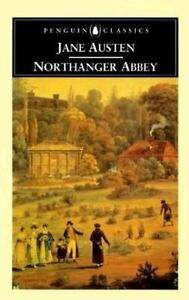
"Northanger Abbey" is divided into two nearly equal parts, 98 &103 pages. In part 1 our heroine, Catherine, is introduced as a sweet, unworldly girl from a country village who is introduced to high society in Bath, England, sometime during the early part of the Regency period, which lasted from 1790 to 1820. Fashionistas from all over England travelled to Bath to see and be seen, in addition to drinking the famous curative waters. We follow Catherine as she takes in the scene and meets some new friends.
In part 2 Catherine visits some people she has met in Bath, Eleanor and Henry Tilney, at their father's estate in Gloucestershire, Northanger Abbey. Having read numerous gothic romance novels, popular in the late 1700s, Catherine lets her imagination run away with her at the abbey. Creepy sounds, dark passageways, seemingly odd events, a dead wife, all bring her terror, sleepless nights, and misery. Never fear, there is a happy ending!
I was not fond of this book. I know it's satire and things are overblown on purpose, but it was a bit boring. I did not like the writing style, either; it seemed a bit too coy. Austen herself lived in Bath from 1801 to 1806 and her contemporary account of what Bath was like during the Regency Period was very enjoyable, though. I knew that people visited the Pump Room to drink the waters, and that there were festive gatherings, but I didn't understand how it all worked before reading this.
This is my entry for the Back to the Classics 2019 Challenge, in the Nineteenth Century Classic category.
FURTHER READING
Jane Austen's World
"This Jane Austen blog brings Jane Austen, her novels, and the Regency Period alive through food, dress, social customs, and other 19th C. historical details related to this topic."
https://janeaustensworld.wordpress.com/tag/regency-bath/
Jane Austen
Penguin, 1995 (originally published 1817)
231 pages
I think this is my first Jane Austen novel! Hard to believe, I know, but it just never came up; not in high school and not as a chemistry major in college. This was the first novel written by Austen, apparently around 1799, although it wasn't published until after her death in 1817.
"Northanger Abbey" is divided into two nearly equal parts, 98 &103 pages. In part 1 our heroine, Catherine, is introduced as a sweet, unworldly girl from a country village who is introduced to high society in Bath, England, sometime during the early part of the Regency period, which lasted from 1790 to 1820. Fashionistas from all over England travelled to Bath to see and be seen, in addition to drinking the famous curative waters. We follow Catherine as she takes in the scene and meets some new friends.
In part 2 Catherine visits some people she has met in Bath, Eleanor and Henry Tilney, at their father's estate in Gloucestershire, Northanger Abbey. Having read numerous gothic romance novels, popular in the late 1700s, Catherine lets her imagination run away with her at the abbey. Creepy sounds, dark passageways, seemingly odd events, a dead wife, all bring her terror, sleepless nights, and misery. Never fear, there is a happy ending!
I was not fond of this book. I know it's satire and things are overblown on purpose, but it was a bit boring. I did not like the writing style, either; it seemed a bit too coy. Austen herself lived in Bath from 1801 to 1806 and her contemporary account of what Bath was like during the Regency Period was very enjoyable, though. I knew that people visited the Pump Room to drink the waters, and that there were festive gatherings, but I didn't understand how it all worked before reading this.
This is my entry for the Back to the Classics 2019 Challenge, in the Nineteenth Century Classic category.
FURTHER READING
Jane Austen's World
"This Jane Austen blog brings Jane Austen, her novels, and the Regency Period alive through food, dress, social customs, and other 19th C. historical details related to this topic."
https://janeaustensworld.wordpress.com/tag/regency-bath/
05 August 2019
Cat Fights
A Cat, a Man, and Two Women
Jun'ichiro Tanizaki
Kodansha International, 1990, translation by Paul McCarthy
Japanese original "Neko to Shozo to futari no onna", and other stories
164 pages
Mr. Tanizaki is a new author to me, although the end flap biography says that most Japanese readers would name him as the best Japanese writer of the 20th century. Apparently the stories in this small volume are different from his novels, as they are playful and lighthearted.
The book contains 3 stories, a novella called "A Cat, a Man, and Two Women" (1936), and two short stories, "The Little Kingdom" (1918) and "Professor Rado" (1923, 1928). All three were first published in magazines in Japan and went untranslated until this book appeared in 1990.

In "The Cat" story, three female characters are vying for the attentions of the man, Shozo: ex-wife Shinako, current wife Fukuko, and a cat named Lily. Shozo is lazy, spoiled, and self-indulgent. His main passion seems to be for the cat. The two wives and his mother push him around all the time. Shozo just bumbles around and gets into arguments with all three women. They are all working class Japanese, just ordinary people.
Shinako is vindictive; she's been divorced and thrown out so he could marry a younger woman who has a bit of money. That younger woman, Fukuko, is rather flighty and runs home to daddy for days at a time to get more money and spend it. Meanwhile the fight over who gets the cat is sort of a proxy battle for Shozo.
The tone is a gentle comedy, and the author has great sympathy for these common people, and for the cat. The preface by the translator mentions that Tanizaki was a great cat-lover, and the depiction of Lily bears witness to that love. It was a fun story, although the people are rather pathetic in the end.
"The Little Kingdom" concerns a provincial school teacher and his family, suffering from poverty and illness. The main plot revolves around a power struggle between the teacher and one of his young pupils.
"Professor Rado" is a very odd tale about a journalist who pursues a pompous professor named Rado, relentlessly asking him questions to which the main answers are merely grunts. At the end, the journalist uncovers the professor's secret obsessions, which are a bit kinky.
I enjoyed these stories a lot, especially the one about Lily, the cat. It's one of those books I must have read about somewhere online, requested from the library, and then wonder how I ended up with such an odd little book. The power of the book bloggers, I guess!
This is my entry for the Back to the Classics 2019 Challenge, in the Classic From Africa, Asia, or Oceania category.
Jun'ichiro Tanizaki
Kodansha International, 1990, translation by Paul McCarthy
Japanese original "Neko to Shozo to futari no onna", and other stories
164 pages
Mr. Tanizaki is a new author to me, although the end flap biography says that most Japanese readers would name him as the best Japanese writer of the 20th century. Apparently the stories in this small volume are different from his novels, as they are playful and lighthearted.
The book contains 3 stories, a novella called "A Cat, a Man, and Two Women" (1936), and two short stories, "The Little Kingdom" (1918) and "Professor Rado" (1923, 1928). All three were first published in magazines in Japan and went untranslated until this book appeared in 1990.
In "The Cat" story, three female characters are vying for the attentions of the man, Shozo: ex-wife Shinako, current wife Fukuko, and a cat named Lily. Shozo is lazy, spoiled, and self-indulgent. His main passion seems to be for the cat. The two wives and his mother push him around all the time. Shozo just bumbles around and gets into arguments with all three women. They are all working class Japanese, just ordinary people.
Shinako is vindictive; she's been divorced and thrown out so he could marry a younger woman who has a bit of money. That younger woman, Fukuko, is rather flighty and runs home to daddy for days at a time to get more money and spend it. Meanwhile the fight over who gets the cat is sort of a proxy battle for Shozo.
The tone is a gentle comedy, and the author has great sympathy for these common people, and for the cat. The preface by the translator mentions that Tanizaki was a great cat-lover, and the depiction of Lily bears witness to that love. It was a fun story, although the people are rather pathetic in the end.
"The Little Kingdom" concerns a provincial school teacher and his family, suffering from poverty and illness. The main plot revolves around a power struggle between the teacher and one of his young pupils.
"Professor Rado" is a very odd tale about a journalist who pursues a pompous professor named Rado, relentlessly asking him questions to which the main answers are merely grunts. At the end, the journalist uncovers the professor's secret obsessions, which are a bit kinky.
I enjoyed these stories a lot, especially the one about Lily, the cat. It's one of those books I must have read about somewhere online, requested from the library, and then wonder how I ended up with such an odd little book. The power of the book bloggers, I guess!
This is my entry for the Back to the Classics 2019 Challenge, in the Classic From Africa, Asia, or Oceania category.
28 April 2019
Vonnegut on Wealth Inequality

God Bless You, Mr. Rosewater
Kurt Vonnegut
Dial Press, 1965
275 pages
Another book read for #1965Club. Thanks to Kaggsy and Simon for hosting! I read some Vonnegut back in the 60s and 70s, during and after college, and I remember liking his offbeat vision of the world, especially in light of the large anti-war protests going on then at the University of Wisconsin in Madison. Recently I started thinking about reading more of his novels and was pleased to find one from 1965 for the club reading week.

The story centers around Eliot Rosewater, a very wealthy man, and how he handles the funds of his family's tax-sheltering foundation. There's not much to the plot. The book is more about the various characters in the Rosewater family, past and present, plus the impoverished citizens of Rosewater County, Indiana, which is pretty much owned by the family, lock, stock, and barrel.
Eliot, who may or may not be insane for most of the book, gives a lot of philosophical musings/speeches about wealth in America and the plight of the poor. The whole story is farcical, satiric, a bit slapstick, take your pick of adjectives. I found it overblown and too snarky for my taste, and therefore more tedious than funny. It's not that I don't agree with Eliot, I just don't like the tone.
I think it's terrible the way people don't share things in this country. I think it's a heartless government that will let one baby be born owning a big piece of the country, the way I was born, and let another baby be born without owning anything. The least a government could do, it seems to me, is to divide things up fairly among the babies - Eliot Rosewater, page 121
Fifty-four years after Vonnegut wrote it, the book seems extremely relevant to today's world, where wealth inequality is a hot topic for the country. A publisher should re-issue it with a foreword by some current politician, scholar, or activist.
This is my entry for the Back to the Classics 2019 Challenge, in the Twentieth Century Classic category.
16 March 2019
A Single Woman's Dilemma
Lolly Willowes, or the Loving Huntsman
Sylvia Townsend Warner
Grosset & Dunlap, 1926
252 pages
Often when I pick a book from my TBR list I wonder how it got there. However this time I can say with certainty that I first heard about "Lolly Willowes" from Scott at the Furrowed Middlebrow book blog. When someone states that this is their favorite novel of all time, someone who shares my taste for novels from the 1920s-1950s and has 2,000+ books in his database, I think it behooves me to read that book!
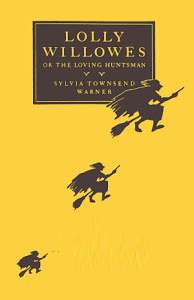
"Lolly Willowes" was British author Sylvia Townsend Warner's first novel, and it was an immediate success both in England and America. It even became the inaugural selection of the Book of the Month Club in April 1926.
As the story opens, Laura Willowes is moving in with her brother and his family in London after the death of their father in 1902. She is 28 and has lived in their rural family home her whole life, enjoying nature and country life, uninterested in marriage. For the next 20 years she is Aunt Lolly (her niece couldn't pronounce "Laura" properly and it stuck) who helps raise her nieces in London. Then out of nowhere she decides to move by herself to a tiny village called Great Mop, where she is free to be herself, unconstrained by narrow societal norms for single women.
At that point the story takes a turn away from being a nice, conventional tale. Curious events begin to happen: Strange music in the wee hours. Lots of people out walking very late at night. Nothing particularly sinister, just odd things. Laura accepts the villager's easy explanations and happily continues her new life on her own terms.
Then one day her nephew moves to Great Mop and she feels all the old obligations begin to fall on her again. So she makes a pact with Satan and declares herself a witch. The devil in question appears as an older country woodsman, quite civilized, no fire and brimstone. Laura and he have several philosophical chats. Nothing very witch-like happens; she's not like the Wicked Witch of the West from the "Wizard of Oz". She's happy. End of story.

Normally I don't like to give so much away, but I thought that one would need a basic plot outline to understand any comments about the story itself. Don't worry, there's really a lot more to the novel that I haven't touched on here.
After I read the book I wasn't quite sure what to make of it. I enjoyed the story immensely but what was it about? That abrupt turn to the devil was done very calmly. In fact, when she first declares this, I laughed out loud at the absurdity of it! I wondered if she was suffering from delusions or hallucinations. And is she truly free or does she just have a nicer man in charge who leaves her on her own? Looking for some guidance, I found much online analysis of the book, probably due to its reissue by the New York Review Books in 1999 and by Virago Modern Classics in 2012.
In the reviews there are various discussions about a satire of Britain in the 1920s, proto-feminism, under-the-radar lesbian themes, and the "surplus women" problem in England between the wars. To me that was all too vague and theoretical. I simply enjoyed the story of an independent-minded woman who breaks away from society to do her own thing. I did see a suggestion somewhere of a tinge of Magical Realism, and I think that might be an apt way to describe the last section in Great Mop. especially when she's chatting with Satan on a hillside.
Scott's review at Furrowed Middlebrow is one of the best at teasing out possible meanings, some of them contradictory, without imposing any particular Correct Meaning. Of course his whole blog is worthy of your time if you are interested in his specialty: lesser-known British, Irish, & American women writers 1910-1960.
There is a lot to think about in this story, and I can understand why bloggers talk about reading "Lolly Willowes" over and over again, gaining new perspective on it as they grow older. I am going to need to reread it myself to see what I may have missed this time.
Another virtue of the book that I must mention is the lush prose of Townsend Warner! She creates the most extraordinary similes and metaphors. My book has many fluttering flags marking special passages.
Thank you Scott for suggesting an excellent novel! I highly recommend it, too. This is my entry for the Back to the Classics 2019 Challenge, in the Classic by a Woman category.
Further Reading
"Hen Wives, Spinsters, and Lolly Willowes"
A very interesting article from the blog Myth & Moor, "a Dartmoor studio on folklore, fairy tales, fantasy, mythic arts & mythic living"
https://www.terriwindling.com/blog/2018/04/sylvia-townsend-warner.html
"Sylvia Townsend Warner: the neglected writer"
An excellent long article by the contemporary writer, Sarah Waters
https://www.theguardian.com/books/2012/mar/02/sylvia-townsend-warner
The Sylvia Townsend Warner Society
http://www.townsendwarner.com/
Sylvia Townsend Warner
Grosset & Dunlap, 1926
252 pages
Often when I pick a book from my TBR list I wonder how it got there. However this time I can say with certainty that I first heard about "Lolly Willowes" from Scott at the Furrowed Middlebrow book blog. When someone states that this is their favorite novel of all time, someone who shares my taste for novels from the 1920s-1950s and has 2,000+ books in his database, I think it behooves me to read that book!
"Lolly Willowes" was British author Sylvia Townsend Warner's first novel, and it was an immediate success both in England and America. It even became the inaugural selection of the Book of the Month Club in April 1926.
As the story opens, Laura Willowes is moving in with her brother and his family in London after the death of their father in 1902. She is 28 and has lived in their rural family home her whole life, enjoying nature and country life, uninterested in marriage. For the next 20 years she is Aunt Lolly (her niece couldn't pronounce "Laura" properly and it stuck) who helps raise her nieces in London. Then out of nowhere she decides to move by herself to a tiny village called Great Mop, where she is free to be herself, unconstrained by narrow societal norms for single women.
At that point the story takes a turn away from being a nice, conventional tale. Curious events begin to happen: Strange music in the wee hours. Lots of people out walking very late at night. Nothing particularly sinister, just odd things. Laura accepts the villager's easy explanations and happily continues her new life on her own terms.
Then one day her nephew moves to Great Mop and she feels all the old obligations begin to fall on her again. So she makes a pact with Satan and declares herself a witch. The devil in question appears as an older country woodsman, quite civilized, no fire and brimstone. Laura and he have several philosophical chats. Nothing very witch-like happens; she's not like the Wicked Witch of the West from the "Wizard of Oz". She's happy. End of story.
Normally I don't like to give so much away, but I thought that one would need a basic plot outline to understand any comments about the story itself. Don't worry, there's really a lot more to the novel that I haven't touched on here.
After I read the book I wasn't quite sure what to make of it. I enjoyed the story immensely but what was it about? That abrupt turn to the devil was done very calmly. In fact, when she first declares this, I laughed out loud at the absurdity of it! I wondered if she was suffering from delusions or hallucinations. And is she truly free or does she just have a nicer man in charge who leaves her on her own? Looking for some guidance, I found much online analysis of the book, probably due to its reissue by the New York Review Books in 1999 and by Virago Modern Classics in 2012.
In the reviews there are various discussions about a satire of Britain in the 1920s, proto-feminism, under-the-radar lesbian themes, and the "surplus women" problem in England between the wars. To me that was all too vague and theoretical. I simply enjoyed the story of an independent-minded woman who breaks away from society to do her own thing. I did see a suggestion somewhere of a tinge of Magical Realism, and I think that might be an apt way to describe the last section in Great Mop. especially when she's chatting with Satan on a hillside.
Scott's review at Furrowed Middlebrow is one of the best at teasing out possible meanings, some of them contradictory, without imposing any particular Correct Meaning. Of course his whole blog is worthy of your time if you are interested in his specialty: lesser-known British, Irish, & American women writers 1910-1960.
There is a lot to think about in this story, and I can understand why bloggers talk about reading "Lolly Willowes" over and over again, gaining new perspective on it as they grow older. I am going to need to reread it myself to see what I may have missed this time.
Another virtue of the book that I must mention is the lush prose of Townsend Warner! She creates the most extraordinary similes and metaphors. My book has many fluttering flags marking special passages.
Lolly was in a small shop, half florist and half greengrocer, with shelves full of "jars of home-made jam and bottled fruits. It was as though the remnants of summer had come into the little shop for shelter."
When Lolly announces her decision to move to Great Mop, her brother is furious and he argues with her. Then he stops and turns his head away. [Titus is her nephew.] "For some time Titus's attempts at speech had hovered above the tumult, like one holy appeasing dove loosed after the other. The last dove was luckier. It settled on Laura."
Lolly spends an unhappy afternoon sitting in a field and the daylight begins to fade. "The long afternoon was ebbing away, stealthily, impassively, as though it were dying under an anaesthetic."
Thank you Scott for suggesting an excellent novel! I highly recommend it, too. This is my entry for the Back to the Classics 2019 Challenge, in the Classic by a Woman category.
Further Reading
"Hen Wives, Spinsters, and Lolly Willowes"
A very interesting article from the blog Myth & Moor, "a Dartmoor studio on folklore, fairy tales, fantasy, mythic arts & mythic living"
https://www.terriwindling.com/blog/2018/04/sylvia-townsend-warner.html
"Sylvia Townsend Warner: the neglected writer"
An excellent long article by the contemporary writer, Sarah Waters
https://www.theguardian.com/books/2012/mar/02/sylvia-townsend-warner
The Sylvia Townsend Warner Society
http://www.townsendwarner.com/
01 March 2019
In a Blue Haze
Adrift on the Nile
Naguib Mahfouz
Anchor, 1994
Arabic original pub. 1966
176 pages
I picked up this slight book for only $1 at a used book sale somewhere. Mahfouz is a Nobel Prize winner and I've wanted to read some of his work, so it seemed like a perfect chance to dip a toe into modern Egyptian fiction. And at least one reviewer wrote that it was a good introduction to Mahfouz.
Very little actually happens until the closing chapters. The bulk of the book consists of a group of thirtysomething friends in Cairo sitting around a water pipe smoking a mixture of tobacco and kif (marijuana). The friends have long conversations, some coherent some not, about politics, the meaning of life, the absurd, and their lives in 1960s Egypt.

The main character is Anis, who rents the houseboat on the Nile where they convene every night for their smoking, talking, flirting, and philosophizing. He is always under the influence of the kif, even at his boring government office job, and we see a lot of the story through his narcotic daze. It's a stream-of-consciousness or rather stream-of-stoned-consciousness style that can get confusing because the narration switches from that back to the omniscient narrator. Much of his internal dialogue drops hints that he is well-read in classical literature and mythology. He even hallucinates a whale, which might be Moby Dick. At the end an incident happens which leads to the breakup of the group. As the book ends, Anis is drifting off into his own hazy world once again.
I was quite surprised by this book. I wasn't expecting something so absurdist and full of druggies talking nonsense. It sort of gave me a flashback to the late 60s in the US; I knew people who did the identical thing in college, minus the water pipe and the houseboat. Reading it got a bit tedious after a while; luckily it's short. But it was enlightening that people so far away were simultaneously having the same sort of reactions to the world as college students in the US. Since so much of the book is dialogue, I could see this staged as a play, with soliloquies on the side by Anis, ala Shakespeare.
One surprising fact I learned: they have evergreen trees in Cairo! I guess I thought they only had palm trees.
Mahfouz has written in many different styles and formats, with much of it translated into English. Will I read more Mahfouz? Yes. I also scored a book of his short stories for $1, and I plan on reading that one. As for his many novels, I will have to do some research in the reviews and find one that sounds appealing.
I enjoy reading books in translation because you usually get different perspectives on things. Although sometimes you are surprised and find more similarities than you imagined. This is my entry for the Back to the Classics 2019 Challenge, in the Classic Novella category.
Naguib Mahfouz
Anchor, 1994
Arabic original pub. 1966
176 pages
I picked up this slight book for only $1 at a used book sale somewhere. Mahfouz is a Nobel Prize winner and I've wanted to read some of his work, so it seemed like a perfect chance to dip a toe into modern Egyptian fiction. And at least one reviewer wrote that it was a good introduction to Mahfouz.
Very little actually happens until the closing chapters. The bulk of the book consists of a group of thirtysomething friends in Cairo sitting around a water pipe smoking a mixture of tobacco and kif (marijuana). The friends have long conversations, some coherent some not, about politics, the meaning of life, the absurd, and their lives in 1960s Egypt.
The main character is Anis, who rents the houseboat on the Nile where they convene every night for their smoking, talking, flirting, and philosophizing. He is always under the influence of the kif, even at his boring government office job, and we see a lot of the story through his narcotic daze. It's a stream-of-consciousness or rather stream-of-stoned-consciousness style that can get confusing because the narration switches from that back to the omniscient narrator. Much of his internal dialogue drops hints that he is well-read in classical literature and mythology. He even hallucinates a whale, which might be Moby Dick. At the end an incident happens which leads to the breakup of the group. As the book ends, Anis is drifting off into his own hazy world once again.
I was quite surprised by this book. I wasn't expecting something so absurdist and full of druggies talking nonsense. It sort of gave me a flashback to the late 60s in the US; I knew people who did the identical thing in college, minus the water pipe and the houseboat. Reading it got a bit tedious after a while; luckily it's short. But it was enlightening that people so far away were simultaneously having the same sort of reactions to the world as college students in the US. Since so much of the book is dialogue, I could see this staged as a play, with soliloquies on the side by Anis, ala Shakespeare.
One surprising fact I learned: they have evergreen trees in Cairo! I guess I thought they only had palm trees.
Mahfouz has written in many different styles and formats, with much of it translated into English. Will I read more Mahfouz? Yes. I also scored a book of his short stories for $1, and I plan on reading that one. As for his many novels, I will have to do some research in the reviews and find one that sounds appealing.
I enjoy reading books in translation because you usually get different perspectives on things. Although sometimes you are surprised and find more similarities than you imagined. This is my entry for the Back to the Classics 2019 Challenge, in the Classic Novella category.
21 February 2019
A Slice of Life in 1929 Berlin
Grand Hotel
Vicki Baum
New York Review of Books, 2016
originally pub. 1929
270 pages
The novel "Grand Hotel" was a best-seller in its original 1929 German version and the American film version won an Oscar for Best Film of 1933. Recently the New York Review of Books has returned it to print as part of their Classics series.
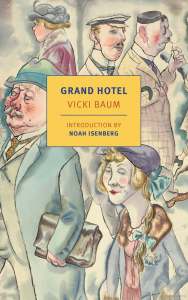
The setting is Berlin after the Great War and just before the Great Depression. In the Grand Hotel, Berlin's fanciest and most expensive place to stay, we discover the stories of some of the guests passing through. A famous ballerina at the end of her career, a badly maimed and despondent veteran, two factory employees from a small town - a bullying manager and his underling who is dying from an unnamed medical condition, a glamorous Baron, a young woman trying to make her way in the world. They meet and mingle, group and regroup for excursions into the city, and tell each other stories from their lives.
Between the omniscient narrator and the conversations we overhear, each of the characters comes to life. It's not a very long book, but somehow Ms. Baum lets us know the essence of each of them, their fears and desires, their good and bad sides. I though she described the characters so well that I knew them and sympathized with them.
The hotel staff are also minor characters, attending to the guests, and assuring that the Grand Hotel is kept functioning smoothly. Berlin itself is almost a character, as its modern attractions and strong nightlife are woven into the stories.
"Grand Hotel" was one of the first works of art to use the conceit of a hotel as a framework for the stories of the people passing through it. In the 90 years since its publication, there have been many films, books, and plays with this structure. The hotel guests come for a while and then move on as others take their place. The motif of the big revolving door in the front lobby emphasizes this ceaseless flow of people. We learn their stories and then they pass out. There is no conclusion, no tying up of loose ends.

The Oscar-winning movie is perhaps better known that the book. It was packed with stars: Greta Garbo, John and Lionel Barrymore, Joan Crawford, and Wallace Beery. This the movie where Garbo, as the exhausted ballerina, utters the line that followed her ever after: "I want to be alone." A Fun Fact according to Wikipedia: "To date, it is the only film to have won the Academy Award for Best Picture without being nominated in any other category."
I recommend reading the book, whether or not you see or have seen the movie. The writing is excellent, as is the translation. The guests of the Grand Hotel are going to stay with me for a long time.
This is my entry for the Back to the Classics 2019 Challenge, in the Classic in Translation category.
Further Reading
Wikipedia entry on the film, which includes a link to a short trailer
https://en.wikipedia.org/wiki/Grand_Hotel_%281932_film%29
Vicki Baum
New York Review of Books, 2016
originally pub. 1929
270 pages
The novel "Grand Hotel" was a best-seller in its original 1929 German version and the American film version won an Oscar for Best Film of 1933. Recently the New York Review of Books has returned it to print as part of their Classics series.
The setting is Berlin after the Great War and just before the Great Depression. In the Grand Hotel, Berlin's fanciest and most expensive place to stay, we discover the stories of some of the guests passing through. A famous ballerina at the end of her career, a badly maimed and despondent veteran, two factory employees from a small town - a bullying manager and his underling who is dying from an unnamed medical condition, a glamorous Baron, a young woman trying to make her way in the world. They meet and mingle, group and regroup for excursions into the city, and tell each other stories from their lives.
Between the omniscient narrator and the conversations we overhear, each of the characters comes to life. It's not a very long book, but somehow Ms. Baum lets us know the essence of each of them, their fears and desires, their good and bad sides. I though she described the characters so well that I knew them and sympathized with them.
The hotel staff are also minor characters, attending to the guests, and assuring that the Grand Hotel is kept functioning smoothly. Berlin itself is almost a character, as its modern attractions and strong nightlife are woven into the stories.
"Grand Hotel" was one of the first works of art to use the conceit of a hotel as a framework for the stories of the people passing through it. In the 90 years since its publication, there have been many films, books, and plays with this structure. The hotel guests come for a while and then move on as others take their place. The motif of the big revolving door in the front lobby emphasizes this ceaseless flow of people. We learn their stories and then they pass out. There is no conclusion, no tying up of loose ends.
The Oscar-winning movie is perhaps better known that the book. It was packed with stars: Greta Garbo, John and Lionel Barrymore, Joan Crawford, and Wallace Beery. This the movie where Garbo, as the exhausted ballerina, utters the line that followed her ever after: "I want to be alone." A Fun Fact according to Wikipedia: "To date, it is the only film to have won the Academy Award for Best Picture without being nominated in any other category."
I recommend reading the book, whether or not you see or have seen the movie. The writing is excellent, as is the translation. The guests of the Grand Hotel are going to stay with me for a long time.
This is my entry for the Back to the Classics 2019 Challenge, in the Classic in Translation category.
Further Reading
Wikipedia entry on the film, which includes a link to a short trailer
https://en.wikipedia.org/wiki/Grand_Hotel_%281932_film%29
18 February 2019
Village Culture Wars
Queen Lucia
E. F. Benson
Harper & Row, 1977
originally published in 1920
318 pages
"Queen Lucia" is the first of six comic novels that E. F. Benson set in village England between the two World Wars. Kirkus Reviews called them "delicious satires of the pretensions and foibles of provincial middle-class life in Britain". The series is sometimes referred to as Mapp and Lucia, after the two main female characters, although Mapp is not in this book and Lucia is not in the third book, "Miss Mapp".
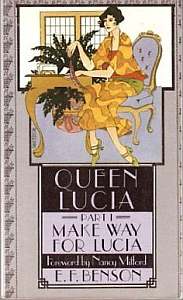
Lucia's real name is Mrs. Emmeline Lucas. However one of her pretensions is that she can speak Italian, so her friends call her "Lucia, pronounced, of course, in the Italian mode--La Lucia, the wife of Lucas." Conversations with Lucia are always peppered with Italian words and phrases.
Lucia is the cultural queen of her village, Riseholme, and she always takes it upon herself to promote literature, music, and art among her subjects, holding frequent garden parties and musical salons. Tact is not her long suit and she constantly badgers and bullies everyone into doing what she wants.
In this book Olga, a famous singer, buys a home in Riseholme to escape the pressures of London life. She is very sweet and genuinely cultured, quite in contrast to Lucia. Thus a rivalry builds up, in Lucia's mind at least, and farcical cultural wars break out.
Although Benson was a serious English novelist, biographer, memoirist, archaeologist, and short story writer, he is now probably best remembered for the Mapp and Lucia comedies. The writing style befits the story he is telling: bombast, exaggeration, mock horror. One of my favorite lines in it is:
This is my entry for the Back to the Classics 2019 Challenge, in the Classic Comedy Book category.
E. F. Benson
Harper & Row, 1977
originally published in 1920
318 pages
"Queen Lucia" is the first of six comic novels that E. F. Benson set in village England between the two World Wars. Kirkus Reviews called them "delicious satires of the pretensions and foibles of provincial middle-class life in Britain". The series is sometimes referred to as Mapp and Lucia, after the two main female characters, although Mapp is not in this book and Lucia is not in the third book, "Miss Mapp".
Lucia's real name is Mrs. Emmeline Lucas. However one of her pretensions is that she can speak Italian, so her friends call her "Lucia, pronounced, of course, in the Italian mode--La Lucia, the wife of Lucas." Conversations with Lucia are always peppered with Italian words and phrases.
Lucia is the cultural queen of her village, Riseholme, and she always takes it upon herself to promote literature, music, and art among her subjects, holding frequent garden parties and musical salons. Tact is not her long suit and she constantly badgers and bullies everyone into doing what she wants.
In this book Olga, a famous singer, buys a home in Riseholme to escape the pressures of London life. She is very sweet and genuinely cultured, quite in contrast to Lucia. Thus a rivalry builds up, in Lucia's mind at least, and farcical cultural wars break out.
Although Benson was a serious English novelist, biographer, memoirist, archaeologist, and short story writer, he is now probably best remembered for the Mapp and Lucia comedies. The writing style befits the story he is telling: bombast, exaggeration, mock horror. One of my favorite lines in it is:
The thought even of good food always calmed Robert's savage breast; it blew upon him as the wind on an Aeolian harp hung in the trees, evoking faint sweet sounds.At least two "Mapp and Lucia" TV series have been created in the UK, and are sometimes shown on our PBS stations. I saw both Geraldine McEwan and Anna Chancellor as Lucia and enjoyed both series, which is why I bought this book. To be honest, I am not sure I'd like it as much without that background. Yes, Lucia was pushy in the TV version, but the actresses somehow smoothed out her rough spots a bit. Maybe the nasty side of her didn't overwhelm the nicer side in a live performance. She's just not very nice at all in the book, so I am a bit disappointed in it. But the goings on in Riseholme are High Farce and quite funny. I do plan on reading the other five eventually.
This is my entry for the Back to the Classics 2019 Challenge, in the Classic Comedy Book category.
01 January 2019
Back to the Classics 2019 Challenge
Last year I discovered that reading challenges were being organized online and immediately joined the Back to the Classics 2018 Challenge hosted by Karen at her KarensBooksAndChocolate blog. And I did it: I read and reviewed one book in each of her 12 categories! My Wrapup post just made the December 31st deadline.
And challenging myself to read with categories to meet and a goal in mind was really fun! Somehow having a vague idea that I wanted to "read more classic books" wasn't getting translated into Finished Books. Thus I am jumping right back into the 2019 Back to the Classics Challenge.
Read 1 book from each of the 12 given categories in 2019, review them online, and link back to Karen's blog. I'm going to list my picks and some alternates now. However you are allowed to change them around or read entirely different books, as long as you straighten it all out by year's end. These are all residents of my newly constructed bookshelves, so I plan on sticking to the list and reducing my TBR lists somewhat.
Here goes!
1. 19th Century Classic
Little Women, Louisa May Alcott (1868-69)
2. 20th Century Classic
Bachelor's Bounty, Grace S Richmond (1932)
Grand Hotel, Vicki Baum (1929)
3. Classic by a Female Author
Bachelor's Bounty, Grace S Richmond (1932)
The Glimpses of the Moon, Edith Wharton (1922)
4. Classic in Translation
Grand Hotel, Vicki Baum (1929)
5. Classic Comedy
Queen Lucia, E. F. Benson (1920)
6. Classic Tragedy
Ethan Frome, Edith Wharton (1911)
7. Very Long Classic. Any classic single work 500 pages or longer, not including introductions or end notes.
The Portrait of a Lady, Henry James (1881)
Innocents Abroad, Mark twain (1869)
8. Classic Novella. Any work of narrative fiction shorter than 250 pages.
Dubliners, James Joyce (1914)
Miguel Street, V.S. Naipaul (1959)
9. Classic From the Americas (includes the Caribbean). Includes classic set in either continent or the Caribbean, or by an author originally from one of those countries.
The Bridge of San Luis Rey, Thorton Wilder (1927)
Miguel Street, V.S. Naipaul (1959)
10. Classic From Africa, Asia, or Oceania (includes Australia). Any classic set in one of those contents or islands, or by an author from these countries.
Peony, Pearl S. Buck (1948)
11. Classic From a Place You've Lived. Read locally!
A Sand County Almanac, Aldo Leopold (1949)
12. Classic Play. Any play written or performed at least 50 years ago. Plays are eligible for this category only.
Four Major Plays, Henrik Ibsen
A Doll's House (1879)
The Wild Duck (1884)
Hedda Gabler (1890)
The Master Builder (1892)
Subscribe to:
Posts (Atom)
-
 Book Beginnings is a weekly meme hosted by Rose City Reader . We share the first sentence (or so) of the book we are reading, along with o...
 -
 Every Frenchman Has One Olivia de Havilland Penguin Random House, 2016 143 pages This is an amusing little book of short pieces by Olivia de...
 -
 Red Pottage Mary Cholmondeley Amazon Digital Services, 2012 originally published by Edward Arnold, 1899 252 pages in the paperback versi...