Showing posts with label Translation. Show all posts

08 May 2020

Book Beginning: Enemies, A Love Story by Isaac Bashevis Singer

Book Beginnings is a weekly meme hosted by Rose City Reader. We share the first sentence (or so) of the book we are reading, along with our initial thoughts about the sentence, impressions of the book, or anything else the opener inspires.

Herman Broder turned over and opened one eye. In his dreamy state, he wondered whether he was in America, in Tzivkev, or in a German camp.


Isaac Bashevis Singer always wrote in Yiddish and won the Nobel Prize in Literature in 1978. That's all I really know about him. I was a bit skittish about reading his work, fearing it would be about the Holocaust and too dark. But this is described as humorous, so I'm hoping for the best. It's my #6 for the Classics Club Spin #23.


21 April 2020

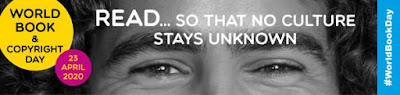
World Book Day 2020

https://www.un.org/en/observances/book-and-copyright-day


Are you ready for World Book Day? It will be upon us this Thursday, 23 April 2020. This special day was officially proclaimed in 1995 by UNESCO, The United Nations Educational, Scientific and Cultural Organization, and is celebrated by over 100 countries on that day.

According to the UNESCO web page, the full name is World Book and Copyright Day, and many festivities are planned all around the world. In addition, a World Book Capital is named each year, and that city promotes literacy throughout the year until April 23rd of the next year. Kuala Lumpur, Malaysia, is the World Book Capital for 2020.

23 April is a symbolic date for world literature. It is on this date in 1616 that Cervantes, Shakespeare and Inca Garcilaso de la Vega all died. It is also the date of birth or death of other prominent authors, such as Maurice Druon, Halldór K. Laxness, Vladimir Nabokov, Josep Pla and Manuel Mejía Vallejo.
- UN web page

I'm all for promoting books, reading, and literacy; they have always been a big part of my life. What makes me especially happy is that Amazon.com is celebrating by offering 9 Kindle books for free! And remember that free Kindle reader apps are available for most devices!

The categories of the nine free ebooks are: Contemporary Fiction, Thriller, True Crime, Chinese Literature, Romantic Comedy, Biographical Fiction, Historical Fiction, Children's Book, and Memoir. The books have all been translated into English, and come from a wide variety of languages. In addition many are by authors who are prize winners or best sellers in their native countries. Such a good chance to peek into another culture.

But hurry, these books are only free until 11:59 PM [Pacific Daylight Time] on Friday night. The time remaining is shown at the top of the download page, so check it in your local time zone. Here's the page on Amazon.com to get your free ebooks:

https://www.amazon.com/article/read-the-world-2020


FURTHER READING

* UN: World Book and Copyright Day 23 April
https://www.un.org/en/observances/book-and-copyright-day

* UNESCO: World Book Day
https://en.unesco.org/commemorations/worldbookday

* World Book Day - a British site for their day, 7 March 2019
https://www.worldbookday.com/


03 April 2020

Book Beginning: Season of Migration to the North by Tayeb Salih


Book Beginnings is a weekly meme hosted by Rose City Reader. We share the first sentence (or so) of the book we are reading, along with our initial thoughts about the sentence, impressions of the book, or anything else the opener inspires.

It was, gentlemen, after a long absence - seven years to be exact, during which time I was studying in Europe - that I returned to my people. I learnt much and much passed me by - but that's another story. The important thing is that I returned with a great yearning for my people in that small village at he bend of the Nile.


 This book is another of my great finds in the clearance section of my local used bookstore. I had not heard of the author before, but the influential literary critic Edward W. Said proclaimed this novel to be "among the six finest novels to be written in modern Arabic literature". It also fits into my plan to read more translated literature. I'm looking forward to this short novel!

05 August 2019

Cat Fights

A Cat, a Man, and Two Women
Jun'ichiro Tanizaki
Kodansha International, 1990, translation by Paul McCarthy
Japanese original "Neko to Shozo to futari no onna", and other stories
164 pages


Mr. Tanizaki is a new author to me, although the end flap biography says that most Japanese readers would name him as the best Japanese writer of the 20th century. Apparently the stories in this small volume are different from his novels, as they are playful and lighthearted.

The book contains 3 stories, a novella called "A Cat, a Man, and Two Women" (1936), and two short stories, "The Little Kingdom" (1918) and "Professor Rado" (1923, 1928). All three were first published in magazines in Japan and went untranslated until this book appeared in 1990.

http://www.amazon.com/exec/obidos/ASIN/1911547038/ref=nosim/webxina/

In "The Cat" story, three female characters are vying for the attentions of the man, Shozo: ex-wife Shinako, current wife Fukuko, and a cat named Lily. Shozo is lazy, spoiled, and self-indulgent. His main passion seems to be for the cat. The two wives and his mother push him around all the time. Shozo just bumbles around and gets into arguments with all three women. They are all working class Japanese, just ordinary people.

Shinako is vindictive; she's been divorced and thrown out so he could marry a younger woman who has a bit of money. That younger woman, Fukuko, is rather flighty and runs home to daddy for days at a time to get more money and spend it. Meanwhile the fight over who gets the cat is sort of a proxy battle for Shozo.

The tone is a gentle comedy, and the author has great sympathy for these common people, and for the cat. The preface by the translator mentions that Tanizaki was a great cat-lover, and the depiction of Lily bears witness to that love. It was a fun story, although the people are rather pathetic in the end.

"The Little Kingdom" concerns a provincial school teacher and his family, suffering from poverty and illness. The main plot revolves around a power struggle between the teacher and one of his young pupils.

"Professor Rado" is a very odd tale about a journalist who pursues a pompous professor named Rado, relentlessly asking him questions to which the main answers are merely grunts. At the end, the journalist uncovers the professor's secret obsessions, which are a bit kinky.

I enjoyed these stories a lot, especially the one about Lily, the cat. It's one of those books I must have read about somewhere online, requested from the library, and then wonder how I ended up with such an odd little book. The power of the book bloggers, I guess!

This is my entry for the Back to the Classics 2019 Challenge, in the Classic From Africa, Asia, or Oceania category.


27 April 2019

#1965 Club: A Classic Police Procedural Novel

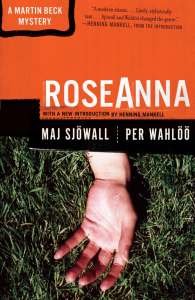
Roseanna: a Martin Beck Mystery
Maj Sjöwall and Per Wahlöö
Pantheon Books, 1967 translation by Lois Roth
Swedish original "Roseanna: roman om ett brott", 1965
212 pp.


Mysteries have never been at the top of my reading list. I do like the Chief Inspector Armand Gamache series by Canadian author Louise Penny, and when I'm not in the mood for more serious Literature, I have a few cozy mystery series on tap. (Hello, Amelia Peabody!) I think the common thread here is that I like mysteries without a lot of blood and gore, graphic violence, serial killers, or misogynistic violence.

But I needed books for the #1965Club and quickly. So I followed the hashtag and found a few blogs with lists of books published in 1965. One review that caught my eye was for a Swedish police procedural called "Roseanna". As it didn't seem too bloody or dark, I got the Kindle version and plunged into 1960s Sweden.

https://amzn.to/2W7OgNX

I really enjoyed this story. The main character is First Detective Inspector Martin Beck of the Swedish National Police, Homicide Bureau. He seems like a very ordinary person, although "There were people who thought that he was the country's most capable examining officer." As such he was called out to a small town where dredging of the navigation channel near the locks had scooped up a naked female body.


The emphasis is on the police procedures as they attempt to solve the murder of the unknown woman, which eventually takes them over six months, all in a rather short book. The language is quite plain, without long passages of description. Conversations between the policemen often consist of short phrases or single words, a very realistic depiction of co-workers communicating. The inevitable government bureaucracy gets in the way. The story is about determined, even obsessed policemen working a difficult case, no heroes in sight. This is most assuredly not an action novel!

Ten books - Ten letters in the character's name

"Roseanna" is the first of 10 Martin Beck mysteries by Sjöwall and Wahlöö, often considered the "godparents of Nordic Noir". The series has greatly influenced writers in Sweden and around the world, especially for police procedural mysteries. Check out the web sites below for more information about the authors and Nordic Noir.


Further Reading

"The couple who invented Nordic Noir"
Maj Sjöwall and her late partner paved the way for Stieg Larsson and Jo Nesbø. Jake Kerridge meets her
https://www.telegraph.co.uk/culture/books/authorinterviews/11741385/The-couple-who-invented-Nordic-Noir.html


"The queen of crime"
When Maj Sjöwall and her partner Per Wahlöö started writing the Martin Beck detective series in Sweden in the 60s, they little realised that it would change the way we think about policemen for ever
https://www.theguardian.com/books/2009/nov/22/crime-thriller-maj-sjowall-sweden


"Nordic Noir: Consider this home base for all things Scandinavian crime fiction."
http://crimebythebook.com/expert-witness-nordicnoir

01 March 2019

In a Blue Haze

Adrift on the Nile
Naguib Mahfouz
Anchor, 1994
Arabic original pub. 1966
176 pages


I picked up this slight book for only $1 at a used book sale somewhere. Mahfouz is a Nobel Prize winner and I've wanted to read some of his work, so it seemed like a perfect chance to dip a toe into modern Egyptian fiction. And at least one reviewer wrote that it was a good introduction to Mahfouz.

Very little actually happens until the closing chapters. The bulk of the book consists of a group of thirtysomething friends in Cairo sitting around a water pipe smoking a mixture of tobacco and kif (marijuana). The friends have long conversations, some coherent some not, about politics, the meaning of life, the absurd, and their lives in 1960s Egypt.

http://www.amazon.com/exec/obidos/ASIN/9780385423335/ref=nosim/webxina/

The main character is Anis, who rents the houseboat on the Nile where they convene every night for their smoking, talking, flirting, and philosophizing. He is always under the influence of the kif, even at his boring government office job, and we see a lot of the story through his narcotic daze. It's a stream-of-consciousness or rather stream-of-stoned-consciousness style that can get confusing because the narration switches from that back to the omniscient narrator. Much of his internal dialogue drops hints that he is well-read in classical literature and mythology. He even hallucinates a whale, which might be Moby Dick. At the end an incident happens which leads to the breakup of the group. As the book ends, Anis is drifting off into his own hazy world once again.

I was quite surprised by this book. I wasn't expecting something so absurdist and full of druggies talking nonsense. It sort of gave me a flashback to the late 60s in the US; I knew people who did the identical thing in college, minus the water pipe and the houseboat. Reading it got a bit tedious after a while; luckily it's short. But it was enlightening that people so far away were simultaneously having the same sort of reactions to the world as college students in the US. Since so much of the book is dialogue, I could see this staged as a play, with soliloquies on the side by Anis, ala Shakespeare.

One surprising fact I learned: they have evergreen trees in Cairo! I guess I thought they only had palm trees.

Mahfouz has written in many different styles and formats, with much of it translated into English. Will I read more Mahfouz? Yes. I also scored a book of his short stories for $1, and I plan on reading that one.  As for his many novels, I will have to do some research in the reviews and find one that sounds appealing.

I enjoy reading books in translation because you usually get different perspectives on things. Although sometimes you are surprised and find more similarities than you imagined. This is my entry for the Back to the Classics 2019 Challenge, in the Classic Novella category.


27 February 2019

One Night in a Thousand

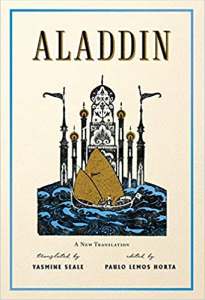
Aladdin: A New Translation
Yasmine Seale
Liveright Publishing, 2019
118 pages


Most of us probably think that we know the story of Aladdin and the magic lamp, which has long been a staple of children's storybooks. Had I seen "Aladdin" propped up on a shelf at a bookstore or my library, I'd have thought "oh, that charming story from my childhood" and passed right on by. But luckily I read a Publishers Weekly interview with Yasmine Seale, the woman who has newly translated the story, and was intrigued.

http://www.amazon.com/exec/obidos/ASIN/163149516X/ref=nosim/webxina/

"Aladdin" is a short fairytale novella, readable as a long winter afternoon's escape. There is more to the tale than I recalled, and it's set in China not the Middle East. Good things happen and bad, there's a poor boy named Aladdin, an evil magician, a magic lamp with a jinni, and a beautiful princess who cleverly saves the day. The translation's prose flows nicely and I enjoyed reading "Aladdin".

There is a fascinating introduction by Paulo Lemos Horta, a scholar of world literature and cross-cultural collaborations. How the story of Aladdin was included in the original French collection "The Arabian Nights" is nearly as interesting as the story itself. "Aladdin" is a fun read and I recommend it for the fairytale lover in each of us!


Further Reading

Yasmine Seale Has Retranslated "Aladdin"
https://www.publishersweekly.com/pw/by-topic/authors/profiles/article/78382-yasmin-seale-has-retranslated-aladdin.html


21 February 2019

A Slice of Life in 1929 Berlin

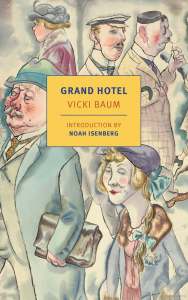
Grand Hotel
Vicki Baum
New York Review of Books, 2016
originally pub. 1929
270 pages


The novel "Grand Hotel" was a best-seller in its original 1929 German version and the American film version won an Oscar for Best Film of 1933. Recently the New York Review of Books has returned it to print as part of their Classics series.

http://www.amazon.com/exec/obidos/ASIN/1590179676/ref=nosim/webxina/

The setting is Berlin after the Great War and just before the Great Depression. In the Grand Hotel, Berlin's fanciest and most expensive place to stay, we discover the stories of some of the guests passing through. A famous ballerina at the end of her career, a badly maimed and despondent veteran, two factory employees from a small town - a bullying manager and his underling who is dying from an unnamed medical condition, a glamorous Baron, a young woman trying to make her way in the world. They meet and mingle, group and regroup for excursions into the city, and tell each other stories from their lives.

Between the omniscient narrator and the conversations we overhear, each of the characters comes to life. It's not a very long book, but somehow Ms. Baum lets us know the essence of each of them, their fears and desires, their good and bad sides. I though she described the characters so well that I knew them and sympathized with them.

The hotel staff are also minor characters, attending to the guests, and assuring that the Grand Hotel is kept functioning smoothly. Berlin itself is almost a character, as its modern attractions and strong nightlife are woven into the stories.

"Grand Hotel" was one of the first works of art to use the conceit of a hotel as a framework for the stories of the people passing through it. In the 90 years since its publication, there have been many films, books, and plays with this structure. The hotel guests come for a while and then move on as others take their place. The motif of the big revolving door in the front lobby emphasizes this ceaseless flow of people. We learn their stories and then they pass out. There is no conclusion, no tying up of loose ends.


The Oscar-winning movie is perhaps better known that the book. It was packed with stars: Greta Garbo, John and Lionel Barrymore, Joan Crawford, and Wallace Beery. This the movie where Garbo, as the exhausted ballerina, utters the line that followed her ever after: "I want to be alone."  A Fun Fact according to Wikipedia: "To date, it is the only film to have won the Academy Award for Best Picture without being nominated in any other category."

I recommend reading the book, whether or not you see or have seen the movie. The writing is excellent, as is the translation. The guests of the Grand Hotel are going to stay with me for a long time.

This is my entry for the Back to the Classics 2019 Challenge, in the Classic in Translation category.


Further Reading

Wikipedia entry on the film, which includes a link to a short trailer
https://en.wikipedia.org/wiki/Grand_Hotel_%281932_film%29


14 January 2019

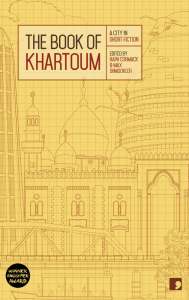
Stories of Khartoum

The Book of Khartoum: a City in Short Fiction
Raph Cormack & Max Shmookler, editors
Comma Press, 2016
72 pages


Somewhere on a book blog I saw a reference to this book, a slim volume of short stories circling about the city of Khartoum, capital of Sudan. I've been trying to read more literature in translation, and I don't think I've read anything from North Africa, so I requested this from the library.

http://www.amazon.com/exec/obidos/ASIN/1905583729/ref=nosim/webxina/  

Khartoum, according to one theory, takes its name from the Beja word hartooma, meaning ‘meeting place’. Geographically, culturally and historically, the Sudanese capital is certainly that: a meeting place of the Blue and White Niles, a confluence of Arabic and African histories, and a destination point for countless refugees displaced by Sudan’s long, troubled history of forced migration.
The Book of Khartoum provides an intimate tour of this city through the eyes of 10 of its best authors, representing a wide array of literary schools and political stances; from the social realism of old Communist stalwarts, to the fantastical abstraction of a new generation of Sudanese writers.
-- Comma Press

Some of the stories are interesting tales of life in this African city today, while others are very experimental and hard to really understand. My favorite of the 10 stories is "The Tank" by Ahmed al-Malik. In it the narrator buys a used tank from a middleman he meets at a wedding. The reactions to the tank are telling of the society he lives in.  His friends and neighbors are suspicious and stay away from him. The tradesman he deals with suddenly give him much better goods and services.

I also enjoyed "Next Eid" by Bawadir Bashir. In it Uthman is a young man from a small village who studies at a big university in Khartoum. Every Eid holiday he takes many gifts home for his family and friends. There he is considered a wonderful and talented big shot, called Sir Doctor Uthman. Afterwards he returns to his shabby dorm, his studies, and the night job that lets him support his family. A small, moving portrait.

According to the introduction, some of the stories depend on nuances of Arabic or playing with Arabic rhyming schemes. I am glad I read this little book, but it does demonstrate that literature in translation can be tricky to understand out of its context.


FURTHER READING

The publisher, Comma Press of Manchester, England, has a series called "Reading the City: Celebrating the best short stories from cities in the UK and from around the world." They are a bit hard to find, but I would like to read a few more. The series thus far:

The Book of Birmingham (UK)
The Book of Cairo (Egypt)
The Book of Dhaka (Bangladesh)
The Book of Gaza (Palestine)
The Book of Havana (Cuba)
The Book of Istanbul (Turkey)
The Book of Khartoum (Sudan)
The Book of Leeds (UK)
The Book of Riga (Latvia)
The Book of Rio (Brazil)
The Book of Tbilisi (Georgia)
The Book of Tehran (Iran)
The Book of Tokyo (Japan)


05 November 2018

Just Say No to Pap

The Little Prince
Antoine de Saint Exupéry
Harbrace, 1943 translation by Katherine Woods
French original "Le Petit Prince" 1943
113 pp.


My first Classics Club Spin book was "The Little Prince", scheduled to be read during August and reported on soon after. I am awfully late and it's not only my move that stopped me. I have dreaded writing this review and dragged my feet because... I hated this book. There, I've written it. What a relief.

And it seems that I am not alone. There is a thread at Goodreads entitled "Am I the only one who hates this book?"

Oh, it does have those cute, whimsical drawings that weren't too cloying, I suppose. And it was short, thankfully. But beyond that, there was nothing that I liked even a little. To me it reeked of heavy-handed moralizing and it was wimpy to boot. Maybe it was better in the world of 1943 when it was written, and World War II was in full swing. I only finished it because it was my Club Spin book.

I'm sure that saying such things will gain me criticism along the line that I just don't understand because I am grown up, like the book says. Alas, I fear trying to answer this charge is like answering the old question "Have you stopped beating your wife?" There is no answer. However, in my defense I will just say that I love all things AA Milne, "Olivia", "Little House on the Prairie", and the children's poems in "Silver Pennies".

Onward and upward to far, far better books! "Tale of Two Cities" anyone?

23 June 2018

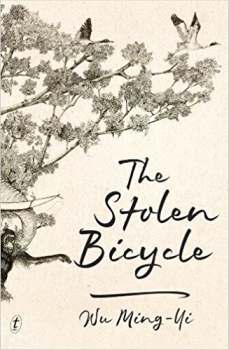
The Stolen Bicycle

The Stolen Bicycle
Wu Ming-Yi
The Text Publishing Company, 2017 translation by Darryl Sterk
Mandarin Chinese original published 2015
376 pages


I'm afraid this is going to be a bit of an HIBK review - Had I But Known that the plot was so heavy with Taiwanese World War II history, I probably wouldn't have read it. I liked the beginning but about half way through I got bored and restless. As someone who feels compelled to complete every book once started, I soldiered on (pun intended) and finished it.

http://www.amazon.com/exec/obidos/ASIN/1911231154/ref=nosim/webxina/

The publisher's summary:
A writer embarks on an epic quest in search of his missing father’s stolen bicycle and soon finds himself caught up in the strangely intertwined stories of Lin Wang, the oldest elephant who ever lived, the soldiers who fought in the jungles of South-East Asia during the Second World War and the secret worlds of the butterfly handicraft makers and antique bicycle fanatics of Taiwan.

Award-winning novelist Wu Ming-Yi is also an artist, designer, photographer, literary professor, butterfly scholar, environmental activist, traveller and blogger, and is widely considered the leading writer of his generation in his native Taiwan.

All the professional reviews I read praised it highly. It was longlisted for the 2018 Man Booker International Prize and won many prizes and honors in the author's native Taiwan. I somehow always feel that I should enjoy prize-winning novels, but I know that is an unrealistic expectation. Novels are many and divers, as are the tastes of the readers.

What I enjoyed was the information about the butterfly art, the elephants, and some of the bicycle details. In a history lesson, I learned that China gave up Taiwan to the Japanese after losing the First Sino-Japanese War in 1895. Japan ruled the island until 1945 and the end of WWII.

What I did not enjoy was all the detail about the fighting in the jungles on the mainland and the excessive Taiwanese bicycle lore. There are lots of characters as the story wanders back and forth in time and space, which I found a bit confusing. This is another book that needs a character chart and/or a set of family trees to keep it all straight. I think it is especially difficult when the names are not familiar ones from your own culture, but that could be just me.

The writing, or I should say the translation was easy to read, but I had two issues with it. First, it's a sloppy translation. I found numerous places where a word was left out that needed to be there, often part of a verb, sometimes just a random word. There are also instances of non-native sounding English. The translator is a native English speaker who has lived in Taiwan for a long time, and maybe that was the problem. However some editor or proofreader at the Australian publisher should have flagged the missing words and the odd syntax before publication. I also thought there were too many side stories which could have been shortened or eliminated altogether without harming the central story. Besides adding to the confusion, they made the book longer than it needed to be.

In the end, it's only so-so in my opinion. I just checked at Goodreads and found others had similar feelings about this book, but then again many loved it and praised its lyrical quality. I guess you will have to read it yourself for a definitive answer!


02 April 2018

Speed Review: Mr. Summer's Story

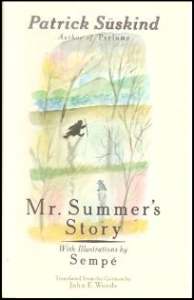
Mr. Summer's Story
Patrick Süskind
Knopf, 1993 translation by John E. Woods
German original "Die Geschichte von Herrn Sommer", 1991
116 pages

[Note to self: writing this review will NOT take longer than reading this short novella, 2 hours.]

I came upon "Mr. Summer's Story" in a roundabout way: in 2014 someone posted its entire 335-word opening sentence in a comment to a blog post, which I happened upon last week. That sentence piqued my interest and I ordered the book from my library.

http://www.amazon.com/exec/obidos/ASIN/0679419950/ref=nosim/webxina/

This slim story - tale, allegory, fable - is a reminiscence told by a man about some incidents that happened to him when he was a little boy in a tiny rural village. He talks about his life at home, at school, and at the mean piano teacher's house, as well as his adventures with bikes and trees.

In the village lives a strange local man known only as Mr. Summer, who wanders the village and the countryside all day everyday, in weather good or bad. No one knows why, nor cares to find out. Several times over the years, the little boy briefly crosses paths with Mr. Summer. At the end, Mr. Summer disappears from the village. And that's basically the whole story. But as in all good tales, there are clues to partially piece together Mr. Summer's story, and the reasons that the narrator remembers him all these years later.

Patrick Süskind has penned a very charming tale, accompanied by pretty watercolor illustrations from Jean-Jaques Sempé, in a small gift-book format. In addition to the wonderful opening sentence, the book is nicely written, with good touches of small boy logic. And it leaves one with things to ponder, all of which I appreciated on yet another cold, wet, grey, pseudo-spring day.

18 March 2018

Back to the Classics 2018: A classic with a single-word title

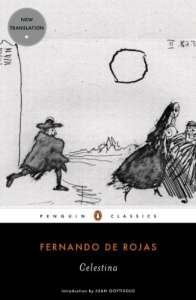
Celestina
Fernando de Rojas
Penguin, 2009, translation by Peter Bush
Spanish original "Tragicomedia de Calisto y Melibea", 1499
219 pages

"Celestina", also known as the "Tragicomedy of Calisto and Melibea" or "The Spanish Bawd", is quite a book. Still in print after 519 years, it trails a small army of students, critics, and professors of Spanish literature in its wake, producing piles of scholarly articles and books! This translation by Peter Bush is in easily-read modern English.


http://www.amazon.com/exec/obidos/ASIN/9780143106098/ref=nosim/webxina/

 http://www.amazon.com/exec/obidos/ASIN/9780143106098/ref=nosim/webxina/ 

An engaging tale of lust and love, the story is funny, bawdy, and crude. Calisto is a wealthy young man who falls violently in love with a chaste maiden, Melibea, after meeting her once. The plot is about his attempts to woo her using the local bawd (madam, pimp, procuress) and possible witch, Celestina. Calisto's servants are always mocking him behind his back, when they aren't with some of Celestina's girls. Most of the characters are rogues and scoundrels, yet they keep invoking God's name and praying. Basically the book is a parody of the Courtly Love found in the popular romances of the day, but with a tragic ending instead of the typical weddings of the romances.

I read this book more for its historical importance than for the quality of story itself. I'm taking an online course about "Don Quixote" by Miguel Cervantes, written one hundred years after "Celestina". In the course readings and lectures, "Celestina" has been mentioned frequently. Plus many lists of "100 best novels" include it, so I thought I should check it out.

http://www.spanisharts.com/books/literature/ampliaciones/celval14.htm

Its unique, wholly original feature is that the entire book is written in dialogue. There is no narrator to set the scene or explain the action, which can make it tricky to keep straight who's talking. However the translator has added some narrative phrases here and there, such as "suggested Celestina" or "Sempronio grunted to himself", and this does help keep the reader on track.

Some call "Celestina" the first European novel, considered second in importance only to Don Quixote in Spanish literary heritage. I discovered that the word "celestina" is even listed in the Spanish dictionary as a "go-between" or "procuress", proving the lasting effect the book has had on Spanish culture over the centuries. In 1904 Pablo Picasso painted this portrait called "Celestina":


There is a long article about the book online at the LA Times website, written by one of the all-time great Spanish authors, Juan Goytisolo, who also wrote the introduction to the book I read.
"Celebrating the 500th Anniversary of Spanish Literature's Most Audacious and Subversive Work", Juan Goytisolo, 1999.

I enjoyed "Celestina" and found parts of it quite funny.

10 February 2018

Back to the Classics 2018: A Classic in Translation

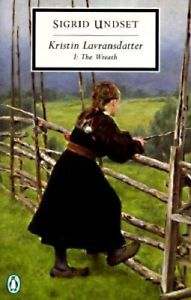
Kristin Lavransdatter, part 1 The Wreath
Sigrid Undset
Penguin, 1997 translation by Tiina Nunnally
Norwegian original "Kransen", 1920
297 pages

If you hated "Kristin Lavransdatter" when forced to read it in school, put off by all that archaic English, there is Good News! This stalwart classic has been reborn in easily readable English, translated by Tiina Nunnally, an award-winning translator from Seattle, Washington.

In an interview in the Seattle Times, Nunnally says of Undset "She was writing in a 1920s Norwegian — beautiful, straightforward language." And thus this translation is in beautiful, straightforward modern English.

http://www.amazon.com/exec/obidos/ASIN/0141180412/ref=nosim/webxina/

http://www.amazon.com/exec/obidos/ASIN/0141180412/ref=nosim/webxina/

Kristin Lavransdatter is a young girl in Norway in the early 1300s. The publisher's blurb on the back cover sums up the plot nicely:

"...The Wreath chronicles the courtship of a headstrong and passionate young woman and a dangerously charming and impetuous man. Undset re-creates the historical backdrop in vivid detail, immersing readers in the day-to-day life, social conventions, and political undercurrents of the period".

I thoroughly enjoyed the book and found the story engaging enough that I plan on reading the other books in the trilogy, "The Wife" and "The Cross". The story of Kristin Lavransdatter and Erlend Nikulaussøn is timeless and I can imagine it being set in many times and places, much as the play "Romeo and Juliet" is sometimes set in other eras. Sure, their beliefs, laws, and wedding customs might be different from those in the modern western world, but the human tale is enduring. Sometimes young people do make bad life choices, but how they deal with the consequences speaks to their character.

I also liked learning about life in the Middle Ages in rural Norway. Nothing is made to seem quaint or archaic; there is no condescension from a modern point of view. All is perfectly reasonable within the customs of the time. Undset must have been an observant nature lover, for her descriptions of the Norwegian countryside are quite vivid and detailed.

The Nobel Prize in Literature 1928 was awarded to Undset "principally for her powerful descriptions of Northern life during the Middle Ages", according to the Nobel Prize's web page.
"Sigrid Undset - Facts"
http://www.nobelprize.org/nobel_prizes/literature/laureates/1928/undset-facts.html

The publisher of this translation, Penguin, has a short reader's guide for the trilogy online:
Kristin Lavransdatter Reader’s Guide
https://www.penguinrandomhouse.com/books/297272/kristin-lavransdatter-by-sigrid-undset/9780143039167/readers-guide/

For anyone interested in the process of literature translation, the above-mentioned Seattle Times article about Nunnally is quite interesting. The interview is by Mary Ann Gwinn, who is featured in the Bookmarks segment of PBS's “Well Read: A Series for the Serious Reader” and is herself a Pulitzer Prize winning journalist.
Finding the Right Words
An award-winning Seattle translator gives voice to writers from other lands
https://web.archive.org/web/20010911125850/http://seattletimes.nwsource.com/pacificnw/2001/0909/people.html

All in all, a satisfying read for me, one which I'd recommend!