Showing posts with label Back to the Classics 2018. Show all posts
31 December 2018
Wrapup: Back to the Classics 2018 Challenge
At the beginning of the year I joined the Back to the Classics 2018 challenge hosted by Karen at her BooksAndChocolate blog: Read 12 books from the twelve given categories in 2018. I had been trying to read more classics, so this was a perfect way to start off my new year!
Now here's my wrapup post for the challenge. I've completed the full challenge, reading and reviewing one book per category, so I have earned 3 entries to the prize drawing. Karen, you can contact me at DuchessMaude [at] gmail [dot] com .
I enjoyed doing this as it gave me some structure to the rather vague notion of "reading more classic books". And it was so much fun that I am entering the 2019 version!
Books read with links to my reviews:
1. A 19th century classic
Red Pottage, Mary Cholmondeley (1899)
2. A 20th century classic
Excellent Women, Barbara Pym (1952)
3. A classic by a woman author
I Capture the Castle, Dodie Smith (1948)
4. A classic in translation
Kristin Lavransdatter, Sigrid Undset (1920)
5. A children's classic
The Brownies: Their Book, Palmer Cox (1887).
6. A classic crime story, fiction or non-fiction
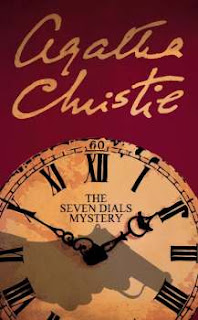
The Seven Dials Mystery, Agatha Christie (1929)
7. A classic travel or journey narrative, fiction or non-fiction
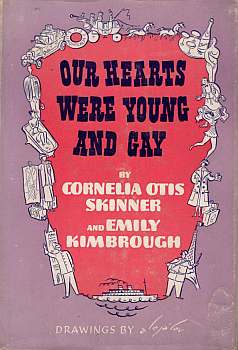
Our Hearts Were Young and Gay, Cornelia Otis Skinner and Emily Kimbrough (1942)
8. A classic with a single-word title
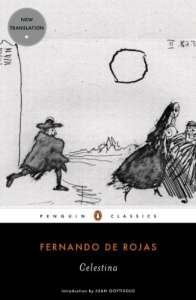
Celestina, Fernando de Rojas (1499)
9. A classic with a color in the title
The Red House Mystery, A. A. Milne (1922)
10. A classic by an author that's new to you
The Pearl, John Steinbeck (1947)
11. A classic that scares you
The Grapes of Wrath, John Steinbeck (1939)
12. Re-read a favorite classic
Mrs. 'Arris Goes to Paris, Paul Gallico (1958)
A Stew of Regret
Red Pottage
Mary Cholmondeley
Amazon Digital Services, 2012
originally published by Edward Arnold, 1899
252 pages in the paperback version
I was lured into reading "Red Pottage" by three factors: 1) the intriguing title, 2) the author's unusual last name, and 3) the free ebook. And it was worth the gamble, if one can gamble on a free book. Or maybe I should say it was worth the time I invested in it.
I am always interested in a good story, but as I started to think about writing this review, I realized that sometimes I am equally curious about the story's cultural background, the unknown quotations and unfamiliar food and books mentioned within. Anyone wanting merely the plot can find it in great detail on many book blogs; however if you are trying to understand the unfamiliar words and references, it takes a lot of Googling and researching around the Internet for a novel written 100+ years ago. So here I'll present an overview of the plot of "Red Pottage" and then explicate some of the interesting quotes and allusions that I found.
The Story
Among several story lines there is the story of the life-long friendship between Rachel West and Hester Gresley, who both have unconventional views of a woman's place in the world in the late 1890s. Rachel, a wealthy heiress who can afford to marry for love not money, falls in love with Hugh, an upper class gentleman who turns out to be a scoundrel. Hester is a successful novelist with no income, forced to live with her pompous brother, the local vicar, who strongly disapproves of her writing. But she is not interested in marrying, desiring instead to make her own way through her writing.
There are lots of characters in both upper-class London and the fictional village of Warpington. I found most of them interesting, though not all are admirable. The plot seemed very busy, with an awful lot of things happening: emotional, dramatic, melodramatic, comedic. With so many intertwined lives and events, the story becomes hard to summarize briefly. Love, heart break, scandal, near-death, weddings, children, temperance meetings, vicars and bishops. Life in 1899.
Other Interesting Notes
Right off the top, there's the question of how to pronounce the author's family name, Cholmondeley. The sources I've found say it's pronounced "CHUM-ley". She was the daughter of a rector in Shropshire. She never married, but lived with her family until her parents died, after which she lived with her sisters.
Then there's that title, "Red Pottage". This comes from a Bible story in Genesis 25:30-34, where Esau, the firstborn son, comes in from working in the fields and is famished. His twin brother, Jacob, has been cooking pottage, a thick stew made by boiling vegetables, grains, and meat or fish. He used red lentils, which is why Esau said "Feed me, I pray thee, with that same red pottage; for I am faint" (King James translation). But Jacob replied that he would trade the pottage for Esau's birthright as firstborn, to which Esau agreed. Thus red pottage refers to a material reward for which something of higher value has been sacrificed. In the novel Hugh has traded his good name for the pleasure of an adulterous affair.
The motto on the title page reads "After the Red Pottage comes the exceeding bitter cry." Indeed, in the book Hugh does suffer bitter remorse for what he has done. The quote comes from a sermon by Frederic William Farrar, published in "Everyday Christian Life or, Sermons by the Way", 1887, p. 183.
The epigraph on the opening chapter is from the poem "Modern Love" by George Meredith:
Then the opening lines of book are:
So Cholmondeley gives us quite a sense of foreboding before the book even starts: the title, the motto, an epigraph, a quote, all portending doom or at least bad juju ahead.
All of the 53 chapters start with an epigraph, among them several Kipling quotes and quite a few French ones. If anyone is looking for a thesis project, they might start investigating them. I don't have the time for that but I did research two interesting quotes.
For the opening of chapter 9, the French aphorism is:
Within the text, Cholmondeley repeats one quote three times: "High hopes faint on a warm hearthstone". It's from an 1888 Rudyard Kipling poem, "The Winner", implying that a married soldier is a marred soldier, one whose dependents will turn him soft.
This is my 19th century classic for the Back to the Classics 2018 challenge on the Books and Chocolate blog.
FURTHER READING
Mary Cholmondeley
Victorian Fiction Research Guide No. 6
by Jane Crisp
An excellent and long introduction to Cholmondeley's life and work, followed by listings of her extensive publications.
https://victorianfictionresearchguides.org/mary-cholmondeley/
Mary Cholmondeley
fan site by Carolyn W. de la L. Oulton, the author of "Let the Flowers Go: A Life of Mary Cholmondeley", Pickering and Chatto 2009.
http://www.MaryCholmondeley.com/
Mary Cholmondeley
Amazon Digital Services, 2012
originally published by Edward Arnold, 1899
252 pages in the paperback version
I was lured into reading "Red Pottage" by three factors: 1) the intriguing title, 2) the author's unusual last name, and 3) the free ebook. And it was worth the gamble, if one can gamble on a free book. Or maybe I should say it was worth the time I invested in it.
I am always interested in a good story, but as I started to think about writing this review, I realized that sometimes I am equally curious about the story's cultural background, the unknown quotations and unfamiliar food and books mentioned within. Anyone wanting merely the plot can find it in great detail on many book blogs; however if you are trying to understand the unfamiliar words and references, it takes a lot of Googling and researching around the Internet for a novel written 100+ years ago. So here I'll present an overview of the plot of "Red Pottage" and then explicate some of the interesting quotes and allusions that I found.
The Story
Among several story lines there is the story of the life-long friendship between Rachel West and Hester Gresley, who both have unconventional views of a woman's place in the world in the late 1890s. Rachel, a wealthy heiress who can afford to marry for love not money, falls in love with Hugh, an upper class gentleman who turns out to be a scoundrel. Hester is a successful novelist with no income, forced to live with her pompous brother, the local vicar, who strongly disapproves of her writing. But she is not interested in marrying, desiring instead to make her own way through her writing.
There are lots of characters in both upper-class London and the fictional village of Warpington. I found most of them interesting, though not all are admirable. The plot seemed very busy, with an awful lot of things happening: emotional, dramatic, melodramatic, comedic. With so many intertwined lives and events, the story becomes hard to summarize briefly. Love, heart break, scandal, near-death, weddings, children, temperance meetings, vicars and bishops. Life in 1899.
Other Interesting Notes
Right off the top, there's the question of how to pronounce the author's family name, Cholmondeley. The sources I've found say it's pronounced "CHUM-ley". She was the daughter of a rector in Shropshire. She never married, but lived with her family until her parents died, after which she lived with her sisters.
Then there's that title, "Red Pottage". This comes from a Bible story in Genesis 25:30-34, where Esau, the firstborn son, comes in from working in the fields and is famished. His twin brother, Jacob, has been cooking pottage, a thick stew made by boiling vegetables, grains, and meat or fish. He used red lentils, which is why Esau said "Feed me, I pray thee, with that same red pottage; for I am faint" (King James translation). But Jacob replied that he would trade the pottage for Esau's birthright as firstborn, to which Esau agreed. Thus red pottage refers to a material reward for which something of higher value has been sacrificed. In the novel Hugh has traded his good name for the pleasure of an adulterous affair.
The motto on the title page reads "After the Red Pottage comes the exceeding bitter cry." Indeed, in the book Hugh does suffer bitter remorse for what he has done. The quote comes from a sermon by Frederic William Farrar, published in "Everyday Christian Life or, Sermons by the Way", 1887, p. 183.
The epigraph on the opening chapter is from the poem "Modern Love" by George Meredith:
... In tragic life, God wot,Meredith wrote this fifty-poem sonnet-sequence about infidelity and the destruction of a marriage, shortly after similar events occurred in his first marriage. When it was published in 1862, the Victorians considered it scandalous because it talked openly about adultery and physical love. (The archaic verb "wot" means to know.)
No villain need be! Passions spin the plot:
We are betrayed by what is false within.
Then the opening lines of book are:
"I can't get out." said Sterne's starling, looking through the bars of his cage.That first line refers to an odd little story about a starling who amazed people by repeatedly saying "I can't get out" in the novel "A Sentimental Journey Through France and Italy" by Laurence Sterne, written and first published in 1768. And just so we wouldn't miss her meaning, Cholmondeley presents us with both the quotation and Hugh's refutation of it as the opening scene of the book.
"I will get out," said Hugh Scarlett to himself, seeing no bars but half conscious of a cage.
So Cholmondeley gives us quite a sense of foreboding before the book even starts: the title, the motto, an epigraph, a quote, all portending doom or at least bad juju ahead.
All of the 53 chapters start with an epigraph, among them several Kipling quotes and quite a few French ones. If anyone is looking for a thesis project, they might start investigating them. I don't have the time for that but I did research two interesting quotes.
For the opening of chapter 9, the French aphorism is:
"Pour vivre tranquille il faut vivre loin des gens d'église"which Google translates as:
"To live in peace you have to live far away from church people"I don't know how many readers in 1899 knew French and understood this quote, but I'm sure it must have raised a few eyebrows and maybe garnered a pulpit denunciation or two. One of the main antagonists in the book is Hester's brother, a vicar who is very self-centered and often unkind to people in his self-righteousness. He makes his sister miserable and eventually quite ill by his behavior toward her.
Within the text, Cholmondeley repeats one quote three times: "High hopes faint on a warm hearthstone". It's from an 1888 Rudyard Kipling poem, "The Winner", implying that a married soldier is a marred soldier, one whose dependents will turn him soft.
White hands cling to the tightened rein,There are no military men in the book, but one of Rachel's former suitors was an artist who felt he could not marry her, although he loved her, because domestic life might interfere with his artistic career. Now, four years later, he appears at a gathering Rachel is at. He turned out to be a mediocre artist and the narrator says:
Slipping the spur from the booted heel;
Tenderest voices cry, "Turn again!"
Red lips tarnish the scabbarded steel.
High hopes faint on a warm hearthstone --
He travels the fastest who travels alone.
His art had not taken possession of him. "High hopes faint on a warm hearthstone." But they sometimes faint also in bachelor lodgings.I liked this novel and found it easy reading, except for all the interesting quotations and French phrases, which I looked up as best I could. I don't think you need to do all that work; the story is understandable with out knowing French or Kipling. I just have a personality quirk that makes me want to know what every word means!
This is my 19th century classic for the Back to the Classics 2018 challenge on the Books and Chocolate blog.
FURTHER READING
Mary Cholmondeley
Victorian Fiction Research Guide No. 6
by Jane Crisp
An excellent and long introduction to Cholmondeley's life and work, followed by listings of her extensive publications.
https://victorianfictionresearchguides.org/mary-cholmondeley/
Mary Cholmondeley
fan site by Carolyn W. de la L. Oulton, the author of "Let the Flowers Go: A Life of Mary Cholmondeley", Pickering and Chatto 2009.
http://www.MaryCholmondeley.com/
22 December 2018
The Inimitable Mrs. 'Arris
Mrs. 'Arris Goes to Paris
Paul Gallico
Drawings by Gioia Fiammenghi
Doubleday, 1958
157 pages
What fun to return to an old favorite and find that it's still a favorite! I have fond memories of Mrs. 'Arris from my first reading when I was in high school, and it has charmed me anew some 50 years later. Mrs. 'Arris is an ordinary char (cleaning woman) in 1950s London, who glimpses a client's Dior dress, falls in love with its beauty, and is determined to own one like it. She needs to possess that beauty, even though she would never wear such a dress.
She gives up every little thing she can do without in order to save for her 450-British-pound dream. Of course when she gets to Dior's shop in Paris there are complications she hadn't foreseen, not being a worldly woman. One doesn't simply buy a Dior off a rack and fly home that evening! During her stay in the City of Light she makes friends with some of the staff and clientele, who are quite taken with this small, determined British woman. She even performs a bit of match-making in that short week.
There's a 1992 made-for-TV movie of the book, staring Angela Lansbury, and I was shocked when I saw it because the movie ended after she got her Dior and went home, all smiles. The actual book has a more bittersweet ending, one that saves the tale from being too fluffy and sentimental. I won't spoil it here, but I wanted to point out the changed ending of the movie version.
This little novella is rather like an adult fairytale about the human desire for beauty, about determination and the kindness of strangers. With a bit of a twist at the end to give it a wider meaning.
Paul Gallico was a prolific writer, most famous for "The Poseidon Adventure", which was made into a movie, and "The Snow Goose", which won the O. Henry Award for short stories in 1941. There are three more Mrs. 'Arris books, which I have only recently discovered exist and need to read: "Mrs. 'Arris Goes to New York", "Mrs. 'Arris Goes to Parliament", and "Mrs. 'Arris Goes to Moscow".
This is my selection for Re-read A Favorite Classic in the 2018 Back to the Classics Challenge.
Paul Gallico
Drawings by Gioia Fiammenghi
Doubleday, 1958
157 pages
What fun to return to an old favorite and find that it's still a favorite! I have fond memories of Mrs. 'Arris from my first reading when I was in high school, and it has charmed me anew some 50 years later. Mrs. 'Arris is an ordinary char (cleaning woman) in 1950s London, who glimpses a client's Dior dress, falls in love with its beauty, and is determined to own one like it. She needs to possess that beauty, even though she would never wear such a dress.
It’s the most beautiful thing I’ve ever laid me eyes on and I mean to ’ave it.
She gives up every little thing she can do without in order to save for her 450-British-pound dream. Of course when she gets to Dior's shop in Paris there are complications she hadn't foreseen, not being a worldly woman. One doesn't simply buy a Dior off a rack and fly home that evening! During her stay in the City of Light she makes friends with some of the staff and clientele, who are quite taken with this small, determined British woman. She even performs a bit of match-making in that short week.
There's a 1992 made-for-TV movie of the book, staring Angela Lansbury, and I was shocked when I saw it because the movie ended after she got her Dior and went home, all smiles. The actual book has a more bittersweet ending, one that saves the tale from being too fluffy and sentimental. I won't spoil it here, but I wanted to point out the changed ending of the movie version.
This little novella is rather like an adult fairytale about the human desire for beauty, about determination and the kindness of strangers. With a bit of a twist at the end to give it a wider meaning.
Paul Gallico was a prolific writer, most famous for "The Poseidon Adventure", which was made into a movie, and "The Snow Goose", which won the O. Henry Award for short stories in 1941. There are three more Mrs. 'Arris books, which I have only recently discovered exist and need to read: "Mrs. 'Arris Goes to New York", "Mrs. 'Arris Goes to Parliament", and "Mrs. 'Arris Goes to Moscow".
This is my selection for Re-read A Favorite Classic in the 2018 Back to the Classics Challenge.
Young and Lighthearted
Our Hearts Were Young and Gay
Cornelia Otis Skinner and Emily Kimbrough
Drawings by Alajálov
Dodd, Mead & Co., 1942
247 pages
It's the 1920s, the Roaring Twenties, and in the air is a feeling of novelty and newness, of getting away from the traditions of the past, of relief that World War I is over. Think of jazz, flappers, the Art Deco movement, and expat writers in Paris. With this spirit of modernity, in the early Twenties two women in their early twenties embarked on a summer in England and France, mostly unchaperoned. In this memoir, written nearly 20 years later, Cornelia Skinner and Emily Kimbrough recount their adventures and misadventures during that summer of freedom.
Every thing is new and exciting to them, not just the attentions of the young doctors they meet on the ocean liner but all the sights, sounds, and people in Europe. Written in the first person by Cornelia, this is a light and airy but very entertaining romp through the quaint Old World. I thoroughly enjoyed their little vignettes about France and England a century ago. And the stories about their clothes were quite funny - they never had the right outfits, although they tried hard to look sophisticated and glamorous.
Lots of unnerving things happen to them, some not of their own doing, such as when the ocean liner runs aground before they even leave the St. Lawrence River and they're stuck in Quebec for a week. Cornelia does get seriously ill en route to England, but she pulls through and makes a lively story out of it. Mostly they just get into scrapes because they are so unworldly, but they aren't in real danger except for their dignity.
I felt almost as though I had been on a whirlwind mini-vacation with two charming but very young girls, for from the vantage point of nearly a century, they seem amazingly innocent for well-bred college girls. They claim to have first learned about the birds and the bees from exhibits at the Cluny Museum of the Middle Ages in Paris. Times have definitely changed!
The book was made into a motion picture in 1944, and was dramatized by Jean Kerr in 1946, but I haven't seen either of them. The movie publicity pictures I saw online just don't jibe with my mental pictures of Cornelia and Emily and their adventures. And I rather like my own images, so I'll stick to the book. Long ago there was a radio ad for NPR (National Public Radio) where a little boy said he liked radio better than TV because "the pictures are better." I agree!
This is my selection for Travel in the 2018 Back to the Classics Challenge.
Cornelia Otis Skinner and Emily Kimbrough
Drawings by Alajálov
Dodd, Mead & Co., 1942
247 pages
It's the 1920s, the Roaring Twenties, and in the air is a feeling of novelty and newness, of getting away from the traditions of the past, of relief that World War I is over. Think of jazz, flappers, the Art Deco movement, and expat writers in Paris. With this spirit of modernity, in the early Twenties two women in their early twenties embarked on a summer in England and France, mostly unchaperoned. In this memoir, written nearly 20 years later, Cornelia Skinner and Emily Kimbrough recount their adventures and misadventures during that summer of freedom.
Every thing is new and exciting to them, not just the attentions of the young doctors they meet on the ocean liner but all the sights, sounds, and people in Europe. Written in the first person by Cornelia, this is a light and airy but very entertaining romp through the quaint Old World. I thoroughly enjoyed their little vignettes about France and England a century ago. And the stories about their clothes were quite funny - they never had the right outfits, although they tried hard to look sophisticated and glamorous.
Lots of unnerving things happen to them, some not of their own doing, such as when the ocean liner runs aground before they even leave the St. Lawrence River and they're stuck in Quebec for a week. Cornelia does get seriously ill en route to England, but she pulls through and makes a lively story out of it. Mostly they just get into scrapes because they are so unworldly, but they aren't in real danger except for their dignity.
I felt almost as though I had been on a whirlwind mini-vacation with two charming but very young girls, for from the vantage point of nearly a century, they seem amazingly innocent for well-bred college girls. They claim to have first learned about the birds and the bees from exhibits at the Cluny Museum of the Middle Ages in Paris. Times have definitely changed!
The book was made into a motion picture in 1944, and was dramatized by Jean Kerr in 1946, but I haven't seen either of them. The movie publicity pictures I saw online just don't jibe with my mental pictures of Cornelia and Emily and their adventures. And I rather like my own images, so I'll stick to the book. Long ago there was a radio ad for NPR (National Public Radio) where a little boy said he liked radio better than TV because "the pictures are better." I agree!
This is my selection for Travel in the 2018 Back to the Classics Challenge.
15 November 2018
A Migrant Crisis in Our Past
The Grapes of Wrath
John Steinbeck
Penguin, 1992 (originally published 1939)
619 pp.
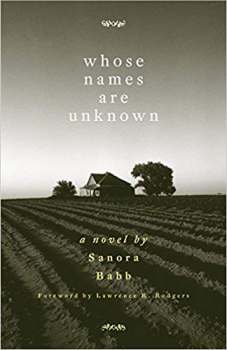
Whose Names are Unknown
Sanora Babb
Univ. of Oklahoma Press, 2004 (written in 1939)
222 pp.
In my quest to read many of the classic novels, I at last read "The Grapes of Wrath", about the Dust Bowl of the 1930s in America. Then while doing some research on the book, I stumbled across another novel which covers the same topic, "Whose Names are Unknown". Although published 65 years apart, they were both written during the Dust Bowl by authors who visited the migrant camps. Sonora Babb was a Farm Security Administration (FSA) worker who took notes about conditions in the California camps set up to house the migrants fleeing the Dust Bowl. The FSA shared these notes with John Steinbeck when he toured the camps. Babb's novel was under contract to be published but was cancelled due to the wide acclaim that Steinbeck's novel garnered. In 2004, Babb's book was rescued from the archives and published by the University of Oklahoma Press.
As a Classic, "Grapes of Wrath" has been critiqued and analyzed many times by authors more scholarly than I am. But I would like to discuss these two books as companion works about an important piece of American history which seems relevant to the world of today.
For me "The Grapes of Wrath" was a slow read, because it was so sad. I liked the book enormously and I can understand that it is great writing, but that's how it made me feel: sad for the individual members of the Joad family, sad for the thousands of people displaced during the Dust Bowl, sad for an America that let this happen. And the characters, no, the people have stayed with me. Critics may call them wooden or cardboard, but as a reader they were very alive to me, each with their own characteristic way of talking and thinking and acting. Some characters were, of course, more distinct, more clearly defined, than others, but only a few were marginal. This is my entry in the Back to the Classics 2018 Challenge, a classic that scares you.
When I read "Whose Names are Unknown" I was prepared for sadness, and it, too, is very sad. The Dunne family and their friends are poor but proud people, determined to escape the Black Blizzards and find a better life in the "promised land" of California. The basic story of their trip is similar to that of the Joads, but told in a much different style. Besides working in the camps, Babb was a native of Oklahoma's arid panhandle and knew about the desperate conditions in both places. The tale is narrated by the mother and is a more intimate, less violent story. Bad things do happen on their journey, but they are more in the background; we don't get blow-by-blow accounts of the violence.
I thoroughly enjoyed both novels despite the sadness quotient. If you've read Steinbeck's you should also read Babb's. Especially since during the current worldwide migrant crises, these evocative books are still relevant.
FURTHER READING
Sanora Babb
http://www.sanorababb.com/
Dust Bowl
https://en.wikipedia.org/wiki/Dust_Bowl
[T]he Farm Security Administration hired numerous photographers to document the crisis. Artists such as Dorothea Lange were aided by having salaried work during the Depression. She captured what have become classic images of the dust storms and migrant families. Among her most well-known photographs is Destitute Pea Pickers in California. Mother of Seven Children, which depicted a gaunt-looking woman, Florence Owens Thompson, holding three of her children. This picture expressed the struggles of people caught by the Dust Bowl and raised awareness in other parts of the country of its reach and human cost.
Many of the songs of folk singer Woody Guthrie, such as those on his 1940 album "Dust Bowl Ballads", are about his experiences in the Dust Bowl era during the Great Depression when he traveled with displaced farmers from Oklahoma to California and learned their traditional folk and blues songs, earning him the nickname the "Dust Bowl Troubadour". --Wikipedia
"The Dust Bowl" (2012) is a documentary film directed by Ken Burns which aired on PBS in 2012. The four-part miniseries recounts the impact of the Dust Bowl on the U.S. during the Great Depression of the 1930s. Available on DVD - check your library!
https://en.wikipedia.org/wiki/The_Dust_Bowl_%28film%29
The film "The Grapes of Wrath" (1940) stars Henry Fonda as Tom Joad and Jane Darwell as Ma Joad. Considered one of the best movies ever made, but it does change the plot in significant ways.
https://en.wikipedia.org/wiki/The_Grapes_of_Wrath_%28film%29
John Steinbeck
Penguin, 1992 (originally published 1939)
619 pp.
Whose Names are Unknown
Sanora Babb
Univ. of Oklahoma Press, 2004 (written in 1939)
222 pp.
In my quest to read many of the classic novels, I at last read "The Grapes of Wrath", about the Dust Bowl of the 1930s in America. Then while doing some research on the book, I stumbled across another novel which covers the same topic, "Whose Names are Unknown". Although published 65 years apart, they were both written during the Dust Bowl by authors who visited the migrant camps. Sonora Babb was a Farm Security Administration (FSA) worker who took notes about conditions in the California camps set up to house the migrants fleeing the Dust Bowl. The FSA shared these notes with John Steinbeck when he toured the camps. Babb's novel was under contract to be published but was cancelled due to the wide acclaim that Steinbeck's novel garnered. In 2004, Babb's book was rescued from the archives and published by the University of Oklahoma Press.
As a Classic, "Grapes of Wrath" has been critiqued and analyzed many times by authors more scholarly than I am. But I would like to discuss these two books as companion works about an important piece of American history which seems relevant to the world of today.
For me "The Grapes of Wrath" was a slow read, because it was so sad. I liked the book enormously and I can understand that it is great writing, but that's how it made me feel: sad for the individual members of the Joad family, sad for the thousands of people displaced during the Dust Bowl, sad for an America that let this happen. And the characters, no, the people have stayed with me. Critics may call them wooden or cardboard, but as a reader they were very alive to me, each with their own characteristic way of talking and thinking and acting. Some characters were, of course, more distinct, more clearly defined, than others, but only a few were marginal. This is my entry in the Back to the Classics 2018 Challenge, a classic that scares you.
When I read "Whose Names are Unknown" I was prepared for sadness, and it, too, is very sad. The Dunne family and their friends are poor but proud people, determined to escape the Black Blizzards and find a better life in the "promised land" of California. The basic story of their trip is similar to that of the Joads, but told in a much different style. Besides working in the camps, Babb was a native of Oklahoma's arid panhandle and knew about the desperate conditions in both places. The tale is narrated by the mother and is a more intimate, less violent story. Bad things do happen on their journey, but they are more in the background; we don't get blow-by-blow accounts of the violence.
I thoroughly enjoyed both novels despite the sadness quotient. If you've read Steinbeck's you should also read Babb's. Especially since during the current worldwide migrant crises, these evocative books are still relevant.
FURTHER READING
Sanora Babb
http://www.sanorababb.com/
Dust Bowl
https://en.wikipedia.org/wiki/Dust_Bowl
[T]he Farm Security Administration hired numerous photographers to document the crisis. Artists such as Dorothea Lange were aided by having salaried work during the Depression. She captured what have become classic images of the dust storms and migrant families. Among her most well-known photographs is Destitute Pea Pickers in California. Mother of Seven Children, which depicted a gaunt-looking woman, Florence Owens Thompson, holding three of her children. This picture expressed the struggles of people caught by the Dust Bowl and raised awareness in other parts of the country of its reach and human cost.
Many of the songs of folk singer Woody Guthrie, such as those on his 1940 album "Dust Bowl Ballads", are about his experiences in the Dust Bowl era during the Great Depression when he traveled with displaced farmers from Oklahoma to California and learned their traditional folk and blues songs, earning him the nickname the "Dust Bowl Troubadour". --Wikipedia
"The Dust Bowl" (2012) is a documentary film directed by Ken Burns which aired on PBS in 2012. The four-part miniseries recounts the impact of the Dust Bowl on the U.S. during the Great Depression of the 1930s. Available on DVD - check your library!
https://en.wikipedia.org/wiki/The_Dust_Bowl_%28film%29
The film "The Grapes of Wrath" (1940) stars Henry Fonda as Tom Joad and Jane Darwell as Ma Joad. Considered one of the best movies ever made, but it does change the plot in significant ways.
https://en.wikipedia.org/wiki/The_Grapes_of_Wrath_%28film%29
![]() | ||
| Dust Storm in Texas 1935 |
29 May 2018
Is She an Excellent Woman?
Excellent Women
Barbara Pym
E. P. Dutton, 1978 (originally published 1952)
256 pages
This is Barbara Pym's best known novel, a lightly satiric, wry look at mid-twentieth century London, soon after World War II's end. Mildred is a very kind, unassuming spinster in her mid-thirties, living alone in London. This is her story, told from her point of view, almost as if written in her diary. Although she has no family left and never married, she says she enjoys her solitude and is happy with a part-time job with an impoverished gentlewomen’s group and her work in the church. In the book, women who do that sort volunteer work are condescendingly referred to as "excellent women" by other characters.
Mildred is quite perceptive about the people she finds around her: the pastor and his spinster sister, the members of her church, her new neighbors, her old school friend. She wonders how a group of anthropologists she meets can be so insightful about the primitive tribes they study and yet so obtuse about their own lives. She marvels that the unmarried pastor can be so smitten with an uncharitable, unacceptable woman. She examines her own thoughts and feelings closely, as well, with a self-deprecating humor.
However as a single woman without family ties, everyone she knows presumes she will help them, expecting her to automatically be there for their needs. And she invariably is, although she does allow herself a grumble here and there about it. Thus she finds herself doing things she doesn't really want to do at all.
It's a quiet book, no dramatic disasters befall Mildred, although the lives of her friends do seem to constantly be in turmoil and in need of her assistance. Overall I enjoyed this look at post-war London and it was very well-written. Mildred's observations are spot on. But I found her passivity in the face of others' demands upon her very sad. This counts as the 20th century classic books for the Back to the Classics 2018 Challenge.
Further Reading
Reader's Guide by Penguin/Random House
Barbara Pym
E. P. Dutton, 1978 (originally published 1952)
256 pages
This is Barbara Pym's best known novel, a lightly satiric, wry look at mid-twentieth century London, soon after World War II's end. Mildred is a very kind, unassuming spinster in her mid-thirties, living alone in London. This is her story, told from her point of view, almost as if written in her diary. Although she has no family left and never married, she says she enjoys her solitude and is happy with a part-time job with an impoverished gentlewomen’s group and her work in the church. In the book, women who do that sort volunteer work are condescendingly referred to as "excellent women" by other characters.
Mildred is quite perceptive about the people she finds around her: the pastor and his spinster sister, the members of her church, her new neighbors, her old school friend. She wonders how a group of anthropologists she meets can be so insightful about the primitive tribes they study and yet so obtuse about their own lives. She marvels that the unmarried pastor can be so smitten with an uncharitable, unacceptable woman. She examines her own thoughts and feelings closely, as well, with a self-deprecating humor.
However as a single woman without family ties, everyone she knows presumes she will help them, expecting her to automatically be there for their needs. And she invariably is, although she does allow herself a grumble here and there about it. Thus she finds herself doing things she doesn't really want to do at all.
It's a quiet book, no dramatic disasters befall Mildred, although the lives of her friends do seem to constantly be in turmoil and in need of her assistance. Overall I enjoyed this look at post-war London and it was very well-written. Mildred's observations are spot on. But I found her passivity in the face of others' demands upon her very sad. This counts as the 20th century classic books for the Back to the Classics 2018 Challenge.
Further Reading
Reader's Guide by Penguin/Random House
19 May 2018
No Cuddly Bears Here
The Red House Mystery
A. A. Milne
E.P. Dutton, 1922
229 pages
I don't think of myself as a mystery reader, and yet for the last month I've been speeding right down the Mystery Lane, er, bookshelf - a couple of Agatha Christies, a Margaret Armstrong, and now a surprising entry from Alan Alexander Milne. Yes, that's A. A. Milne of Winnie-the-Pooh fame, writing for adults in his only mystery novel.
Before Pooh, Piglet, Eeyore, and the rest debuted in 1924, Milne had written stories for the British humor magazine, "Punch", several plays, and a few other novels. The title page of "The Red House Mystery" (1922) identifies him as the "Author of 'Mr. Pym Passes By,' 'The Dover Road,' etc.", which are both plays.
The book is dedicated to his father:
This is probably a cozy mystery, although the amateur detectives are men, and women dominate that genre these days. But it is set in a small English village, nothing very violent is described, and the amateur sleuths ferret out lots of gossip to help solve the crime and best the police at their game - all good cozy mystery attributes.
The plot is not overly complicated, but it is a devious and misleading one. Once again, I only half figured out who dunnit. Mostly I ruled out a lot of the suspects in my mind, but the ending was a surprise.
The main characters, Antony Gillingham, a gentleman of means, and his young friend, Bill Beverly, decide to play detectives and solve the murder of Bill's friend Mark Ablett. They approach this task in a rather light-hearted way at times, calling each other Holmes and Watson. The first Sherlock Holmes story was published by Arthur Conan Doyle in 1887, so this is not surprising in a 1922 novel. It also turns out that Milne knew Doyle. According to a story on the BBC website:
The dawn of celebrity sports teams! I love finding out that famous authors were, in fact, friends long ago. And it makes me wonder if there are other references to each other's work to be found? Some sleuthing required...
Milne made his fame and fortune from the books of Pooh stories and poems. However, I wish he had penned a few more mysteries as I enjoyed this one. It's my pick for the Back to the Classics 2018 Challenge - A classic with a color in the title.
A. A. Milne
E.P. Dutton, 1922
229 pages
I don't think of myself as a mystery reader, and yet for the last month I've been speeding right down the Mystery Lane, er, bookshelf - a couple of Agatha Christies, a Margaret Armstrong, and now a surprising entry from Alan Alexander Milne. Yes, that's A. A. Milne of Winnie-the-Pooh fame, writing for adults in his only mystery novel.
Before Pooh, Piglet, Eeyore, and the rest debuted in 1924, Milne had written stories for the British humor magazine, "Punch", several plays, and a few other novels. The title page of "The Red House Mystery" (1922) identifies him as the "Author of 'Mr. Pym Passes By,' 'The Dover Road,' etc.", which are both plays.
The book is dedicated to his father:
This is probably a cozy mystery, although the amateur detectives are men, and women dominate that genre these days. But it is set in a small English village, nothing very violent is described, and the amateur sleuths ferret out lots of gossip to help solve the crime and best the police at their game - all good cozy mystery attributes.
The plot is not overly complicated, but it is a devious and misleading one. Once again, I only half figured out who dunnit. Mostly I ruled out a lot of the suspects in my mind, but the ending was a surprise.
The main characters, Antony Gillingham, a gentleman of means, and his young friend, Bill Beverly, decide to play detectives and solve the murder of Bill's friend Mark Ablett. They approach this task in a rather light-hearted way at times, calling each other Holmes and Watson. The first Sherlock Holmes story was published by Arthur Conan Doyle in 1887, so this is not surprising in a 1922 novel. It also turns out that Milne knew Doyle. According to a story on the BBC website:
Peter Pan author JM Barrie, a cricketing fanatic, gathered the most famous writers of his day to play on his amateur team - the oddly-named Allahakbarries - between 1887 and 1913. The team members included Arthur Conan Doyle, PG Wodehouse, AA Milne and Jerome K Jerome.
http://news.bbc.co.uk/2/hi/entertainment/8662375.stm
The dawn of celebrity sports teams! I love finding out that famous authors were, in fact, friends long ago. And it makes me wonder if there are other references to each other's work to be found? Some sleuthing required...
Milne made his fame and fortune from the books of Pooh stories and poems. However, I wish he had penned a few more mysteries as I enjoyed this one. It's my pick for the Back to the Classics 2018 Challenge - A classic with a color in the title.
02 May 2018
Zany Christie or Mysterious Wodehouse?
The Seven Dials Mystery
Agatha Christie
William Morrow, 2012 (first published 1929)
284 pages
Agatha Christie, you ask? Sure, we all know Agatha from her stories about Miss Marple or Hercule Poirot. Yes, we say, "The Seven Dials Mystery" should be an entertaining book. We begin to read... and then confusion ensues. Imagine a nice British country house party of the 20s or 30s, full of titled upper class folk, the idle rich, and their stalwart servants. Present are all the usual slightly nutty types a la P. G. Wodehouse, a stuffy Lord, a ditzy Lady, fun-loving, carefree young folk with money to burn, a supercilious gardener. Sir Oswald and Lady Coote surely must know Bertie Wooster!
It's Wodehouse in a lower key; no one is quite as smart as Jeeves, nor quite as fatuous as Wooster, and for silly names we have only a girl named Socks, the male secretary, Pongo, and the amateur detective, Lady Eileen Brent, known as Bundle. But then drop in a serious mystery complete with several bodies, a Russian countess, a furtive society, German agents, and a secret industrial process. The events happening at various grand estates verge right on the edge of being zany, but are held in check by the ever-present threat of more deaths occurring.
The mystery itself is perplexing and kept me guessing until the very end. All my suspects were innocent - of the crimes, if not of deceptions. Later I found out it is number two of five in the Superintendent Battle series. Oddly enough number three in that series, "Cards on the Table", is also number 13 in the Hercule Poirot series, which I have already read. I guess I need to hunt up numbers one, four, and five now to complete the set.
Don't get me wrong, I liked this book a lot, it just wasn't what I had expected from Agatha Christie! A quick, enjoyable read. And it's a classic crime story for the Back to the Classics 2018 challenge.
Agatha Christie
William Morrow, 2012 (first published 1929)
284 pages
Agatha Christie, you ask? Sure, we all know Agatha from her stories about Miss Marple or Hercule Poirot. Yes, we say, "The Seven Dials Mystery" should be an entertaining book. We begin to read... and then confusion ensues. Imagine a nice British country house party of the 20s or 30s, full of titled upper class folk, the idle rich, and their stalwart servants. Present are all the usual slightly nutty types a la P. G. Wodehouse, a stuffy Lord, a ditzy Lady, fun-loving, carefree young folk with money to burn, a supercilious gardener. Sir Oswald and Lady Coote surely must know Bertie Wooster!
It's Wodehouse in a lower key; no one is quite as smart as Jeeves, nor quite as fatuous as Wooster, and for silly names we have only a girl named Socks, the male secretary, Pongo, and the amateur detective, Lady Eileen Brent, known as Bundle. But then drop in a serious mystery complete with several bodies, a Russian countess, a furtive society, German agents, and a secret industrial process. The events happening at various grand estates verge right on the edge of being zany, but are held in check by the ever-present threat of more deaths occurring.
The mystery itself is perplexing and kept me guessing until the very end. All my suspects were innocent - of the crimes, if not of deceptions. Later I found out it is number two of five in the Superintendent Battle series. Oddly enough number three in that series, "Cards on the Table", is also number 13 in the Hercule Poirot series, which I have already read. I guess I need to hunt up numbers one, four, and five now to complete the set.
Don't get me wrong, I liked this book a lot, it just wasn't what I had expected from Agatha Christie! A quick, enjoyable read. And it's a classic crime story for the Back to the Classics 2018 challenge.
22 April 2018
The Pearl of the World
The Pearl
John Steinbeck
Drawings by José Clemente Orozco
Viking Press, 1945
123 pages
This slim book by Nobel-laureate Steinbeck has been called a simple story about simple people. It feels like a very old fable, whose lyrical writing sings in your head as you read it. Wikipedia says Steinbeck heard the tale on a trip to Mexico, and first turned it into a short story, then this novella, and finally a screenplay for a Mexican American movie.
It's the story of an impoverished Mexican pearl diver, Kino, his wife Juana, and their infant son, Coyotito. One day Kino finds a huge pearl, the Pearl of the World. But instead of the good new future he envisions for his family, other people's greed and betrayal overwhelm him and his hopes. The writing is very evocative and affecting. I had a slight feeling of doom throughout, which made it hard to continue reading sometimes.
This was my first Steinbeck novel and I loved the writing style, despite the rather downbeat story. I need to add some of his other works to my To Be Read list. I've been trying to read more works by authors who won a big literary prize, e.g., Nobel Prize, Man Booker Award, Women's Prize for Fiction (née Orange Prize), Pulitzer, etc. This my Back to the Classics entry for a classic by an author that's new to you.
Wikipedia says that the movie, La perla (The Pearl) is a 1947 Mexican American film by the acclaimed director Emilio Fernández. In 2002, the film was selected for preservation in the US National Film Registry. I hadn't heard of this Film Registry before, but it is a program of the Library of Congress. On it's web pages it says:
John Steinbeck
Drawings by José Clemente Orozco
Viking Press, 1945
123 pages
This slim book by Nobel-laureate Steinbeck has been called a simple story about simple people. It feels like a very old fable, whose lyrical writing sings in your head as you read it. Wikipedia says Steinbeck heard the tale on a trip to Mexico, and first turned it into a short story, then this novella, and finally a screenplay for a Mexican American movie.
It's the story of an impoverished Mexican pearl diver, Kino, his wife Juana, and their infant son, Coyotito. One day Kino finds a huge pearl, the Pearl of the World. But instead of the good new future he envisions for his family, other people's greed and betrayal overwhelm him and his hopes. The writing is very evocative and affecting. I had a slight feeling of doom throughout, which made it hard to continue reading sometimes.
This was my first Steinbeck novel and I loved the writing style, despite the rather downbeat story. I need to add some of his other works to my To Be Read list. I've been trying to read more works by authors who won a big literary prize, e.g., Nobel Prize, Man Booker Award, Women's Prize for Fiction (née Orange Prize), Pulitzer, etc. This my Back to the Classics entry for a classic by an author that's new to you.
![]() |
| Movie Poster for "The Pearl" |
[The National Film Registry] is a list of films deemed "culturally, historically or aesthetically significant" that are earmarked for preservation by the Library of Congress. These films are not selected as the 'best' American films of all time, but rather as works of enduring importance to American culture. They reflect who we are as a people and as a nation.They add 25 films each year to the list. All the titles and many descriptions are listed on the web site. Maybe the start of a To Be Seen list?
18 March 2018
Back to the Classics 2018: A classic with a single-word title
Celestina
Fernando de Rojas
Penguin, 2009, translation by Peter Bush
Spanish original "Tragicomedia de Calisto y Melibea", 1499
219 pages
"Celestina", also known as the "Tragicomedy of Calisto and Melibea" or "The Spanish Bawd", is quite a book. Still in print after 519 years, it trails a small army of students, critics, and professors of Spanish literature in its wake, producing piles of scholarly articles and books! This translation by Peter Bush is in easily-read modern English.
An engaging tale of lust and love, the story is funny, bawdy, and crude. Calisto is a wealthy young man who falls violently in love with a chaste maiden, Melibea, after meeting her once. The plot is about his attempts to woo her using the local bawd (madam, pimp, procuress) and possible witch, Celestina. Calisto's servants are always mocking him behind his back, when they aren't with some of Celestina's girls. Most of the characters are rogues and scoundrels, yet they keep invoking God's name and praying. Basically the book is a parody of the Courtly Love found in the popular romances of the day, but with a tragic ending instead of the typical weddings of the romances.
I read this book more for its historical importance than for the quality of story itself. I'm taking an online course about "Don Quixote" by Miguel Cervantes, written one hundred years after "Celestina". In the course readings and lectures, "Celestina" has been mentioned frequently. Plus many lists of "100 best novels" include it, so I thought I should check it out.
Its unique, wholly original feature is that the entire book is written in dialogue. There is no narrator to set the scene or explain the action, which can make it tricky to keep straight who's talking. However the translator has added some narrative phrases here and there, such as "suggested Celestina" or "Sempronio grunted to himself", and this does help keep the reader on track.
Some call "Celestina" the first European novel, considered second in importance only to Don Quixote in Spanish literary heritage. I discovered that the word "celestina" is even listed in the Spanish dictionary as a "go-between" or "procuress", proving the lasting effect the book has had on Spanish culture over the centuries. In 1904 Pablo Picasso painted this portrait called "Celestina":
There is a long article about the book online at the LA Times website, written by one of the all-time great Spanish authors, Juan Goytisolo, who also wrote the introduction to the book I read.
"Celebrating the 500th Anniversary of Spanish Literature's Most Audacious and Subversive Work", Juan Goytisolo, 1999.
I enjoyed "Celestina" and found parts of it quite funny.
Fernando de Rojas
Penguin, 2009, translation by Peter Bush
Spanish original "Tragicomedia de Calisto y Melibea", 1499
219 pages
"Celestina", also known as the "Tragicomedy of Calisto and Melibea" or "The Spanish Bawd", is quite a book. Still in print after 519 years, it trails a small army of students, critics, and professors of Spanish literature in its wake, producing piles of scholarly articles and books! This translation by Peter Bush is in easily-read modern English.
I read this book more for its historical importance than for the quality of story itself. I'm taking an online course about "Don Quixote" by Miguel Cervantes, written one hundred years after "Celestina". In the course readings and lectures, "Celestina" has been mentioned frequently. Plus many lists of "100 best novels" include it, so I thought I should check it out.
Its unique, wholly original feature is that the entire book is written in dialogue. There is no narrator to set the scene or explain the action, which can make it tricky to keep straight who's talking. However the translator has added some narrative phrases here and there, such as "suggested Celestina" or "Sempronio grunted to himself", and this does help keep the reader on track.
Some call "Celestina" the first European novel, considered second in importance only to Don Quixote in Spanish literary heritage. I discovered that the word "celestina" is even listed in the Spanish dictionary as a "go-between" or "procuress", proving the lasting effect the book has had on Spanish culture over the centuries. In 1904 Pablo Picasso painted this portrait called "Celestina":
There is a long article about the book online at the LA Times website, written by one of the all-time great Spanish authors, Juan Goytisolo, who also wrote the introduction to the book I read.
"Celebrating the 500th Anniversary of Spanish Literature's Most Audacious and Subversive Work", Juan Goytisolo, 1999.
I enjoyed "Celestina" and found parts of it quite funny.
15 February 2018
Back to the Classics 2018: A classic by a woman author
I Capture the Castle
Dodie Smith
St. Martins Griffin, 1976 reprint of the 1948 original
340 pages
This is my first Dodie Smith novel, but it won't be my last. I discovered this one on the Books and Chocolate blog and thought it sounded like a fun read for a classic novel by a woman. And I wasn't disappointed in the least!
The narrator is 17-year old Cassandra Mortmain, who is writing a diary of her life in an old, very run-down castle in rural England, circa 1934. Her father, James, once wrote "a very unusual book called 'Jacob Wrestling', a mixture of fiction, philosophy and poetry." He made quite a lot of money from it, but then he mysteriously stopped writing and they are now desperately poor. He is married to Topaz, stepmother to his children, who is famous as a model, painted (with or without clothes) by many British artists. Cassandra has an older sister, Rose, and a younger brother, Thomas. The household is rounded out by Stephen Colly, a young man whose late mother had been the family's servant, plus a dog and a cat, wittily named Héloïse and Abelard.
When an intriguing family of Americans inherits the nearby estate, including two eligible young men, life for the Mortmains is suddenly thrown out of its familiar rut. There are parties, laughter, trysts, tears, intrigue, arguments, and lots of emoting, all captured in detail in Cassandra's diary.
The story is fun to read and I took it in great gulps over 2 days. Cassandra muses on interesting topics from a 17-year-old's perspective: poverty, religion, social class, and how Americans are different from the English.
What I found surprising is that there is nary a word about the Great War. The setting is a small village close enough to London to go for a day using the train, not exactly isolated from the wider world. World War I ended in 1918 and this is 16 or 17 years later (Cassandra is a bit fuzzy on the current year). Since many of the characters in the story would have been of military age during the war, it just seems unusual that no mention is made of wartime service or veterans, not even in passing. I read in a review somewhere that Dodie Smith wrote this in the 1940s in America, where she had moved to escape World War II. It makes me wonder if, after the horrors of WWII, she was looking back on more idyllic times for her country and simply edited out the other war from her storyline.
I enjoyed this novel a lot and might consider re-reading it one day, not something I do very often. There are so many, many books that I want to read that I usually just keep moving on to new reading adventures.
Dodie Smith
St. Martins Griffin, 1976 reprint of the 1948 original
340 pages
This is my first Dodie Smith novel, but it won't be my last. I discovered this one on the Books and Chocolate blog and thought it sounded like a fun read for a classic novel by a woman. And I wasn't disappointed in the least!
The narrator is 17-year old Cassandra Mortmain, who is writing a diary of her life in an old, very run-down castle in rural England, circa 1934. Her father, James, once wrote "a very unusual book called 'Jacob Wrestling', a mixture of fiction, philosophy and poetry." He made quite a lot of money from it, but then he mysteriously stopped writing and they are now desperately poor. He is married to Topaz, stepmother to his children, who is famous as a model, painted (with or without clothes) by many British artists. Cassandra has an older sister, Rose, and a younger brother, Thomas. The household is rounded out by Stephen Colly, a young man whose late mother had been the family's servant, plus a dog and a cat, wittily named Héloïse and Abelard.
The story is fun to read and I took it in great gulps over 2 days. Cassandra muses on interesting topics from a 17-year-old's perspective: poverty, religion, social class, and how Americans are different from the English.
What I found surprising is that there is nary a word about the Great War. The setting is a small village close enough to London to go for a day using the train, not exactly isolated from the wider world. World War I ended in 1918 and this is 16 or 17 years later (Cassandra is a bit fuzzy on the current year). Since many of the characters in the story would have been of military age during the war, it just seems unusual that no mention is made of wartime service or veterans, not even in passing. I read in a review somewhere that Dodie Smith wrote this in the 1940s in America, where she had moved to escape World War II. It makes me wonder if, after the horrors of WWII, she was looking back on more idyllic times for her country and simply edited out the other war from her storyline.
I enjoyed this novel a lot and might consider re-reading it one day, not something I do very often. There are so many, many books that I want to read that I usually just keep moving on to new reading adventures.
10 February 2018
Back to the Classics 2018: A Classic in Translation
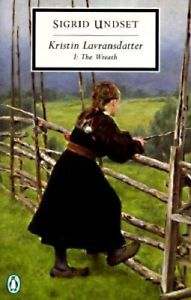
Kristin Lavransdatter, part 1 The Wreath
Sigrid Undset
Penguin, 1997 translation by Tiina Nunnally
Norwegian original "Kransen", 1920
297 pages
If you hated "Kristin Lavransdatter" when forced to read it in school, put off by all that archaic English, there is Good News! This stalwart classic has been reborn in easily readable English, translated by Tiina Nunnally, an award-winning translator from Seattle, Washington.
In an interview in the Seattle Times, Nunnally says of Undset "She was writing in a 1920s Norwegian — beautiful, straightforward language." And thus this translation is in beautiful, straightforward modern English.
Kristin Lavransdatter is a young girl in Norway in the early 1300s. The publisher's blurb on the back cover sums up the plot nicely:
I thoroughly enjoyed the book and found the story engaging enough that I plan on reading the other books in the trilogy, "The Wife" and "The Cross". The story of Kristin Lavransdatter and Erlend Nikulaussøn is timeless and I can imagine it being set in many times and places, much as the play "Romeo and Juliet" is sometimes set in other eras. Sure, their beliefs, laws, and wedding customs might be different from those in the modern western world, but the human tale is enduring. Sometimes young people do make bad life choices, but how they deal with the consequences speaks to their character.
I also liked learning about life in the Middle Ages in rural Norway. Nothing is made to seem quaint or archaic; there is no condescension from a modern point of view. All is perfectly reasonable within the customs of the time. Undset must have been an observant nature lover, for her descriptions of the Norwegian countryside are quite vivid and detailed.
The Nobel Prize in Literature 1928 was awarded to Undset "principally for her powerful descriptions of Northern life during the Middle Ages", according to the Nobel Prize's web page.
The publisher of this translation, Penguin, has a short reader's guide for the trilogy online:
For anyone interested in the process of literature translation, the above-mentioned Seattle Times article about Nunnally is quite interesting. The interview is by Mary Ann Gwinn, who is featured in the Bookmarks segment of PBS's “Well Read: A Series for the Serious Reader” and is herself a Pulitzer Prize winning journalist.
All in all, a satisfying read for me, one which I'd recommend!
Sigrid Undset
Penguin, 1997 translation by Tiina Nunnally
Norwegian original "Kransen", 1920
297 pages
If you hated "Kristin Lavransdatter" when forced to read it in school, put off by all that archaic English, there is Good News! This stalwart classic has been reborn in easily readable English, translated by Tiina Nunnally, an award-winning translator from Seattle, Washington.
In an interview in the Seattle Times, Nunnally says of Undset "She was writing in a 1920s Norwegian — beautiful, straightforward language." And thus this translation is in beautiful, straightforward modern English.
Kristin Lavransdatter is a young girl in Norway in the early 1300s. The publisher's blurb on the back cover sums up the plot nicely:
"...The Wreath chronicles the courtship of a headstrong and passionate young woman and a dangerously charming and impetuous man. Undset re-creates the historical backdrop in vivid detail, immersing readers in the day-to-day life, social conventions, and political undercurrents of the period".
I thoroughly enjoyed the book and found the story engaging enough that I plan on reading the other books in the trilogy, "The Wife" and "The Cross". The story of Kristin Lavransdatter and Erlend Nikulaussøn is timeless and I can imagine it being set in many times and places, much as the play "Romeo and Juliet" is sometimes set in other eras. Sure, their beliefs, laws, and wedding customs might be different from those in the modern western world, but the human tale is enduring. Sometimes young people do make bad life choices, but how they deal with the consequences speaks to their character.
I also liked learning about life in the Middle Ages in rural Norway. Nothing is made to seem quaint or archaic; there is no condescension from a modern point of view. All is perfectly reasonable within the customs of the time. Undset must have been an observant nature lover, for her descriptions of the Norwegian countryside are quite vivid and detailed.
The Nobel Prize in Literature 1928 was awarded to Undset "principally for her powerful descriptions of Northern life during the Middle Ages", according to the Nobel Prize's web page.
"Sigrid Undset - Facts"
http://www.nobelprize.org/nobel_prizes/literature/laureates/1928/undset-facts.html
The publisher of this translation, Penguin, has a short reader's guide for the trilogy online:
Kristin Lavransdatter Reader’s Guide
https://www.penguinrandomhouse.com/books/297272/kristin-lavransdatter-by-sigrid-undset/9780143039167/readers-guide/
For anyone interested in the process of literature translation, the above-mentioned Seattle Times article about Nunnally is quite interesting. The interview is by Mary Ann Gwinn, who is featured in the Bookmarks segment of PBS's “Well Read: A Series for the Serious Reader” and is herself a Pulitzer Prize winning journalist.
Finding the Right Words
An award-winning Seattle translator gives voice to writers from other lands
https://web.archive.org/web/20010911125850/http://seattletimes.nwsource.com/pacificnw/2001/0909/people.html
All in all, a satisfying read for me, one which I'd recommend!
23 January 2018
Back to the Classics 2018: A children's classic
The Brownies: Their Book
Palmer Cox
Dover, 1964 reprint of the 1887 original
Brownies? Who doesn't love brownies? I was a Brownie, then a Girl Scout. I've made brownies for dessert. I used to take pictures with a Brownie camera. And I remember seeing drawings of little fairy-type creatures called Brownies many decades ago, but never a book about them. So it seemed like a great idea to read "The Brownies: Their Book" for the Back to the Classics Challenge.
Each adventure runs about 4 or 5 pages with illustrations on nearly every page, sometimes taking up most of the page. The stories are all done in verse as rhyming couplets, which seems appropriate for reading to small children. But at 144 pages, it was very monotonous for me, reading silently to myself; best done in small doses.
For me the real charm of the Brownies lies in the illustrations, also created by Palmer Cox. I often spent more time studying them than reading the poems! He must have been a very patient man, as most illustrations depict in great detail dozens of little Brownies having fun. And I began to notice that while most of them are generic, I could spot 6 or 7 individual Brownies who show up again and again. I even have a favorite, with top hat, a monocle, and cane.
Although technically I did fulfill the challenge to read a children's book that was more than 50 years old, it seems like cheating because it was poetry and not prose. So, I'm going to read another children's book for good measure.
07 January 2018
Back to the Classics 2018 Challenge
I just discovered the world of book-reading challenges online. What fun! I'm joining the Back to the Classics 2018 challenge hosted by Karen at her BooksAndChocolate blog: Read 12 books from the twelve given categories in 2018. I've been trying to read more classics, so this is perfect. I finished Moby-Dick in November, and began the even longer Don Quixote this week.
My book choices (updated):
1. A 19th century classic -- READ, not yet reviewed
Red Pottage, Mary Cholmondeley (1899)
2. A 20th century classic -- DONE
Excellent Women, Barbara Pym (1952)
3. A classic by a woman author -- DONE
I Capture the Castle, Dodie Smith (1948)
4. A classic in translation -- DONE
Kristin Lavransdatter, Sigrid Undset (1920)
5. A children's classic -- DONE
The Brownies: Their Book, Palmer Cox (1887)
I've heard about these little critters forever and now it's time to read about them.
6. A classic crime story, fiction or non-fiction -- DONE
The Seven Dials Mystery, Agatha Christie (1929)
7. A classic travel or journey narrative, fiction or non-fiction -- DONE
Our Hearts Were Young and Gay, Cornelia Otis Skinner and Emily Kimbrough (1942)
8. A classic with a single-word title -- DONE
Celestina, Fernando de Rojas (1499)
9. A classic with a color in the title -- DONE
The Red House Mystery, A. A. Milne (1922)
10. A classic by an author that's new to you -- DONE
The Pearl, John Steinbeck (1947)
11. A classic that scares you -- DONE
The Grapes of Wrath, John Steinbeck (1939)
12. Re-read a favorite classic -- DONE
Mrs. 'Arris Goes to Paris, Paul Gallico (1958)
Subscribe to:
Posts (Atom)
-
Book Beginnings is a weekly meme hosted by Rose City Reader . We share the first sentence (or so) of the book we are reading, along with o...
-
Every Frenchman Has One Olivia de Havilland Penguin Random House, 2016 143 pages This is an amusing little book of short pieces by Olivia de...
-
Red Pottage Mary Cholmondeley Amazon Digital Services, 2012 originally published by Edward Arnold, 1899 252 pages in the paperback versi...