Showing posts with label Classics Club. Show all posts

03 August 2020

Classics Club Spin #24


It's Classics Club Spin time again! Each Clubber has a personal list of 50-100 classic books that we have chosen to be our challenge list. For the Spin we pick 20 of those titles and put them into a numbered list. On August 9th the Club moderators will draw a number from 1 to 20 and we have to read that book on our list by the end of September and report back to the Club.

I failed completely for Spin #23 - I just could not read anything in April and May. But I'm hoping to be in a reading mood now, so here's a list of books that I think I have on my shelves or can get for my Kindle. First publication date is in parentheses.

  1. At Swim-two-birds, Flann O'Brien (1939)
  2. Billy Budd and other Tales, Herman Melville (~1891)
  3. Candide, Voltaire (1759)
  4. The Dubliners, James Joyce (1914)
  5. Emma, Jane Austen (1815)
  6. Enemies, A Love Story, Isaac Bashevis Singer (1966)
  7. Eugénie Grandet, Honoré de Balzac (1833)
  8. Huckleberry Finn, Mark Twain (1884)
  9. Jane Eyre, Charlotte Brontë (1847)
  10. The Man in the Brown Suit, Agatha Christie (1924)
  11. Oroonoko, The Rover and Other Works, Aphra Behn (<1689)
  12. The Autobiography of Alice B Toklas, Gertrude Stein (1933)
  13. The Rainbow, D. H. Lawrence (1915)
  14. The Reef, Edith Wharton (1912)
  15. A Tale of Two Cities, Charles Dickens (1859)
  16. Things Fall Apart, Chinua Achebe (1958)
  17. This Side of Paradise, F. Scott Fitzgerald (1920)
  18. Three Men in a Boat, Jerome K. Jerome (1889)
  19. The Vicar of Bullhampton, Anthony Trollope (1870)
  20. Wives and Daughters, Elizabeth Gaskell (1864)


I'm looking forward to reading them all eventually, but I think I'd like to tackle Gertrude Stein's "The Autobiography of Alice B Toklas". Go #12!


UPDATE: The spin is #18, so I have a date with "Three Men in a Boat" by Jerome K. Jerome. Everyone tells me it's great fun, so I'm happy. Cheerful books are easier for me to concentrate on during these trying days.


08 May 2020

Book Beginning: Enemies, A Love Story by Isaac Bashevis Singer

Book Beginnings is a weekly meme hosted by Rose City Reader. We share the first sentence (or so) of the book we are reading, along with our initial thoughts about the sentence, impressions of the book, or anything else the opener inspires.

Herman Broder turned over and opened one eye. In his dreamy state, he wondered whether he was in America, in Tzivkev, or in a German camp.


Isaac Bashevis Singer always wrote in Yiddish and won the Nobel Prize in Literature in 1978. That's all I really know about him. I was a bit skittish about reading his work, fearing it would be about the Holocaust and too dark. But this is described as humorous, so I'm hoping for the best. It's my #6 for the Classics Club Spin #23.


19 April 2020

Classics Club Spin #23


It's Classics Club Spin time again! Each Clubber has a personal list of 50-100 classic books that we have chosen to be our challenge list. For the Spin we pick 20 of those titles and put them into a numbered list. On April 19th the Club moderators will draw a number from 1 to 20 and we have to read that book on our list by the end of May and report back to the Club.

I've missed the last few Spins, but I'm in a reading mood now, so here's a list of books that I think I have on my shelves or can get for my Kindle. First publication date is in parentheses.

  1. At Swim-two-birds, Flann O'Brien (1939)
  2. Billy Budd and other Tales, Herman Melville (~1891)
  3. Candide, Voltaire (1759)
  4. The Dubliners, James Joyce (1914)
  5. Emma, Jane Austen (1815)
  6. Enemies, A Love Story, Isaac Bashevis Singer (1966)
  7. Eugénie Grandet, Honoré de Balzac (1833)
  8. Huckleberry Finn, Mark Twain (1884)
  9. Jane Eyre, Charlotte Brontë (1847)
  10. The Man in the Brown Suit, Agatha Christie (1924)
  11. Oroonoko, The Rover and Other Works, Aphra Behn (<1689)
  12. The Autobiography of Alice B Toklas, Gertrude Stein (1933)
  13. The Rainbow, D. H. Lawrence (1915)
  14. The Reef, Edith Wharton (1912)
  15. A Tale of Two Cities, Charles Dickens (1859)
  16. Things Fall Apart, Chinua Achebe (1958)
  17. This Side of Paradise, F. Scott Fitzgerald (1920)
  18. Three Men in a Boat, Jerome K. Jerome (1889)
  19. The Vicar of Bullhampton, Anthony Trollope (1870)
  20. Wives and Daughters, Elizabeth Gaskell (1864)

I'm looking forward to reading them all eventually, but I think I'd like to tackle Gertrude Stein's "The Autobiography of Alice B Toklas". Go #12!


UPDATE: The spin is #6, so I'm reading "Enemies, A Love Story", by Isaac Bashevis Singer. I know only a little bit about Singer: he was awarded the Nobel Prize for Literature, and he always wrote and published in Yiddish. I'm looking forward to reading this novel!


11 December 2019

A Gothic Bath Visit

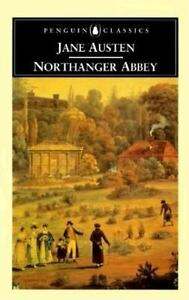
Northanger Abbey
Jane Austen
Penguin, 1995 (originally published 1817)
231 pages

I think this is my first Jane Austen novel! Hard to believe, I know, but it just never came up; not in high school and not as a chemistry major in college. This was the first novel written by Austen, apparently around 1799, although it wasn't published until after her death in 1817.


"Northanger Abbey" is divided into two nearly equal parts, 98 &103 pages. In part 1 our heroine, Catherine, is introduced as a sweet, unworldly girl from a country village who is introduced to high society in Bath, England, sometime during the early part of the Regency period, which lasted from 1790 to 1820. Fashionistas from all over England travelled to Bath to see and be seen, in addition to drinking the famous curative waters. We follow Catherine as she takes in the scene and meets some new friends.

In part 2 Catherine visits some people she has met in Bath, Eleanor and Henry Tilney, at their father's estate in Gloucestershire, Northanger Abbey. Having read numerous gothic romance novels, popular in the late 1700s, Catherine lets her imagination run away with her at the abbey. Creepy sounds, dark passageways,  seemingly odd events, a dead wife, all bring her terror, sleepless nights, and misery. Never fear, there is a happy ending!

I was not fond of this book. I know it's satire and things are overblown on purpose, but it was a bit boring. I did not like the writing style, either; it seemed a bit too coy. Austen herself lived in Bath from 1801 to 1806 and her contemporary account of what Bath was like during the Regency Period was very enjoyable, though. I knew that people visited the Pump Room to drink the waters, and that there were festive gatherings, but I didn't understand how it all worked before reading this.

This is my entry for the Back to the Classics 2019 Challenge, in the Nineteenth Century Classic category.


FURTHER READING

Jane Austen's World
"This Jane Austen blog brings Jane Austen, her novels, and the Regency Period alive through food, dress, social customs, and other 19th C. historical details related to this topic."
https://janeaustensworld.wordpress.com/tag/regency-bath/


19 April 2019

Classics Club Spin #20


It's Classics Club Spin time again! Each Clubber has a personal list of 50-100 classic books that we have chosen to be our challenge list. For the Spin we pick 20 of those titles and put them into a numbered list. On April 23rd the Club moderators will draw a number from 1 to 20 and we have to read that book on our list by the end of May and report back to the Club.

So here's my list! I want to read them all, but I've wanted to read "A Tree G rows in Brooklyn" for ages, so I'm hoping for #10.

1. Greenwillow, B.J. Chute 1956
2. The Dubliners, James Joyce (1914)
3. Little Women, Louisa May Alcott (1869)
4. Ethan Frome, Edith Wharton (1911)
5. The Autobiography of Alice B Toklas, Gertrude Stein (1933)
6. Candide, Voltaire (1759)
7. Giles Goat Boy, John Barth (1966)
8. Wives and Daughters, Elizabeth Gaskell (1864)
9. Elizabeth Gaskell, May Barton (1848)
10. A Tree Grows in Brooklyn, Betty Smith (1943)
11. Three Men in a Boat, Jerome K. Jerome (1889)
12. Things Fall Apart, Chinua Achebe (1958)
13. The Reef, Edith Wharton (1912)
14. The Moonstone, Wilkie Collins (1868)
15. The Woman in White, Wilkie Collins (1859)
16. Lucky Jim, Kingsley Amis (1954)
17. The Innocents Abroad, Mark Twain (1869)
18. Enemies, A Love Story, Isaac Bashevis Singer (1966)
19. Main Street, Sinclair Lewis (1920)
20. Howards End, E. M. Forster (1910)


Ready for Spin!


UPDATE: The spin is #19, so I'm reading Main Street by Sinclair Lewis!


08 February 2019

A Maiden, a Widow and a Wife

Can You Forgive Her?
Anthony Trollope
Penguin, 1986
1st Edition: London, Chapman and Hall, 1864-5. 2 vol.
848 pages, including 39 pp introduction and 17 pp notes


"Can You Forgive Her?" is the first novel in Anthony Trollope's sextet known as the Palliser novels. Despite being quite long at almost 800 pages, I enjoyed reading this book. To me it never seemed to drag on, as I was always very interested in the characters and what was happening to them. However it did take a few chapters to get used to the "dear reader" writing style where the omniscient narrator comments on the events that they are describing, sometimes at length.

http://www.amazon.com/exec/obidos/ASIN/0140430865/ref=nosim/webxina/

There was one long scene about fox hunting which didn't add much to the development of the characters or the plots. Later I learned that Trollope was crazy about fox hunting and participated in it as often as he could, despite being overweight and unfit for the sport. He even placed a surrogate fox-hunting writer in the scene. I found it an interesting but nonessential little story island within the book.

Because there are three main stories being told simultaneously, there are a lot of characters to keep track of plus several settings in and out of London. I will confess to having made a family tree for the Vavasor family that bridges the three stories, which helped until I became more familiar with everyone. Wikipedia has a list of characters in the Palliser series, but there might be spoilers in there such as who marries whom and resultant children.

Written and set in the 1860s, the interconnected stories concern three women and their choices in life and men. In chapter 11 the central character, a single young woman named Alice Vavasor, asks "What should a woman do with her life?" Respectable women could not have careers, which left them to either marry and live conventionally or remain spinsters. Of course the issue was complicated by money or lack thereof. A further issue in Alice's mind was whether to choose a man with ambitions in the world, and be devoted to helping in his worthy cause, or to choose a man without ambitions and be devoted to home and hearth. She agonizes over this choice for most of the 800 pages, jilting both men at some point, and she is the one the title asks us to forgive.

Trollope has given us a range of upper-class women to think about. Alice Vavasor, 24, single, with a modest income. Lady Glencora, 20ish, married, fabulously wealthy. Arabella Vavasor Greenow, 40-something widow, with a large income. They all are deciding between two suitors, in each case between a nice guy and a bad boy. So this attraction some women have for the bad boy is nothing new! Another interesting parallel with modern day romance is reflected in this quote from Alice:

[she] had begged him to treat her simply as a friend. 'In spite of everything, I hope that we may always be friends, - dear friends' she said.

The three stories contrast in many ways including the personalities of the women. Alice is rather serious and a bit grave, looking for meaning in her life. Glencora is frivolous and gay, and wants romance. Arabella is wise and witty, in search of companionship; she gives the book quite humorous interludes that provide a break from the more serious concerns of Alice. Some critics have panned Arabella's inclusion in the book, but I think she is my favorite character of all.

I knew practically nothing about Anthony Trollope or his novel "Can You Forgive Her?" when I began reading it at the whim of the Classic Club's Spin #19, the chunkster challenge. But I thoroughly enjoyed it and have started the next in the series, "Phineas Finn".


FURTHER READING

Wikipedia has a list of characters
https://en.wikipedia.org/wiki/Palliser_novels

The Trollope Society
https://trollopesociety.org/
"The Trollope Society exists, with a world-wide membership, to promote and publish the works of Anthony Trollope, to provide a forum for the exploration of all aspects of his life, and to encourage the reading and enjoyment of his fiction for future generations." Plot summaries and character biographies are online for all his works, and many Trollope quotes.

A Maiden, a Widow and a Wife
Title of a 1956 painting by Max Ernst
https://www.wikiart.org/en/max-ernst/a-maiden-a-widow-and-a-wife-1956


21 November 2018

Classics Club Spin #19


 It's Classics Club Spin time again! Each Clubber has a personal list of 50-100 classic books that we have chosen to be our challenge list. For the Spin we pick 20 of those titles and put them into a numbered list. On November 27th the Club moderators will pick a number from 1 to 20 and we have to read that book on our list by the end of January and report back to the Club. Usually we get one month to read the book, but for this Spin we have two months because it's a Chunkster version and the books should be nice big ones.

So here's my list! I want to read them all, so I'm not sure if I am hoping for any particular number to come up. I should probably hope for a long, cold winter in which to stay home and read!

1. Can You Forgive Her?
Anthony Trollope
848 pages

2. The Claverings
Anthony Trollope
560 pages

3. A Dance to the Music of Time: First Movement
Anthony Powell
732 page

4. Daniel Deronda
George Eliot
784 pages

5. David Copperfield
Charles Dickens
768 pages

6. The Decameron
Giovanni Boccaccio, Wayne A. Rebhorn (Translator)
1024 pages

7. Hard Times
Charles Dickens
352 pages

8. Little Women
Louisa May Alcott
544 pages

9. Mary Barton: A Tale of Manchester Life
Elizabeth Gaskell
496 pages

10. The Moonstone
Wilkie Collins
560 pages

11. Ruth
Elizabeth Gaskell
512 pages

12. A Tree Grows in Brooklyn
Betty Smith
496 pages

13. Vanity Fair
William Makepeace Thackeray
736 pages

14. Wives and Daughters
Elizabeth Gaskell
720 pages

15. Far From the Madding Crowd
Thomas Hardy
480 pages

16. Giants in the Earth: A Saga of the Prairie
O.E. Rolvaag
480 pages

17. Far From the Madding Crowd
Thomas Hardy
480 pages

18. Howards End
E. M. Forster
499 pages

19. The Vicar of Bullhampton
Anthony Trollope
512 pages

20. The Ambassadors
Henry James
528 pages


UPDATE: The spin is #1, so I'm reading Anthony Trollope's "Can You Forgive Her?" All 848 pages of it by January 31, 2019.


05 November 2018

Just Say No to Pap

The Little Prince
Antoine de Saint Exupéry
Harbrace, 1943 translation by Katherine Woods
French original "Le Petit Prince" 1943
113 pp.


My first Classics Club Spin book was "The Little Prince", scheduled to be read during August and reported on soon after. I am awfully late and it's not only my move that stopped me. I have dreaded writing this review and dragged my feet because... I hated this book. There, I've written it. What a relief.

And it seems that I am not alone. There is a thread at Goodreads entitled "Am I the only one who hates this book?"

Oh, it does have those cute, whimsical drawings that weren't too cloying, I suppose. And it was short, thankfully. But beyond that, there was nothing that I liked even a little. To me it reeked of heavy-handed moralizing and it was wimpy to boot. Maybe it was better in the world of 1943 when it was written, and World War II was in full swing. I only finished it because it was my Club Spin book.

I'm sure that saying such things will gain me criticism along the line that I just don't understand because I am grown up, like the book says. Alas, I fear trying to answer this charge is like answering the old question "Have you stopped beating your wife?" There is no answer. However, in my defense I will just say that I love all things AA Milne, "Olivia", "Little House on the Prairie", and the children's poems in "Silver Pennies".

Onward and upward to far, far better books! "Tale of Two Cities" anyone?

26 July 2018

Classics Club Spin #18


This is my first Classics Club Spin, and I'm excited! Each Clubber has a personal list of 50-100 classic books that we have chosen to be our challenge list. For the Spin we pick 20 of those titles and put them into a numbered list. On August 1 the Club moderators will pick a number from 1 to 20 and we have to read that book on our list by the end of August and report back to the Club.

So here's my list. Quite a few novellas, as I have set up a personal challenge called Short Reads Short Reviews (SRSR). Most of these are sitting in my collection somewhere, as reading what I already own is a major theme for me.
  1. Chinua Achebe, "Things Fall Apart" 1958
  2. John Barth, "Giles Goat-Boy" 1966
  3. May Barton, "Elizabeth Gaskell" 1848
  4. Joseph Bédier, "The Romance of Tristan & Iseult" 1900
  5. Aphra Behn, Oroonoko, "The Rover and Other Works" <1689
  6. Daniel Defoe, "A Journal of the Plague Year" 1722
  7. Honoré de Balzac, "Eugénie Grandet" 1833
  8. Olivia de Havilland, "Every Frenchman Has One" 1961
  9. Antoine de Saint Exupéry, "The Little Prince" 1943
  10. Charles Dickens, "A Tale of Two Cities" 1859
  11. Nikolai Gogol, "Dead Souls" 1842
  12. Henry James, "Daisy Miller" 1879
  13. James Joyce, "Dubliners" 1914
  14. Herman Melville, "Billy Budd and other Tales" ~1891
  15. I. E. Rövaag, "Giants in the Earth" 1925
  16. Anthony Trollope, "The Vicar of Bullhampton" 1870
  17. Edith Wharton, "The Glimpses of the Moon" 1922
  18. Edith Wharton, "The Reef" 1912
  19. Voltaire, "Candide" 1759
  20. Virginia Woolf, "A Room of One's Own" 1929

Spin On!


UPDATE: The spin is #9, so I'm reading Antoine de Saint Exupéry's "The Little Prince". I guess it's about time I read this popular classic, everyone else seems to have!


20 June 2018

The Original Hero with a Secret Identity

The Scarlet Pimpernel
Baroness Emma Orczy
Signet, 2000 (originally published 1905)
288 pages


Although I had heard of the novel called "The Scarlet Pimpernel" for ages, I never really knew anything about it, except that it had an odd title. A scarlet pimpernel, it turns out, is a common European wildflower related to primroses. And it is the symbol chosen by the book's hero to announce his daring deeds.

http://www.amazon.com/exec/obidos/ASIN/0451527623/ref=nosim/webxina/


The rather breathless text on the back of book is a nice summary:

The year is 1792. The French Revolution, driven to excess by its own triumph, has turned into a reign of terror. Daily, tumbrels roll over the cobbled streets of Paris bearing new victims to the insatiable Madame Guillotine.... Thus the stage is set for one of the most enthralling novels of historical adventure ever written.
The mysterious figure known as the Scarlet Pimpernel, sworn to rescue helpless men, women, and children from their doom; his implacable foe, the French agent Chauvelin, relentlessly hunting him down; and the lovely Lady Marguerite Blakeney, a beautiful French exile married to an English lord and caught in a terrible conflict of loyalties -- all play their parts in a suspenseful tale that ranges from the squalid slums of Paris to the aristocratic salons of London, from intrigue on a great English country estate to the final denouement on the cliffs of the French coast.

Apparently this book was the first novel to have a hero with a secret identity, an idea soon copied in the tales of Zorro (1919), The Shadow (1931), Superman (1933), and Batman (1939), to name a few early examples. After the League of the Scarlet Pimpernel has saved a noblewoman and her children, the woman demands to meet their leader so she can thank him in person.
"Alas, Madame!" said Lord Antony, "that is impossible."
"Impossible?--Why?"
"Because the Scarlet Pimpernel works in the dark, and his identity is only known under the solemn oath of secrecy to his immediate followers."

http://www.amazon.com/exec/obidos/ASIN/0451527623/ref=nosim/webxina/

It's a ripping good story, full of suspense, intrigue, aristocratic snits, and a conniving bad guy. What I found most interesting was seeing the story of the French Revolution from the view of the English aristocracy. France and England didn't see eye to eye very often over the centuries, but the English aristocrats were quite disturbed at what was happening to the aristocrats in France. Could the revolutionary fever spread to England?

This is the first in a series of 16 historical fictions, including stories about the Pimpernel's ancestors, thereby probably inventing prequels as well!


29 May 2018

Is She an Excellent Woman?

Excellent Women
Barbara Pym
E. P. Dutton, 1978 (originally published 1952)
256 pages


This is Barbara Pym's best known novel, a lightly satiric, wry look at mid-twentieth century London, soon after World War II's end. Mildred is a very kind, unassuming spinster in her mid-thirties, living alone in London. This is her story, told from her point of view, almost as if written in her diary. Although she has no family left and never married, she says she enjoys her solitude and is happy with a part-time job with an impoverished gentlewomen’s group and her work in the church. In the book, women who do that sort volunteer work are condescendingly referred to as "excellent women" by other characters.

http://www.amazon.com/exec/obidos/ASIN/014310487X/ref=nosim/webxina/

Mildred is quite perceptive about the people she finds around her: the pastor and his spinster sister, the members of her church, her new neighbors, her old school friend. She wonders how a group of anthropologists she meets can be so insightful about the primitive tribes they study and yet so obtuse about their own lives. She marvels that the unmarried pastor can be so smitten with an uncharitable, unacceptable woman. She examines her own thoughts and feelings closely, as well, with a self-deprecating humor.

However as a single woman without family ties, everyone she knows presumes she will help them, expecting her to automatically be there for their needs. And she invariably is, although she does allow herself a grumble here and there about it. Thus she finds herself doing things she doesn't really want to do at all.

It's a quiet book, no dramatic disasters befall Mildred, although the lives of her friends do seem to constantly be in turmoil and in need of her assistance. Overall I enjoyed this look at post-war London and it was very well-written. Mildred's observations are spot on. But I found her passivity in the face of others' demands upon her very sad. This counts as the 20th century classic books for the Back to the Classics 2018 Challenge.


Further Reading

Reader's Guide by Penguin/Random House


22 April 2018

The Pearl of the World

The Pearl
John Steinbeck
Drawings by José Clemente Orozco
Viking Press, 1945
123 pages

This slim book by Nobel-laureate Steinbeck has been called a simple story about simple people. It feels like a very old fable, whose lyrical writing sings in your head as you read it. Wikipedia says Steinbeck heard the tale on a trip to Mexico, and first turned it into a short story, then this novella, and finally a screenplay for a Mexican American movie.

It's the story of an impoverished Mexican pearl diver, Kino, his wife Juana, and their infant son, Coyotito. One day Kino finds a huge pearl, the Pearl of the World. But instead of the good new future he envisions for his family, other people's greed and betrayal overwhelm him and his hopes. The writing is very evocative and affecting. I had a slight feeling of doom throughout, which made it hard to continue reading sometimes.

http://www.amazon.com/exec/obidos/ASIN/014017737X/ref=nosim/webxina/

This was my first Steinbeck novel and I loved the writing style, despite the rather downbeat story. I need to add some of his other works to my To Be Read list. I've been trying to read more works by authors who won a big literary prize, e.g., Nobel Prize, Man Booker Award, Women's Prize for Fiction (née Orange Prize), Pulitzer, etc. This my Back to the Classics entry for a classic by an author that's new to you.

Movie Poster for "The Pearl"
Wikipedia says that the movie, La perla (The Pearl) is a 1947 Mexican American film by the acclaimed director Emilio Fernández. In 2002, the film was selected for preservation in the US National Film Registry. I hadn't heard of this Film Registry before, but it is a program of the Library of Congress. On it's web pages it says:
[The National Film Registry] is a list of films deemed "culturally, historically or aesthetically significant" that are earmarked for preservation by the Library of Congress. These films are not selected as the 'best' American films of all time, but rather as works of enduring importance to American culture. They reflect who we are as a people and as a nation.
They add 25 films each year to the list. All the titles and many descriptions are listed on the web site. Maybe the start of a To Be Seen list?

18 March 2018

Back to the Classics 2018: A classic with a single-word title

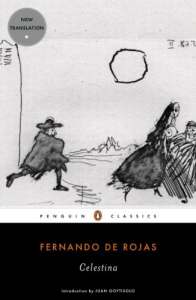
Celestina
Fernando de Rojas
Penguin, 2009, translation by Peter Bush
Spanish original "Tragicomedia de Calisto y Melibea", 1499
219 pages

"Celestina", also known as the "Tragicomedy of Calisto and Melibea" or "The Spanish Bawd", is quite a book. Still in print after 519 years, it trails a small army of students, critics, and professors of Spanish literature in its wake, producing piles of scholarly articles and books! This translation by Peter Bush is in easily-read modern English.


http://www.amazon.com/exec/obidos/ASIN/9780143106098/ref=nosim/webxina/

 http://www.amazon.com/exec/obidos/ASIN/9780143106098/ref=nosim/webxina/ 

An engaging tale of lust and love, the story is funny, bawdy, and crude. Calisto is a wealthy young man who falls violently in love with a chaste maiden, Melibea, after meeting her once. The plot is about his attempts to woo her using the local bawd (madam, pimp, procuress) and possible witch, Celestina. Calisto's servants are always mocking him behind his back, when they aren't with some of Celestina's girls. Most of the characters are rogues and scoundrels, yet they keep invoking God's name and praying. Basically the book is a parody of the Courtly Love found in the popular romances of the day, but with a tragic ending instead of the typical weddings of the romances.

I read this book more for its historical importance than for the quality of story itself. I'm taking an online course about "Don Quixote" by Miguel Cervantes, written one hundred years after "Celestina". In the course readings and lectures, "Celestina" has been mentioned frequently. Plus many lists of "100 best novels" include it, so I thought I should check it out.

http://www.spanisharts.com/books/literature/ampliaciones/celval14.htm

Its unique, wholly original feature is that the entire book is written in dialogue. There is no narrator to set the scene or explain the action, which can make it tricky to keep straight who's talking. However the translator has added some narrative phrases here and there, such as "suggested Celestina" or "Sempronio grunted to himself", and this does help keep the reader on track.

Some call "Celestina" the first European novel, considered second in importance only to Don Quixote in Spanish literary heritage. I discovered that the word "celestina" is even listed in the Spanish dictionary as a "go-between" or "procuress", proving the lasting effect the book has had on Spanish culture over the centuries. In 1904 Pablo Picasso painted this portrait called "Celestina":


There is a long article about the book online at the LA Times website, written by one of the all-time great Spanish authors, Juan Goytisolo, who also wrote the introduction to the book I read.
"Celebrating the 500th Anniversary of Spanish Literature's Most Audacious and Subversive Work", Juan Goytisolo, 1999.

I enjoyed "Celestina" and found parts of it quite funny.

14 March 2018

Joining the Classics Club

I'm jumping into another book-reading challenge, after discovering the Classics Club. Although I do read novels published in this century, as well as quite a bit of non-fiction, I have always loved reading classic novels, books that have been favorites of readers for generation after generation. So, finding a club of fellow classics enthusiasts was a thrill!

My list has 90+ books so far, but I will be updating it now and then, as I find other intriguing titles, or give up on some. The publication dates range from 1024 (!) to 1979, so I'll have quite a good range of styles and types to dive into. I don't have any strict criteria for what is a classic novel, but they tend to be more than 50 years old and I am trying to read a lot of the big prize winners, e.g. the Man Booker Prize, the Pulitzer Prize, and the Women's Prize/Orange Prize. Reviews will be linked to the titles below as I post them.

Classics Club: On your blog, post a list of 50 or more classics that you agree to read within 5 years. Write about each one, post it on your blog, and link that post to your list.

My Start Date: 1 March 2018
My Finishing Goal: 1 March 2023


My List

The Age of Innocence, Edith Wharton (1920)
Arrowsmith, Sinclair Lewis (1925)
At Swim-two-birds, Flann O'Brien (1939)
The Autobiographiy of Alice B Toklas, Gertrude Stein (1933)

A Bend in the River, VS Naipaul (1979)
Bill the Conqueror, P. G. Wodehouse (1924)
Billy Budd and other Tales, Herman Melville (~1891)
The Blue Castle, Lucy Maud Montgomery (1926)

Cairo Trilogy, Naguib Mahfouz
    Palace Walk (1956) (Cairo Trilogy, Part 1)
    Palace of Desire (1957) (Cairo Trilogy, Part 2)
    Sugar Street (1957) (Cairo Trilogy, Part 3)
Can You Forgive Her?, Anthony Trollope (1865)
Candide, Voltaire (1759)
The Canterbury Tales, Geoffrey Chaucer (1387-1400)
Celestina, Fernando de Rojas (1499)
Children of the Alley, Naguib Mahfouz (1959)
The Count of Monte Cristo, Alexandre Dumas (1884)

Daisey Miller, Henry James (1879)
The Decameron, Giovanni Boccaccio (1353) [trans. J. G. Nichols]
Dead Souls, Nikolai Gogol (1842)
Don Quixote, Miguel de Cervantes (1605 and 1615)
Dubliners, James Joyce (1914)

Elizabeth Gaskell, May Barton (1848)
Emma, Jane Austen (1815)
Enemies, A Love Story, Isaac Bashevis Singer (1966)
Ethan Frome, Edith Wharton (1911)
Eugénie Grandet, Honoré de Balzac (1833)
Every Frenchman Has One, Olivia de Havilland (1961)
Excellent Women, Barbara Pym (1952)

The Flowering Thorn, Margery Sharp (1933)
Four Gardens, Margery Sharp (1935)

Giants in the Earth, O. E. Rölvaag, (1925)
Giles Goat Boy, John Barth (1966)
The Glimpses of the Moon, Edith Wharton (1922)
The Golden Notebook, Doris Lessing (1962)
The Good Soldier, Ford Madox Ford (1915)
Great Expectations, Charles Dickens (1861)

Howards End, E. M. Forster (1910)
Huckleberry Finn, Mark Twain (1884)

If on a Winter's Night a Traveller, Italo Calvino (1979)
Independent People, Halldór Laxness (1935)
The Innocents Abroad, Mark Twain (1869)

Jane Eyre, Charlotte Brontë (1847)
A Journal of the Plague Year, Daniel Defoe (1722)

Lazarillo de Tormes, anonymous (1554)
The Life and Opinions of Tristram Shandy, Gentleman, Laurence Sterne (1759)
The Little Prince, Antoine de Saint Exupéry (1943)
Little Women, Louisa May Alcott (1869)
Loitering with Intent, Muriel Spark (1981)
Lucky Jim, Kingsley Amis (1954)

Main Street, Sinclair Lewis (1920)
The Man in the Brown Suit, Agatha Christie (1924)
Marvelous Land of Oz, L. Frank Baum  (1904)
The Master and Margarita, Mikhail Bulgakov (1940)
The Moonstone, Wilkie Collins (1868)
Mrs Dalloway, Virginia Woolf (1925)

One Hundred Years of Solitude, Gabriel García Márquez (1967)
Orlando, Virginia Woolf (1928)
Oroonoko, The Rover and Other Works, Aphra Behn (<1689)

A Passage to India, E. M. Forster (1924)
Portrait of a Lady, Henry James (1881)
Pride and Prejudice, Jane Austen (1813)
The Prime of Miss Jean Brodie, Muriel Spark (1961)
The Pursuit Of Love, Nancy Mitford (1945)

Quartet in Autumn, Barbara Pym (1977)

The Rainbow, D. H. Lawrence (1915)
Rebecca, Daphne du Maurier (1938)
The Reef, Edith Wharton (1912)
Robinson Crusoe, Daniel Defoe (1719)
The Romance of Tristan & Iseult, Joseph Bédier (1900)
A Room of One's Own, Virginia Woolf (1929)

Scoop, Evelyn Waugh (1938)
The Setons, O. Douglas (1917)
Silas Marner, George Eliot (1861)
Sons and Lovers, D. H. Lawrence (1913)
The Sound of the Mountain, Yasunari Kawabata (1949)

The Tale of Genji, Murasaki Shikibu (Before 1021)
A Tale of Two Cities, Charles Dickens (1859)
Things Fall Apart, Chinua Achebe (1958)
This Side of Paradise, F. Scott Fitzgerald (1920)
Three Men in a Boat, Jerome K. Jerome (1889)
To the Lighthouse, Virginia Woolf (1927)
Tom Jones, Henry Fielding (1749)
A Tree Grows in Brooklyn, Betty Smith (1943)
Typee, Herman Melville (1846)

Vanity Fair, William Makepeace Thackeray (1848)
The Vicar of Bullhampton, Anthony Trollope (1870)

Wives and Daughters, Elizabeth Gaskell (1864)
The Way We Live Now, Anthony Trollope (1875)
The Woman in White, Wilkie Collins (1859)

Zorba the Greek, Nikos Kazantzakis (1946)


Wish me luck!!