14 January 2019

Bout of Books #24 - Wrapup


https://boutofbooks.blogspot.com/

Another week-long Bout of Books comes to an end, during which I read parts of several books, joined the Monday Twitter chat, and completed one of the challenges. I like this read-a-thon because it's all about reading and sharing with the group, in a free-form manner. No rules, no large page-counts required!

First I finished the final 200 pages of the 800-page novel "Can You Forgive Her?" by Anthony Trollope. It's known as the first of his Palliser series, although the Pallisers are not the central figures in this book. Yes, it was long, but I thoroughly enjoyed the stories that it told of upper class life in 1860s England, and look forward to reading the other five tomes eventually.


I also read 3/4 of "Queen Lucia" by E. F. Benson, likewise the first in a series of six novels. Long ago I watched several television productions based on the Mapp and Lucia series of books, so I thought I should read the original comedies. I must admit that I liked Lucia much better on screen than on the page. She's so bossy and snobbish that she became annoying. I guess in the TV series she seemed a bit more likeable. Still, I plan on reading the whole series.

http://www.amazon.com/exec/obidos/ASIN/9781603863629/ref=nosim/webxina/


Lastly, I re-read several short stories in the translated collection "The Book of Khartoum" before reviewing it. There are 10 stories from Sudan in the slim volume and it's a quick read. Some stories were very interesting, while others were mostly baffling to me. It gave me a peek into a very different culture, which I enjoyed, but I am glad it was a short trip.


I see Bout of Books #25 will be from May 13th to May 19th. Join us, it's fun!


Stories of Khartoum

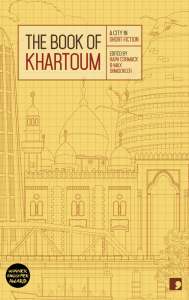
The Book of Khartoum: a City in Short Fiction
Raph Cormack & Max Shmookler, editors
Comma Press, 2016
72 pages


Somewhere on a book blog I saw a reference to this book, a slim volume of short stories circling about the city of Khartoum, capital of Sudan. I've been trying to read more literature in translation, and I don't think I've read anything from North Africa, so I requested this from the library.

http://www.amazon.com/exec/obidos/ASIN/1905583729/ref=nosim/webxina/  

Khartoum, according to one theory, takes its name from the Beja word hartooma, meaning ‘meeting place’. Geographically, culturally and historically, the Sudanese capital is certainly that: a meeting place of the Blue and White Niles, a confluence of Arabic and African histories, and a destination point for countless refugees displaced by Sudan’s long, troubled history of forced migration.
The Book of Khartoum provides an intimate tour of this city through the eyes of 10 of its best authors, representing a wide array of literary schools and political stances; from the social realism of old Communist stalwarts, to the fantastical abstraction of a new generation of Sudanese writers.
-- Comma Press

Some of the stories are interesting tales of life in this African city today, while others are very experimental and hard to really understand. My favorite of the 10 stories is "The Tank" by Ahmed al-Malik. In it the narrator buys a used tank from a middleman he meets at a wedding. The reactions to the tank are telling of the society he lives in.  His friends and neighbors are suspicious and stay away from him. The tradesman he deals with suddenly give him much better goods and services.

I also enjoyed "Next Eid" by Bawadir Bashir. In it Uthman is a young man from a small village who studies at a big university in Khartoum. Every Eid holiday he takes many gifts home for his family and friends. There he is considered a wonderful and talented big shot, called Sir Doctor Uthman. Afterwards he returns to his shabby dorm, his studies, and the night job that lets him support his family. A small, moving portrait.

According to the introduction, some of the stories depend on nuances of Arabic or playing with Arabic rhyming schemes. I am glad I read this little book, but it does demonstrate that literature in translation can be tricky to understand out of its context.


FURTHER READING

The publisher, Comma Press of Manchester, England, has a series called "Reading the City: Celebrating the best short stories from cities in the UK and from around the world." They are a bit hard to find, but I would like to read a few more. The series thus far:

The Book of Birmingham (UK)
The Book of Cairo (Egypt)
The Book of Dhaka (Bangladesh)
The Book of Gaza (Palestine)
The Book of Havana (Cuba)
The Book of Istanbul (Turkey)
The Book of Khartoum (Sudan)
The Book of Leeds (UK)
The Book of Riga (Latvia)
The Book of Rio (Brazil)
The Book of Tbilisi (Georgia)
The Book of Tehran (Iran)
The Book of Tokyo (Japan)


08 January 2019

Dinner Party

https://boutofbooks.blogspot.com/

The challenge for Day 2 of Bout of Books 24 is:

Character dinner party: You are hosting an intimate dinner party for five of your favorite characters. Who do you invite and what food do you serve?


This was a tough one for me at first; of the many books I've read, who would I invite? But then I decided I should invite characters from some of my favorite book series, because after 10 or so books, you feel you know them well enough to have them over.

Invitations go to:

  • Domenica, Bertie, and Angus from the "44 Scotland Street" series by Alexander McCall Smith
  • Isabel and Jamie from the "Isabel Dalhousie" series by Alexander McCall Smith
  • and mayhap Flavia de Luce will pop in from her eponymous series by Alan Bradley


I would cook a 7-course Chinese feast, one course per diner as traditional, because that's what I'm good at! Since the first 5 are from Scotland and Flavia is English, they would all be far to polite to object to whatever I made. For after dinner drinks, I would offer some single-malt Scotch and sparkling apple juice for Flavia.

How is your dinner party working out?


01 January 2019

Short Reads Short Reviews #4: Becoming French

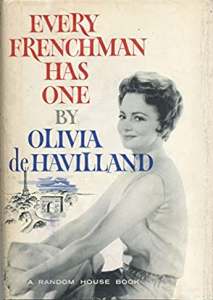
Every Frenchman Has One
Olivia de Havilland
Penguin Random House, 2016
143 pages


This is an amusing little book of short pieces by Olivia de Havilland, the retired actress who won 2 Oscars and many other awards in her long career. On the eve of her 100th birthday, the 1961 book was reissued with a short interview with Miss de Havilland as she turned 100.


She fell in love with a Frenchman and moved to Paris in 1953, where she has remained up to this day. In this book she humorously recounts many incidents that happened to her as she learned to be French. As the publisher's blurb puts it, "her skirmishes with French customs, French maids, French salesladies, French holidays, French law, French doctors, and above all, the French language are here set forth in a delightful and amusing memoir of her early years in the City of Light."

Her style is light and funny, as though she were an old friend telling you of her adventures with as much wit and exaggeration as she could get away with.
Of course the thing that staggers you when you first come to France is the fact that all the French speak French—even the children. Many Americans and Britishers who visit the country never quite adjust to this, and the idea persists that the natives speak the language just to show off or be difficult.
On a long, cold, grey winter day, this would be a perfect pick-me-up accompanied by a cup of something hot, especially if you, like me, have a soft spot in your heart for Paris.

P. S. The secret word is "liver".


Back to the Classics 2019 Challenge


https://karensbooksandchocolate.blogspot.com/2018/12/back-to-classics-2019_9.html

Last year I discovered that reading challenges were being organized online and immediately joined the Back to the Classics 2018 Challenge hosted by Karen at her KarensBooksAndChocolate blog. And I did it: I read and reviewed one book in each of her 12 categories! My Wrapup post just made the December 31st deadline.

And challenging myself to read with categories to meet and a goal in mind was really fun! Somehow having a vague idea that I wanted to "read more classic books" wasn't getting translated into Finished Books. Thus I am jumping right back into the 2019 Back to the Classics Challenge.

Read 1 book from each of the 12 given categories in 2019, review them online, and link back to Karen's blog. I'm going to list my picks and some alternates now. However you are allowed to change them around or read entirely different books, as long as you straighten it all out by year's end. These are all residents of my newly constructed bookshelves, so I plan on sticking to the list and reducing my TBR lists somewhat.

Here goes!

1. 19th Century Classic
    Little Women, Louisa May Alcott (1868-69)

2. 20th Century Classic
    Bachelor's Bounty, Grace S Richmond (1932)
    Grand Hotel, Vicki Baum (1929)

3. Classic by a Female Author
    Bachelor's Bounty, Grace S Richmond (1932)
    The Glimpses of the Moon, Edith Wharton (1922)

4. Classic in Translation
    Grand Hotel, Vicki Baum (1929)

5. Classic Comedy
    Queen Lucia, E. F. Benson (1920)

6. Classic Tragedy
    Ethan Frome, Edith Wharton (1911)

7. Very Long Classic. Any classic single work 500 pages or longer, not including introductions or end notes.
    The Portrait of a Lady, Henry James (1881)
    Innocents Abroad, Mark twain (1869)

8. Classic Novella. Any work of narrative fiction shorter than 250 pages.
    Dubliners, James Joyce (1914)
    Miguel Street, V.S. Naipaul (1959)

9. Classic From the Americas (includes the Caribbean). Includes classic set in either continent or the Caribbean, or by an author originally from one of those countries.
    The Bridge of San Luis Rey, Thorton Wilder (1927)
    Miguel Street, V.S. Naipaul (1959)

10. Classic From Africa, Asia, or Oceania (includes Australia). Any classic set in one of those contents or islands, or by an author from these countries.
    Peony, Pearl S. Buck (1948)

11. Classic From a Place You've Lived. Read locally!
    A Sand County Almanac, Aldo Leopold (1949)

12. Classic Play. Any play written or performed at least 50 years ago. Plays are eligible for this category only.
    Four Major Plays, Henrik Ibsen
        A Doll's House (1879)
        The Wild Duck (1884)
        Hedda Gabler (1890)
        The Master Builder (1892)