05 May 2018

A Geeky Family's Drama

The Last Equation of Isaac Severy: A Novel in Clues
Nova Jacobs
Touchstone, 2018
352 pages


Isaac Severy, venerable patriarch of the brainy and eccentric Severy clan, has just died and the bereft family members are struggling to cope. His granddaughter Hazel receives a posthumous note from Isaac, who was a famous mathematician, setting her off on a search for an equation. Given only a few mysterious clues, she is asked to find the equation and deliver it to Isaac's friend for safe keeping. During the search she discovers that there are lots of secrets spread throughout the family.


http://www.amazon.com/exec/obidos/ASIN/1501175122/ref=nosim/webxina/
 http://www.amazon.com/exec/obidos/ASIN/1501175122/ref=nosim/webxina/

This is an inventive mystery with surprising plot twists, and I liked it very much. However I do feel it is a bit too ambitious in some respects. There are so many characters that I had to stop and create a family tree on paper to keep all the relatives straight. Many of them appear multiple times and take up space, but are not part of the main plot. One or two sub-plots could be dispensed with, too. I just think it needed some editing, to give the main characters some breathing space and develop them more. I wanted to know Hazel better, as she seemed quite interesting.

This is an impressive debut novel and I really did enjoy it, so I feel bad criticizing it. It just took a lot for me to work through it. I'll be watching for Jacobs' next book, to see what sort of interesting new story she constructs!


Jan Morris' Conundrum

Conundrum: From James to Jan - An Extraordinary Personal Narrative of Transsexualism
Jan Morris
Harcourt Brace Jovanovich, 1974
174 pages


I love the travel writing of Jan Morris, and had long thought about reading this memoir. Since I am currently planning some travels of my own, I came across her name again and checked "Conundrum" out of the library.

http://www.amazon.com/exec/obidos/ASIN/1590171896/ref=nosim/webxina/
 http://www.amazon.com/exec/obidos/ASIN/1590171896/ref=nosim/webxina/

Afterwards I felt like I had met her in a cozy tearoom and we had had a nice long chat over some delicious tea and scones. In this most personal of memoirs she tries to explain what may well be inexplicable, even to her, namely feelings about gender and sex. Most of the book is about her life before the sex reassignment surgery: her early life at school, in the British Army during WWII, and her years spent on the road as a travel author. She tries to convey what she felt as James Morris, what she felt during the 10-year transition from male to female, and what she is feeling now as Jan.

There is nothing lurid, no graphic details of the surgery. What would you expect of such a nice British lady? Instead there are ponderings about the topics of relationships, belonging, family, and gender and sex. She has a theory/idea of a scale and a pointer correlating gender and sex, though I'm not sure I understood that completely.

© David Hurn
Reading "Conundrum" now seemed very timely, despite the 44 years since it's publication. Issues about LGBT rights have been in the news from all over the world in recent years. Reading about transsexualism from the inside is a thought-provoking experience.


Further Reading


"Writer Jan Morris on reporting from Everest and changing sex"
Henry Mance, The Financial Times
https://www.ft.com/content/fd6e31da-2cf3-11e8-9b4b-bc4b9f08f381

"Love story: Jan Morris - Divorce, the death of a child and a sex change... but still together"
Andy McSmith, The Independent
https://www.independent.co.uk/news/uk/this-britain/love-story-jan-morris-divorce-the-death-of-a-child-and-a-sex-change-but-still-together-839602.html


03 May 2018

Alberto Manguel and Jorge Luis Borges

With Borges
Alberto Manguel
Telegram Books, 2006
77 pages

I first discovered Alberto Manguel's lovely writing when I read "A History of Reading", to be reviewed shortly. How I stumbled upon that book is a mystery, an Internet Mystery. One reads blogs, follows links to more blogs and review sites, and eventually some book's description grabs your full attention and you order it online. Well, that's how my reading life goes at any rate. Then having enjoyed the first Manguel book so much, I looked for more. The title "With Borges" caught my eye because I loved reading Jorge Luis Borges' works when I was in college, so I ordered that one, too.


http://www.amazon.com/exec/obidos/ASIN/1846590051/ref=nosim/webxina/

Manguel was 16 and working in a bookshop in Buenos Aires when he first met the famous Argentine writer. The older man was blind by then, and he asked Manguel to read to him at his apartment. Manguel did so three or four times a week over a four-year period. And for the next 16 years, until Borges death in 1986, they were friends. While it is a very short book, it contains wonderful, insightful stories about Borges, his author-friends, and his thoughts on writing and writers.

A must read if you love Literature, Borges, or Manguel.

02 May 2018

Intro to Italian Lit

Italian Literature: A Very Short Introduction
Peter Hainsworth and David Robey
Oxford University Press, 2012
128 pages

I came across this slim volume while looking for books the old-fashioned way at the library: by perusing the shelves. Usually I discover an interesting book in one of the book-review blogs I frequent; then I jump over to my library's web site, put it on hold, and pick it up down the street at the local branch library. It's very efficient, but the thrill of serendipitous discovery is absent.

This time I was wandering in a newly re-organized library and found this little gem. With my background in microbiology and computer science, I can feel intimidated by literary references and literary criticism, although I am a fervid reader. So I was quite tickled to find such a succinct introduction. I haven't read much Italian literature, but I am currently working on Umberto Eco's "Baudolino" and have just ordered a copy of "The Decameron" by Giovanni Boccaccio.

http://www.amazon.com/exec/obidos/ASIN/0199231796/ref=nosim/webxina/

Although there are only 128 pages, the type is rather small, as are all the margins, so the book punches above its weight, as they say. The publisher's summary is as follows:
In this Very Short Introduction, Peter Hainsworth and David Robey examine Italian literature from the Middle Ages to the present day, looking at themes and issues which have recurred throughout its history. The authors illuminate such topics as regional identities, political disunity, and the role of the national language and they cover a wide range of authors and works, including Dante, Petrarch, Manzoni, Montale, and Calvino. They explore some of the distinctive traditions of the literature, such as its concern with politics and its secular orientation in spite of the Catholic beliefs and practices of the Italian people, and they conclude by looking at recent developments in Italian literature, such as the influence of women's writing in Italian.

After the main text there is a section of Further Reading with books listed by various topics and a list of all the writers cited with their dates and types of writing. I'm far from being an expert now, but I have a feel for what's available in Italian literature. Once I've read a goodly number of Italian novels, I would like to re-read this book for more perspective on the topic.


Very Short Introductions

Oxford University Press has a huge series of these small volumes called Very Short Introductions, with over 300 books on every imaginable topic. This is how they describe the series:
Oxford's Very Short Introductions offers concise and original introductions to a wide range of subjects--from Islam to Sociology, Politics to Classics, and Literary Theory to History. Not simply a textbook of definitions, each volume provides trenchant and provocative--yet always balanced and complete--discussions of the central issues in a given topic. Every Very Short Introduction gives a readable evolution of the subject in question, demonstrating how it has developed and influenced society.

I plan on reading some of their introductions to national literatures, literary genres, and individual authors.


Zany Christie or Mysterious Wodehouse?

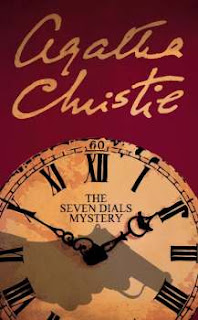
The Seven Dials Mystery
Agatha Christie
William Morrow, 2012 (first published 1929)
284 pages

Agatha Christie, you ask? Sure, we all know Agatha from her stories about Miss Marple or Hercule Poirot. Yes, we say, "The Seven Dials Mystery" should be an entertaining book. We begin to read... and then confusion ensues. Imagine a nice British country house party of the 20s or 30s, full of titled upper class folk, the idle rich, and their stalwart servants. Present are all the usual slightly nutty types a la P. G. Wodehouse, a stuffy Lord, a ditzy Lady, fun-loving, carefree young folk with money to burn, a supercilious gardener. Sir Oswald and Lady Coote surely must know Bertie Wooster!

http://www.amazon.com/exec/obidos/ASIN/0062074164/ref=nosim/webxina/
 http://www.amazon.com/exec/obidos/ASIN/0062074164/ref=nosim/webxina/

It's Wodehouse in a lower key; no one is quite as smart as Jeeves, nor quite as fatuous as Wooster, and for silly names we have only a girl named Socks, the male secretary, Pongo, and the amateur detective, Lady Eileen Brent, known as Bundle. But then drop in a serious mystery complete with several bodies, a Russian countess, a furtive society, German agents, and a secret industrial process. The events happening at various grand estates verge right on the edge of being zany, but are held in check by the ever-present threat of more deaths occurring.

The mystery itself is perplexing and kept me guessing until the very end. All my suspects were innocent - of the crimes, if not of deceptions. Later I found out it is number two of five in the Superintendent Battle series. Oddly enough number three in that series, "Cards on the Table", is also number 13 in the Hercule Poirot series, which I have already read. I guess I need to hunt up numbers one, four, and five now to complete the set.

Don't get me wrong, I liked this book a lot, it just wasn't what I had expected from Agatha Christie! A quick, enjoyable read. And it's a classic crime story for the Back to the Classics 2018 challenge.